
Results
- 280,000 beneficiaries have been reached through interventions that aim to improve earning opportunities for low-income urban youth and migrant workers returning to Bangladesh.
- This includes over 140,000 returning migrant workers who have been registered through 31 new district welfare centers and received counselling, cash transfers, and referrals to job training to upgrade their skills and increase their capacity for self-employment.
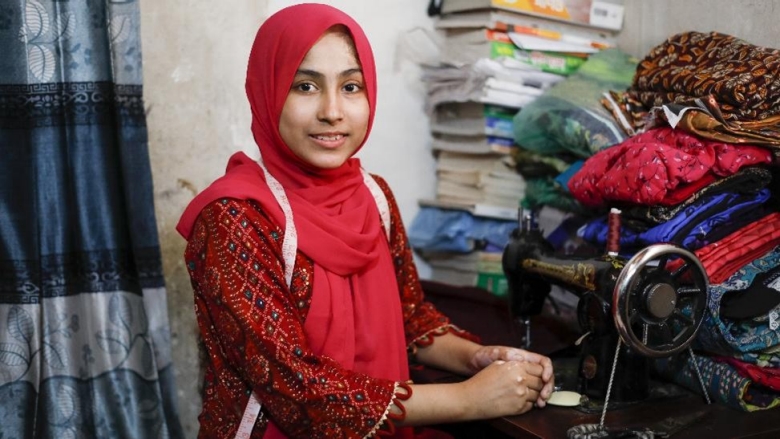
- So far, over 17,200 youth have graduated from a job apprenticeship program, and almost 90% are now employed in jobs or running their own microenterprise.
- Almost 115,000 microentrepreneurs have been supported to enhance their small businesses, leading some to expand their businesses and create jobs.
- As of January 2025, the project had resulted in nearly 45,000 new or better jobs for women.
The Challenge
Bangladesh’s informal sector accounts for up to 85% of employment and is characterized by low productivity and low wages. Youth in particular face significant challenges to accessing economic opportunity, and unemployment has traditionally been higher for them. With youth expected to account for 50% of Bangladesh’s working-age population by 2028, their labor market outcomes are critical for the country’s sustainable long-term growth and poverty reduction.
International migration also is a major part of Bangladesh’s economy: on average, up to 1 million workers seek temporary employment opportunities overseas, where they could earn three to four times more than at home. However, the exorbitant cost of migration often requires workers to spend their life savings or take out large loans. When COVID-19 lowered demand for labor, forcing hundreds of thousands of working migrants to return to Bangladesh, they struggled with high debt burdens, social ostracization, and reintegration into the domestic labor market. To support these populations and invest in its economic future, Bangladesh sought to enhance employability and productivity for low-income urban youth, microentrepreneurs impacted by the pandemic, and returning migrants.
WBG Approach
The World Bank Group is supporting Bangladesh in enhancing earning opportunities for low-income urban youth and returning migrants. The project’s targeted economic inclusion program, for which the Partnership for Economic Inclusion provided technical inputs, is rooted in the communities it serves and tailored to fit beneficiaries’ individual needs.

Through the program, youth and low-income microentrepreneurs in urban and peri-urban areas receive a bundle of services to boost their job prospects, including counseling; on-the-job learning through informal apprenticeships; business management, technical skills, and life-skills training; microfinance for self-employment and informal micro-enterprises; and stipends. For returning migrants, the project helped establish 31 district welfare centers, where beneficiaries can register and receive services, ranging from counseling and psychosocial first aid to a one-time cash transfer, as well as referrals to relevant services. The project employs an extensive implementation network to deliver services at close proximity to clients, which facilitates case-by-case interaction and follow up, and enables greater responsiveness to local needs and preferences.