
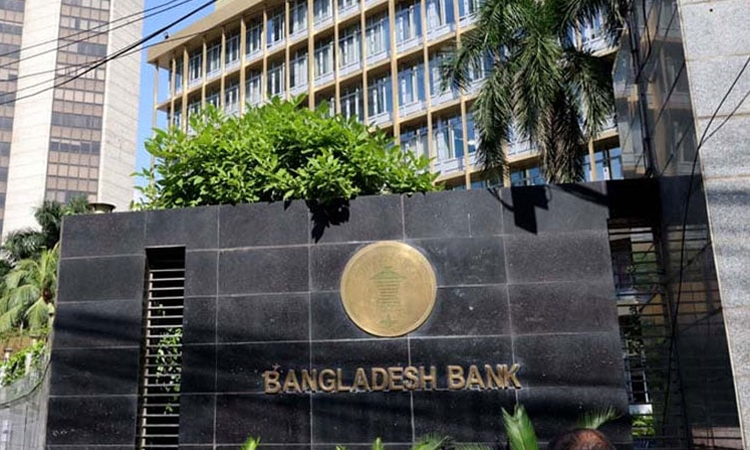
Experts for granting complete independence to Bangladesh Bank
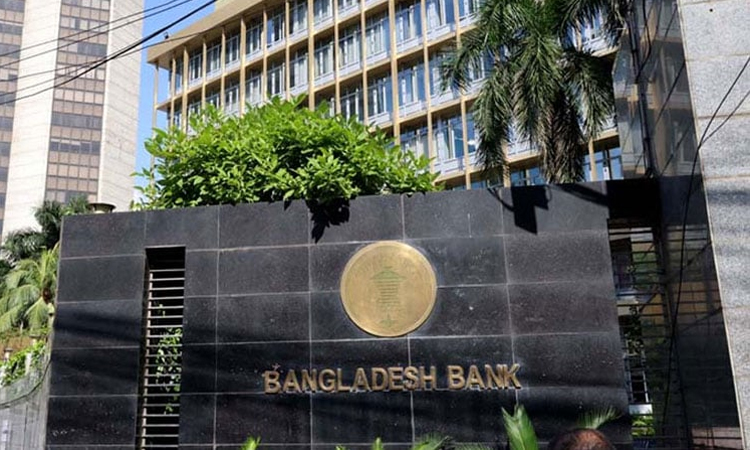
File Photo
DHAKA, Sept 30, 2025 (BSS) – Experts at a discussion here today laid emphasis on granting complete independence to Bangladesh Bank for ensuring good governance, monetary policy effectiveness, and national economic health.
They observed that the deliberate erosion of Bangladesh Bank’s independence and technical capacity has enabled the rise of economic oligarchs who have operated with impunity, extracting rents in a manner reminiscent of the East India Company.
They mentioned that their unchecked financial irregularities pushed the country’s banking system to the brink of collapse, undermining public trust and weakening the economy’s foundations.
Experts came up the remarks while speaking at the July-August edition of its Monthly Macroeconomic Insights (MMI) at the Policy Research Institute (PRI) conference room in the city.
The Centre for Macroeconomic Analysis (CMEA) of the PRI, in partnership with the Department of Foreign Affairs and Trade (DFAT) of the Australian Government, hosted the event.
Dr. Mohammed Farashuddin, Chairperson of the Board of Trustees at East West University and Former Governor of Bangladesh Bank, attended the event as the chief guest.
Stressing the urgency of tax reform, he remarked, “Every year, 20 lakh new taxpayers need to be brought under the tax net so that the burden does not fall disproportionately on those who are already paying. At the same time, the government must take stronger action against money launderers.”
The economist stressed the importance of employment generation, underscoring the need to support small entrepreneurs through skills training and access to low-interest loans.
While presiding over the event, Dr Khurshid Alam, Executive Director of PRI, said, “The current situation shows that growth is being held back by constraints on capital machinery imports and other essential inputs. This reflects a broader dilemma: the choice between pursuing stability or unsustainable growth.
The real question is whether we should aim for sustainable growth, supported by a stable system and sound macroeconomic conditions. Achieving this, however, will inevitably require deeper and more comprehensive reforms in the future.”
While delivering the keynote presentation, Dr Ashikur Rahman, Principal Economist at PRI, said, “The economic stabilization that has been painstakingly achieved through contractionary fiscal and monetary policies, and through difficult measures to restore governance in the banking sector, can only yield long-term dividends if Bangladesh invests in the capacity and autonomy of its economic institutions, most importantly Bangladesh Bank.”
He said that complete independence of the Bangladesh Bank would empower it with both the authority and the technical capacity to safeguard financial stability, enforce discipline in the banking sector, and credibly apply orthodox monetary policy.
“In effect, central bank independence is no longer a desirable policy choice; it is a fundamental necessity for Bangladesh’s economic future. Without it, stabilization will remain fragile, vulnerable to capture, and at constant risk of reversal,” he added.
Kamran T Rahman, President of Metropolitan Chamber of Commerce and Industry (MCCI), joined as the special guest, while Clinton Pobke, Deputy Head of Mission, Australian High Commission in Dhaka, attended as the guest of honour.
Kamran T Rahman highlighted that, “Expanding employment and investing in skills development are critical to harnessing our demographic dividend. With coordinated action and strong collaboration between government, the private sector and development partners, Bangladesh can overcome present challenges and secure sustainable, inclusive growth.”
Clinton Pobke noted that new governance reforms—covering banking, taxation, and judicial independence—could deliver long-term dividends if sustained, but their future depends on the next government’s choices.
He cautioned that reform windows are rare and easily lost, expressing hope that Bangladesh continues its reform journey.
Pobke also reaffirmed Australia’s commitment to supporting Bangladesh’s reforms through a forthcoming development partnership plan and deeper trade and investment ties.
Distinguished panelists included Khondoker Shakhawat Ali, Visiting Research Fellow at BIGD, BRAC University, and Rizwan-ur Rahman, Former President of Dhaka Chamber of Commerce and Industry (DCCI).
Khondoker Shakhawat Ali observed that, “The banking sector’s growing integration with technology is a positive development. With stronger cyber security measures and more effective regulation and monitoring by Bangladesh Bank, the sector can achieve greater resilience and efficiency.”
Echoing the need for institutional reforms, Rizwan-ur Rahman stressed that ensuring the independence of Bangladesh Bank would require the establishment of a separate commission dedicated to accountability.
The event concluded with closing remarks from Dr. Khurshid Alam.