
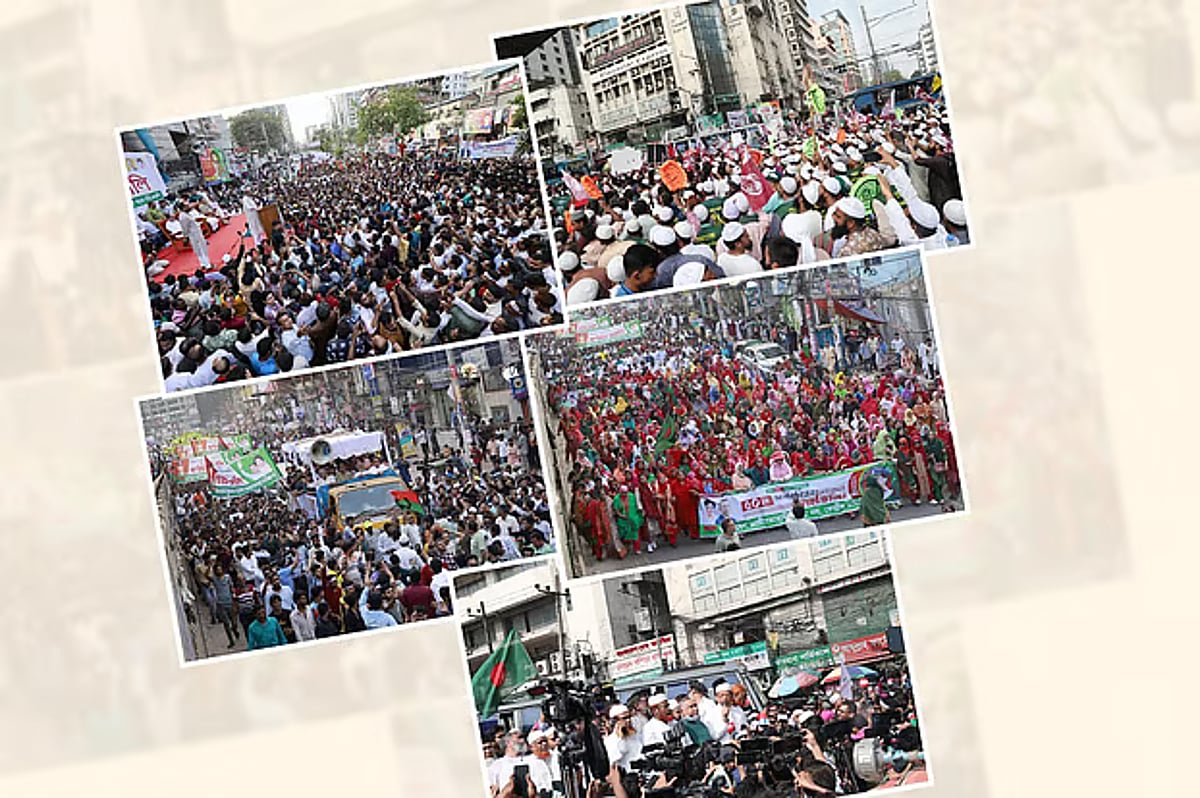
Meanwhile, BNP wants the referendum to be held on the same day as the parliamentary elections in February. The party has already announced its candidates in 237 constituencies. Since last Friday, the party has taken to the field with programmes that have drummed up an election vibe. They selected “National Revolution and Solidarity Day” as the occasion. As part of this programme, rallies and processions have been held not only in Dhaka but also in Chattogram, Rajshahi, Khulna, Rangpur, Cumilla, Barishal, Sylhet, Mymensingh, Bogura, and in all divisions and districts. At these events, posters, banners, and placards featuring the sheaf of paddy, the party’s election symbol, and the prospective candidates were displayed.
On 5 August last year, the student-mass uprising led to the fall of the Sheikh Hasina government. Since then, in national politics, BNP, Jamaat, as well as National Citizen Party (NCP) which was formed under the leadership of young organisers who led the uprising, are being seen as significant forces. While Jamaat and the BNP have begun programmes on the ground, NCP has not yet announced such initiatives.
On 12 February, the National Consensus Commission was formed under the leadership of the chief advisor. Professor Ali Riaz, head of the Constitutional Reform Commission, serves as the co-chair of this commission. Over roughly eight and a half months, the commission held continuous meetings with 30 political parties and drafted the July Charter. Most parties signed it. However, the parties could not agree on how the reforms outlined in the July Charter would be implemented.