
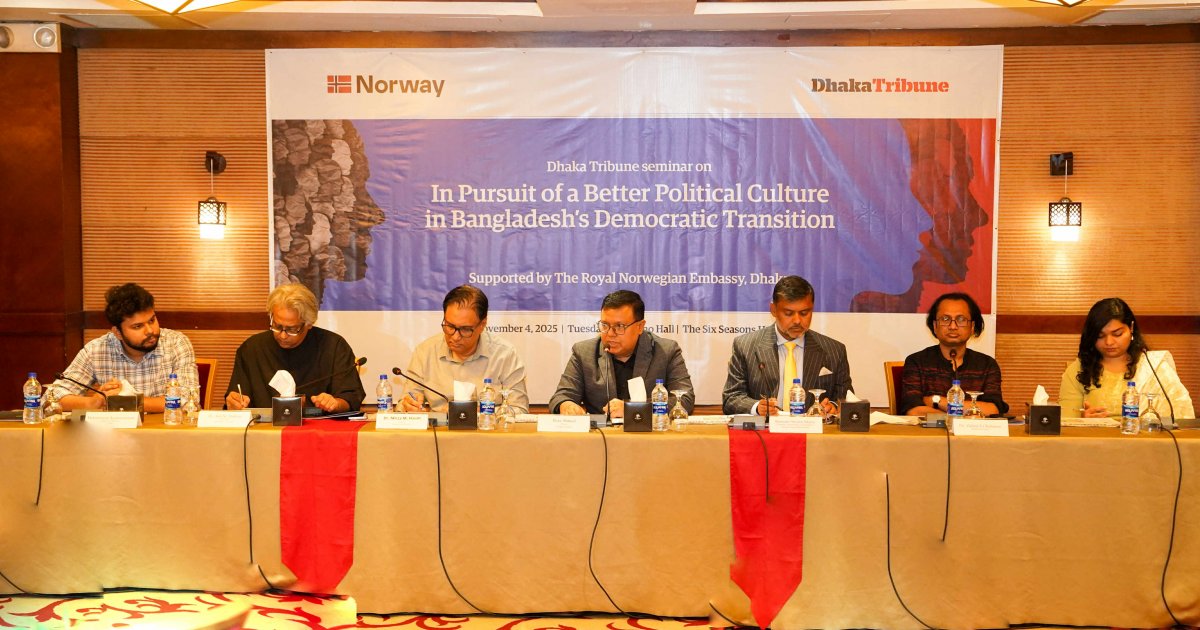
Politics in Bangladesh has increasingly turned into a means of livelihood rather than a platform for public service, observed speakers at a high-profile seminar titled “In Pursuit of a Better Political Culture in Bangladesh’s Democratic Transition.”
Organized by the Dhaka Tribune, supported by the Royal Norwegian Embassy, Dhaka, the event was held on November 4, at a hotel in Gulshan.
The seminar brought together leading political scientists and commentators, diplomats, civil society representatives, youth, politicians and academics for an open discussion on Bangladesh’s democratic transition and the challenges of reforming its political culture.
The session was moderated by Reaz Ahmad, Editor of the Dhaka Tribune, who noted that it was part of a broader series aimed at sparking dialogue on democratic reform, governance, and civic renewal.
Norwegian Ambassador Håkon Arald Gulbrandsen said that while Bangladesh’s interim government has initiated significant structural reforms, the country’s democratic renewal depends on the conduct of its politicians.
Special guest of the event, political scientist and CPD Distinguished Fellow Dr Rounaq Jahan said that behavioral change and institutional integrity must go hand in hand.
As the discussion concluded, participants agreed that Bangladesh’s democratic renewal depends less on charters, commissions, or constitutional amendments, and more on trust, civic responsibility, and moral leadership.
The panel’s message was clear: democracy is not sustained by procedures alone but by culture, the everyday ethics of how politics is practiced.
As Ambassador Håkon Arald Gulbrandsen reminded in his parting words: “Healthy political culture is not built by laws alone, it is built by the way people practice politics.”
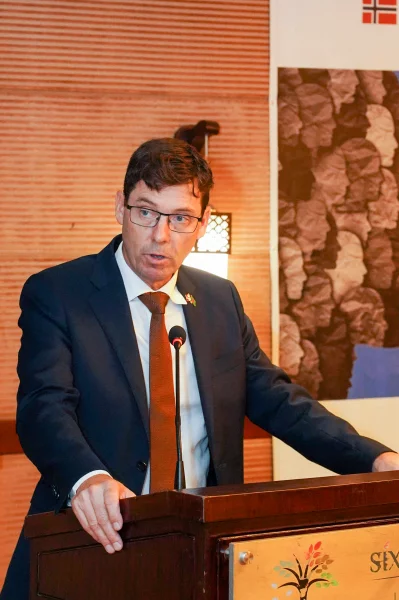
Håkon Arald Gulbrandsen
Ambassador of Norway to Bangladesh
“In Norway, candidates maintain friendly relations even during election campaigns because politics is not personal, it is public service. Bangladesh holds immense potential, and a healthy political culture will expand its opportunities.”
Ambassador Gulbrandsen emphasized that the success of any democracy depends not only on laws and institutions but on the culture that underpins them. He commended Bangladesh’s ongoing efforts toward reform, including the formation of several commissions under the interim government to address structural challenges.
“Bangladesh is undergoing a democratic transition, guided by the National Consensus Commission (NCC) under the chief adviser. These bodies are steering institutional changes tied to the July Charter, a roadmap for transparency and decentralization,” he said.
He cautioned, however, that structural change alone is not enough.
“Beyond structural reform, political culture is the deciding factor. Without it, reforms may fail and old patterns of authoritarianism, confrontation, and corruption will return.”
Drawing on Norway’s political experience, he added: “Democracy thrives on diversity and inclusion, not majoritarianism. It isn’t just about winning elections, it’s about respecting the rules, the opposition, and the people.”
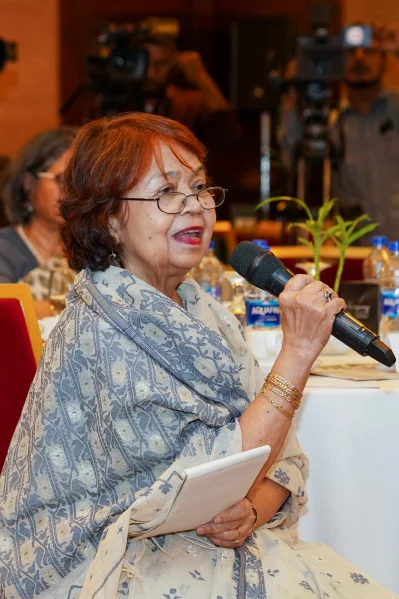
Dr Rounaq Jahan
Distinguished Fellow, Centre for Policy Dialogue (CPD)
“Citizens’ ability to hold leaders accountable cannot be limited to elections every five years. Accountability must extend to every level of governance, from policy formulation to implementation.”
Dr Jahan warned that unchecked privileges and elite capture have hollowed out institutions, eroding public faith in democracy.
“The dismantling of the caretaker government system marked a major setback for public confidence in fair elections. Elite capture has turned institutions into instruments of control.”
She urged political parties to move from personality-driven rivalries to policy-based competition.
“Parties must shift from personal attacks to policy debates. Equal access for women, minorities, and less-resourced candidates is not charity, it is democracy.”
Ending on a hopeful note, she added: “Despite everything, people’s faith in democracy endures. That is our greatest strength and our reason to keep striving for reform.”
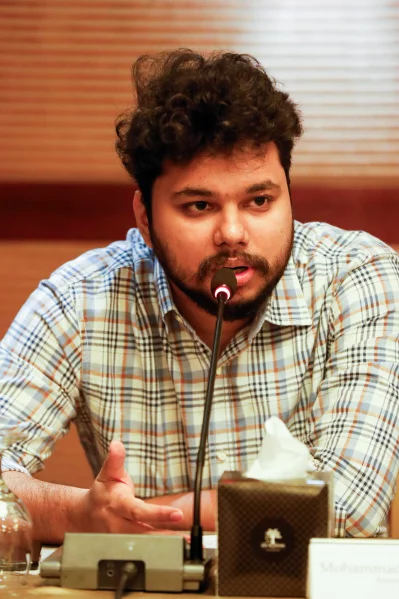
Mohammed Asaduzzaman
Research Director, Dhaka Institute of Research and Analytics (DAIRA)
“Bangladesh’s post-uprising political culture must be examined within both national and global contexts. Around the world, we see the rise of populism and inequality, and these trends are shaping our own politics.”
Asaduzzaman described how entrenched patronage networks, violence, and elite control have hollowed out the country’s democratic institutions.
“We face a deep crisis of trust in politics, governance, and institutions that undermines democracy itself. Political parties, bureaucratic elites, and business interests have created a system of mutual dependency that leaves little space for accountability.”
He argued that rebuilding that trust will require an entirely new foundation of civic education and citizen participation.
“We cannot build democracy on patronage and fear. Without transparency and participation, the cycle of elite domination will persist. Sustainable democracy can emerge only through empowerment, civic learning, and institutional reform driven by the people.”
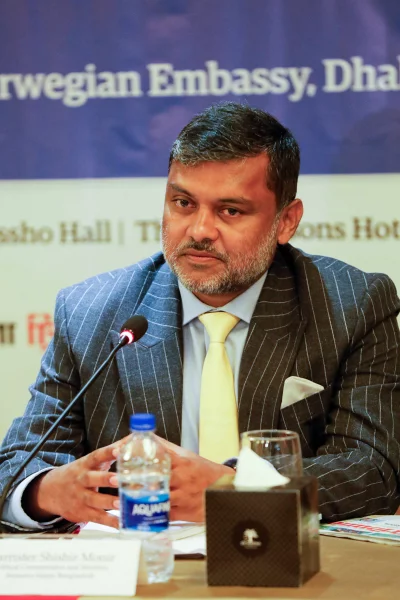
Barrister Shishir Manir
Member, Bangladesh Jamaat-e-Islami
“Politics has become one of the biggest livelihoods in Bangladesh. Economic survival and political power have become so intertwined that leadership is often treated as personal property rather than public responsibility.”
Manir warned that the culture of entitlement has eroded the sense of service in both national and local governance.
“Authority is now seen as entitlement and leadership as a source of income. This mindset weakens institutions and corrupts democratic processes.”
Referring to the July Charter, he said: “The Charter offers a framework for balancing power among the executive, legislature, and judiciary. If practiced with sincerity, it could be the beginning of a sound political culture and a peaceful transition. But democracy cannot flourish where institutions serve individuals. Sustainable reform demands long-term commitment across all party lines.”
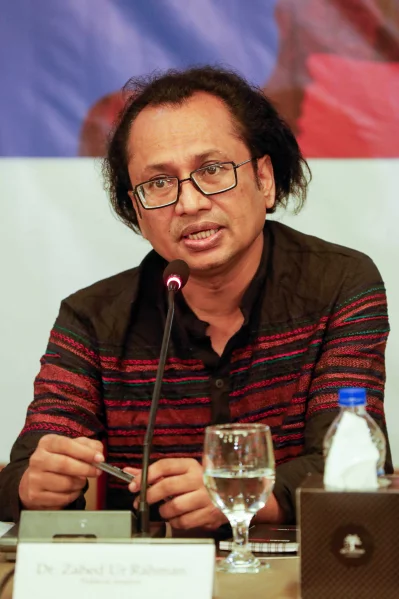
Dr Zahed Ur Rahman
Political Analyst
“The next phase of Bangladesh’s politics may see intensified religious mobilization. What we are witnessing is not just a crisis of governance, but a cultural shift toward sectarianism and exclusion.”
Zahed described the post-2018 period as “a classic example of a mafia regime,” arguing that Bangladesh has shifted from authoritarianism to a system sustained by loyalty networks and fear rather than legitimacy.
“Democracy often dies within a constitutional framework. Elected governments manipulate amendments to entrench control. What we have is an illusion of democracy formed without substance.”
He called for the restoration of institutional independence and the protection of civil society as safeguards against creeping authoritarianism.
“Without collective vigilance, authoritarianism will keep wearing democratic masks. The responsibility lies not only with politicians but with citizens, academics, and the media to demand transparency and truth.”
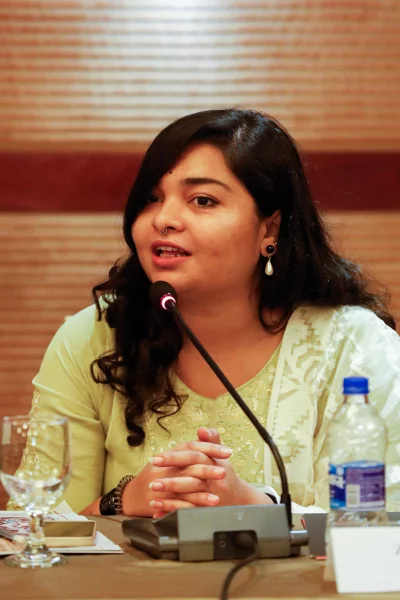
Zyma Islam
Senior Reporter, The Daily Star
“Eighty-eight people were killed in intra-party BNP clashes and thirty-four in Awami League–BNP confrontations. These are not just statistics, they reveal how deeply violence has been normalized in our political life.”
Zyma noted that political violence continues to erupt despite renewed aspirations for democratic reform following the July Revolution.
“Both major parties are centralized, intolerant, and closed to dissent. Yet at the grassroots, a spirit of cooperation still survives—a hopeful sign that inclusive politics can be rebuilt from below.”
She also highlighted how repression against the press weakens democracy.
“Journalists face legal harassment and intimidation for reporting inconvenient truths. Democracy cannot thrive amid fear, vengeance, and silence. Protecting freedom of expression must be central to any democratic transition.”
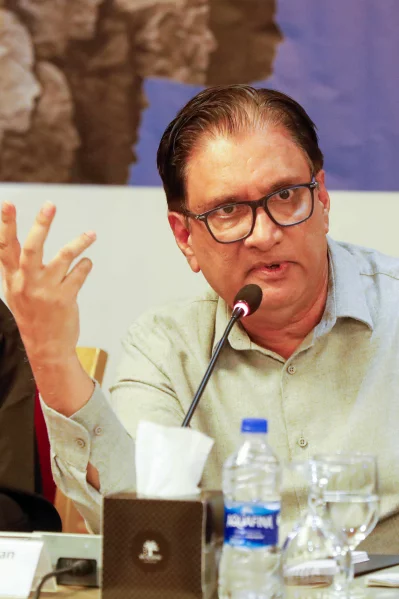
Dr Mirza M Hassan
Adviser, Brac Institute of Governance and Development (BIGD)
“Bangladesh’s political crisis is rooted not just in corruption, but in the norms that sustain elite control. Politics remains an arena of manipulation and intolerance, while the poor are excluded from meaningful participation.”
Dr Hassan explained that the absence of a credible electoral framework has allowed elites to dominate public institutions without accountability.
“Democracy cannot depend on the goodwill of individuals. It must be built on credible institutions and clear rules. Without those, participation is symbolic and change remains cosmetic.”
He called for sustained investment in civic education, dialogue, and institutional integrity.
“Only when citizens understand their rights and institutions respect them can democracy move from survival to substance.”
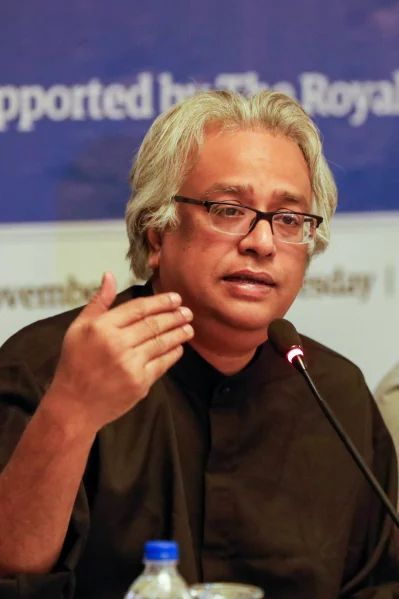
Dr Asif M Shahan
Professor, Department of Development Studies, University of Dhaka
“Bangladesh’s politics remains trapped in a ‘winner-takes-all’ culture where the goal is control, not service. Reform cannot rely on finding ‘good people’; it must focus on fixing the systems that produce bad outcomes.”
Dr Shahan described the roots of this culture as historical, tracing them back to centralized governance and patronage-based bureaucracy.
“It’s difficult to define a ‘good’ political culture, but ours is characterized by concentration of power, weak checks and balances, and a lack of merit-based governance.”
He emphasized that sustainable democracy depends on institutions that outlive individuals.
“Politics must be about service delivery, not control. Accountability must be demanded as a right, not received as a favor. Bureaucratic and political systems must reward fairness, not loyalty.”
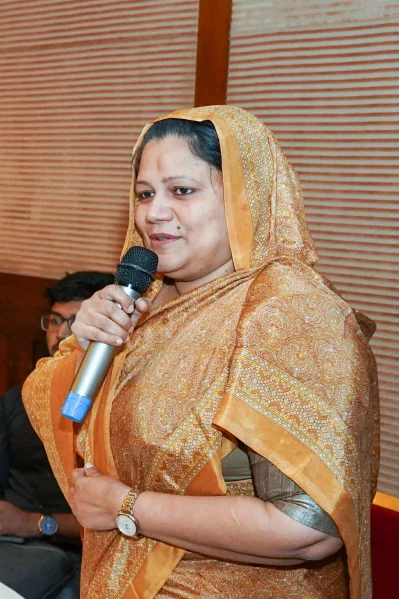
Mahmuda Habiba
Member, BNP Media Cell
“Politics in Bangladesh has become a substitute for social protection. When loyalty determines livelihood, principles fade. Politics should never be about survival, it should be about service.”
Habiba emphasized that reform is not a one-time project but a continuing process.
“Reform must be continuous, not reactive. Participatory politics is not a slogan; it’s a shared responsibility between parties, citizens, and the media.”
She also called for meaningful inclusion of women and youth in decision-making.
“True democratization will come only when citizens see politics not as patronage but as public service. Women and young people must have a real voice in shaping the future of governance.”
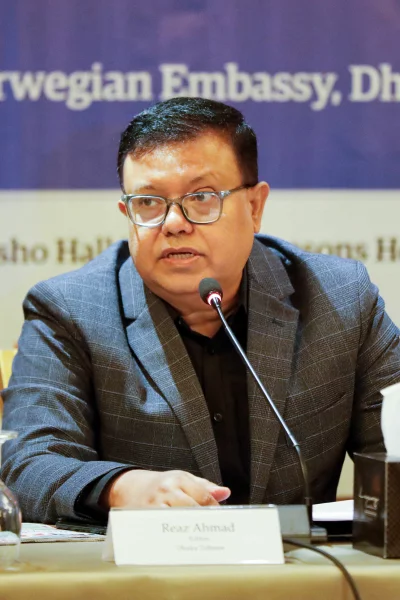
Reaz Ahmad
Editor, Dhaka Tribune
“The theme may sound weighty, ‘In Pursuit of a Better Political Culture in Bangladesh’s Democratic Transition,’ but more than a year after the July Revolution, as the nation looks ahead to a fair national election, we believe this is the right moment to affirm: the people of Bangladesh deserve a better democracy.
To achieve that, we must begin by acknowledging past mistakes and cultivating an environment that nurtures a healthy political culture.
This is not about any single era or one party’s dominance over another. It goes deeper. It’s about embracing a culture grounded in democratic values.
For too long, our political landscape has been shaped by a ‘winner-takes-all’ mentality, limited space for dissent, deep-seated acrimony, intolerance, and mutual mistrust.
We must move beyond these entrenched practices that have hindered our democratic aspirations.
We hope today’s discussions will offer insights and recommendations—a roadmap toward building a more inclusive and ethical political culture.”
“So the question before this panel is: how do we promote the practice of better politics, and what concrete steps can we take to make it a reality?”