
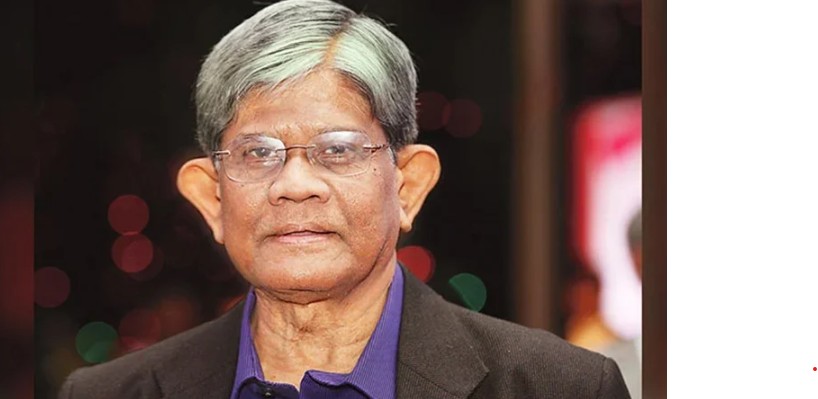
Speaking after chairing meetings of the Advisers Council Committee on Economic Affairs and the Advisers Council Committee on Government Purchase at the Bangladesh Secretariat, Dr Salehuddin said the IMF considers Bangladesh’s progress “generally positive” but stressed the importance of speeding up policy execution, particularly around interest rate adjustments.
“Increasing the policy rate cannot be done suddenly. We have to ensure supply-side improvements at the same time,” he noted.

The finance adviser also mentioned concerns raised by the IMF regarding the banking sector, with five banks under observation. “They consider this a major challenge. The government needs to undertake tough reforms to strengthen financial governance,” he said.
On revenue administration, Dr Salehuddin said the IMF is satisfied with progress at the National Board of Revenue (NBR) but expects continued reforms, including manpower restructuring and capacity enhancement. He added that while a complete turnaround may not be achieved within the current government’s tenure, substantial groundwork and structural preparations will be completed.
Responding to questions on new conditions, he said the IMF did not impose any fresh requirements. “This was more like a consultation. They expressed satisfaction with the measures we have taken so far. The financial situation is largely under control, and the remaining time will be used for consolidation,” he said.
The $4.7 billion IMF loan programme, approved in January 2023, is designed to support Bangladesh’s economic stability, strengthen fiscal reforms, and enhance resilience amid global pressures. Several tranches have already been disbursed, with the fourth and fifth tranches amounting to $1.3 billion released in June 2025, bringing total disbursements to $3.6 billion. The programme’s overall size was increased to $5.5 billion from $4.7 billion in June 2025 to help meet balance of payments needs.