
He urges trust in businessmen to enable their contribution to economy
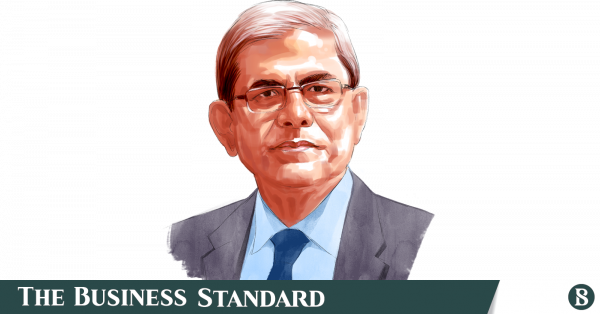
BNP Secretary General Mirza Fakhrul Islam Alamgir. Sketch: TBS
“>

BNP Secretary General Mirza Fakhrul Islam Alamgir. Sketch: TBS
Highlights
- Fakrul says closing factories leaves 14 lakh jobless
- Priority should be welfare of farmers, workers, stability
- Khasru stresses democratising economy for public welfare
- Says new economic model needed for public participation
- Shafiqur says economy must be founded on fairness, responsibility
- Says entrepreneurs need stability, free from political interference
- AK Azad warns industrial sector failing to create jobs
BNP Secretary General Mirza Fakhrul Islam Alamgir has called for a careful balance in tackling economic crimes over the past 15 years, urging that looters be punished without shutting down their factories.
“Where will all these employees go? We need to think about why unemployment is being created while pursuing looters,” he said while addressing a session of the “Fourth Bangladesh Economic Conference 2025: Future Economic Roadmap and Political Commitment” held at a hotel in Dhaka today (29 November).

“Those who have looted, stolen, and even robbed banks over the past 15 years must be held accountable,” Fakhrul said at the event organised by Daily Bonik Barta. “But their industries and factories employ thousands of people. Closing these factories has left 14 lakh unemployed.”
He added, “We need to find ways to keep these factories running and sustain jobs for these people.”
He further said the priority should be the welfare of ordinary people. “Our farmers must be supported, their problems addressed, workers should get fair wages, and the economy should remain stable.”
Fakhrul said that attitudes towards businessmen must change. “We need to move from suspicion to trust. If we do not trust them, how can they contribute to the country through business?”
Democratising economy is key: Khasru
In another session of the conference, BNP Standing Committee member Amir Khasru Mahmud Chowdhury said the benefits of Bangladesh’s economic growth have largely gone to a select group.
He said the economy must be a part of democracy and serve public welfare. “Democratising the economy is essential for overall financial progress,” he said.
He added that a new economic model is needed to ensure public participation, create access for entrepreneurs to global markets, and enable rural populations to prosper and sell their products globally.
Economy must be founded on fairness: Shafiqur
Jamaat-e-Islami Ameer Shafiqur Rahman said everyone contributes to the country’s economy, noting that total development stems from two main sources: taxes and remittances.
“Everyone, from beggars to industrialists – even newborns – pays taxes. Since society shares responsibility equally, economic structures must be founded on fairness,” he said.
He said to transform 18 crore people into productive human capital, school dropouts at the primary education level must be prevented. “Identifying tomorrow’s economists, central bank governors, and future national leaders is a shared responsibility of society and government,” he added.
Shafiqur also noted widespread bureaucratic inefficiencies, corruption, and harassment hinder entrepreneurs. “Bribes and corruption discourage both domestic and foreign investors. While we have abundant human resources and low production costs, investors demand a proper environment,” he said.
He added that no economy operates outside politics. “Policy coordination, regulation, and growth are shaped by political structures. Entrepreneurs are vital to society, but Bangladesh has yet to provide a stable ‘comfort zone’ for business free from political interference.”
Industries failing to create jobs: AK Azad
AK Azad, chairman and managing director of Ha-Meem Group, expressed concern over the country’s overall economic and banking situation. Citing the latest Bangladesh Bank bulletin, he said GDP growth was 4.22% last fiscal year, projected to fall to 3.97% this year, reflecting internal economic pressures.
He warned that non-performing loans account for 24% of total lending, though the real figure is likely higher. He said contractionary monetary policy has pushed up interest rates, affecting the private sector.
“Industrialisation is weak, capital machinery imports have declined, and the sector is failing to create employment,” he said, adding that when 30 lakh new workers enter the job market annually, 14 lakh have lost jobs due to declining industrialisation.