

ROME, December 22 (IPS) – Bangladesh in recent years started drawing global attention for its success in emerging out of poverty through economic growth and agricultural development. From early 2000 until 2023, while population growth continued to decline from 1.2 in 2013 to 1.03 in 2023, this growth has been the powerful driver of poverty reduction since 2000. Indeed, agriculture accounted for 90 percent of the reduction in poverty between 2005 and 2010 (World Bank).
Despite frequent natural disasters and population growth, food grain production tripled between 1972 and 2014, from 9.8 to 34.4 million tons. As a result, the country became almost self-sufficient in basic food and, net overseas foreign aid (ODA), as a percentage of GNI fell from 8 in 1977 to less than 1 in 2023 (World Bank).
Along with agricultural development, buoyed by booming export, (led by the garment sector) and remittances, foreign reserves went past $30 billion.
With resources in hand and confidence to move forward the country launched mega infrastructure projects, such as huge bridges, deep sea port, urban metro transit, highways and modernization of airports; mega power projects including a nuclear power plant.
And then came the ‘deluge’ of corruption and the ‘rot’ of the basic moral fabric of the government, led by Sheikh Hasina, the daughter of the “Father of the Nation” and head of the Awami League (AL), the party that brought us independence. While the AL led government publicly started publicizing its achievements and successes, it was simultaneously systematically looting the country through corrupt practices, crony capitalism and outright theft through the banking system by forcefully appointing their henchmen onto the board of directors. Sheikh Hasina’s government further alienated the youth ‘by limiting access to government jobs to the supporters of her party by implementing a quota system.
Consequently, the students rebelled and overthrew her government and installed an Interim government with Nobel Laureate Professor Mohammed Yunus at its head. Everyone heaved a sigh of relief and hoped for a better future for the country guided by the most distinguished Nobel laureate, son of the soil.
Prof. Yunus found a country politically broken, financially drained without foreign currency reserve and a banking sector with empty coffers due to politically motivated loans to the AL leaders and their cronies without any hope of ever recovering them.
Prof. Yunus brought in several advisers to run the administration and focused on (a) stabilizing the financial sector ; and (b) reforming the institutions and the constitutions, assuming that weak institutions and the existing constitution enabled the AL government to loot the country dry.
He appointed very competent, well known and experienced economists at the head of the central Bank and the Ministry of Finance and they very successfully stabilized the financial market.
However, his attempts to reform, as well as his lackluster performance as a leader to guide the country and the reform process are pushing the country further into turmoil and towards a downward spiral. The hope that a Nobel laureate will save the country is turning into a nightmare!
Personal leadership of the Interim Government?
Though widely respected, as a leader of the Interim government Prof. Yunus has given no indication of what he stands for. The civil society and the general public are totally confused by his failure to stand up for basic mainstream Bengali values, including women’s right and freedom, organization of cultural and musical events, support for the minorities and ethnic communities. His administration did not support the “Women’s Commission Report” without ever giving any adequate justification.
None can really explain why he failed to stand up in public and as the head of the government for the basic values he fought for as a leader of Grameen bank and cherishes in private. May be one day his memoirs will explain that.
The Interim government also failed to address education and research. It allocated Tk 95,645 crore (approx. $900+ million USD) for education in FY2025-26, representing about 11% of the total budget and 1.69 % of GDP, well below UNESCO recommendations (4-6% GDP). It is one of the lowest in the history of the country. The whole country was expecting eagerly that he, being a professor and a Nobel laureate, would start reversing the trend of low allocation for education. Instead he lowered it even further than before.
In addition, the business community is exasperated by lack of participation in the interim government and its failure to address closure of factories of politically tainted people affecting export and increasing unemployment. There was also inadequate consultation before ratifying the ILO conventions on labour rights under international pressure.
Flawed reform and governance conundrum?
While the interim Government is committing most of its time discussing reforms of the institutions and the constitution, hardly a day goes by without some report of illicit land grabbing, police harassment of ordinary people, bribery and extortion in every government office, streets and local markets and transport hubs. There are wide spread arsons and killings. The security and law and order situation in the country is worse than ever before.
Reform before governance’ emphasizes making systemic improvements (like updating laws, processes, structures) before fully implementing the laws and rules to ensure that the foundation is sound, fair, and efficient.
However, interim government’s decision to prioritize was not based on any analysis demonstrating that there were flaws in the constitution, or in the judiciary etc. that allowed the last government to rob the country. Besides, the agitation that drove Sheikh Hasina’s government from power was motivated by lack of access to jobs, corruption and extortion, land grabbing, police brutality and political oppression. All these issues are related to governance. Reform was not on their agenda.
Prof. Yunus and his interim government are to be commended for their good intentions in seeking to carry out reforms that would forestall a return to the bad old days of the last government that looted the country. But they should have understood that reform may have been necessary but not sufficient.
Poor governance and lack of capacity to govern by the established institutions of Bangladesh and its bureaucracy is clear to the entire nation and the international community. Just look at any public institutions (from the airport to embassies, union parishad to district administration, telecom and power) the situation is blatantly visible to all. No one can get anything done without going through harassment, hustles, often paying a bribe or showing authority or power. People want relief from such miserable governance and administration and not Reform.
Fixing of the financial sector was indeed one of Prof Yunus’s government’s big achievement. However, though people feared that the financial and the political crisis would derail agricultural growth and then the rest of the economy along with it, fortunately that did not happen. Overall agricultural growth of the country kept its pace and total food grain production did not decline. Overall growth of value added in agriculture remained at more than 3 percent (Bureau of Statistics, Bangladesh).
Continued and sustained agricultural growth provided the life line to industries and the garment sector in particular to withstand the financial crisis. Overall, Bangladesh’s total exports expanded 24.9 % YoY in Nov 2024, compared with an increase of 25.7 % YoY in the previous month. Garment exports surged 12% in first 7 months of FY24–25, (Export Promotion Bureau of Bangladesh).
Likewise fixing the financial sector did not fix the economy. Even with a stronger financial sector, poor governance and inadequate attention to the business community have affected the real economy. Poverty is on the rise, export and agricultural productivity are declining. The country is now staring at downhill spiral both economically and politically.
Consequences of the failures of the Interim Government to Govern?
The most significant consequence is that by offering no alternative to better governance than the regime that was over thrown, the people are likely to turn towards the Islamic parties, which are, as of now not tainted by corruption in power and poor governance. There is a high probability that they may win. People are tending to believe that the Islamic parties will provide better governance and will be less corrupt.
The only factor that may not bring them to power is the fear that some of their values related to women and culture do not correspond to mainstream Bengali values.
The main stream opposition party, Bangladesh National Party (BNP) is also hoping to win big as they see no clear opponent. This party, however, is also accused of committing crimes, extortion and corruption when it was in power. The founder of BNP is linked to the cruel murder of Sheikh Mujib and the members of his family, and the current leader of BNP is accused of masterminding the grenade attack aimed at killing Sheikh Hasina at an AL rally on 21st August 2004. Hasina survived the attack, but it killed 24 people and injured about 200. Though acquitted, under the Interim Government, the accusations and BNP’s corruption and extortion by its cadres are lingering in public minds.
In spite of these short comings and the relative strength of the Islamic parties, the BNP is very optimistic of winning. They believe that the minorities, the large section of the freedom fighters, the left leaning parties and the secular urban women will never vote for the Islamist parties, come what may. However, given the current volatile political climate anything is possible.
In a sense the interim Government of Prof. Yunus is making it inevitable for the people to choose between: “good governance” vs. “upholding socio cultural Bengali values”. Which one will win is yet to be seen. The future of the country now critically hinges on the forthcoming election in February 2026 and the kind of leadership it will produce. Either way the people will be the losers – either they will get BNP, a corrupt party very similar to the ousted party AL with a history of bad governance or the Islamists which may turn out to be a threat to main stream Bengali values.
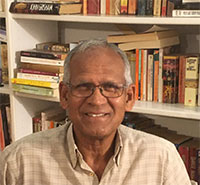
The Author was a freedom fighter during the war of liberation of Bangladesh and Former Chief of Policy Assistance Branch for Asia and the Pacific of the Food and Agriculture Organization of the United Nations (FAO).
IPS UN Bureau
© Inter Press Service (20251222183123) — All Rights Reserved. Original source: Inter Press Service