
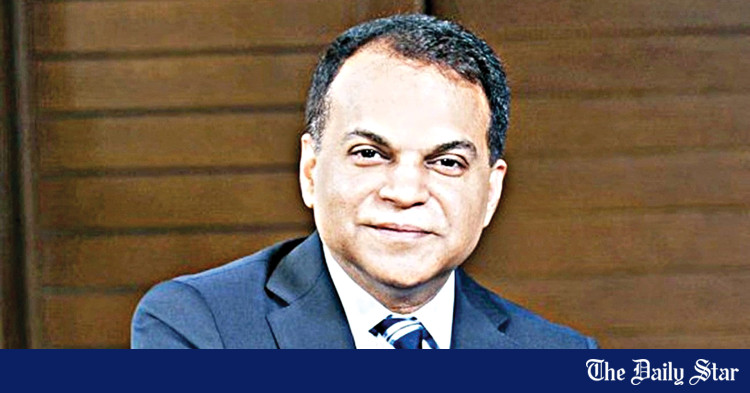
I have long believed Bangladesh has realised only a fraction of its potential. After more than three decades working across industries and engaging with government processes, one conclusion is hard to escape: fragmented governance, siloed decision-making and weak coordination among institutions are holding us back.
In 1961, South Korea created the Economic Planning Board to bring planning, budgeting, industrialisation and economic analysis under one command — the President’s office. That same year, Singapore set up the Economic Development Board to align investors, infrastructure, skills and trade around a single industrial vision. These were not exercises in expanding bureaucracy. They were coordination authorities, economic nerve centres, that helped resource-constrained nations move with clarity and discipline.
 For all latest news, follow The Daily Star’s Google News channel.
 Bangladesh does not need to copy these models. But it must learn from what worked.
Today, our economy is steered by powerful bodies: the National Board of Revenue, the Bangladesh Bank, Bida, the Securities and Exchange Commission, multiple ministries and scores of regulators, each with its own mandate and priorities. They rarely operate as one system with one shared vision. As a result, tax, investment, monetary, trade and industrial decisions are often taken in isolation and then collide in the real economy.
The costs are not theoretical. Take taxation in construction materials. The NBR may hesitate to withdraw VAT and taxes on cement used for brick making to protect short-term revenue targets. Yet lower taxes could make cement bricks competitive against environmentally harmful burnt bricks, improving public health and environmental outcomes. What appears to be a revenue decision is also an industrial, environmental and health policy choice.
Economic policy is inherently interconnected. Construction alone illustrates this clearly. It links roughly 3,600 industries, from steel to microfinance. A narrow decision on steel taxes should not be judged only by immediate revenue effects. Lower input taxes can raise activity across the entire ecosystem, creating jobs and downstream tax collections that may outweigh the initial loss.
Many countries have used real estate investment-friendly frameworks to generate powerful multiplier effects. Bangladesh should assess it.
If we are serious about reaching developed economy status by 2041, we need a permanent platform where these interconnections are understood and acted upon together. What the country needs is a National Financial Strategy Cell, placed directly under the Prime Minister’s Office, to function as an economic nerve centre.
This should not become another administrative layer. It must be a lean, data-driven coordination mechanism that aligns fiscal, monetary, trade, investment and industrial policy so that decisions reinforce each other. Its role should be to stress-test major proposals for cross-sector impact, flag contradictions early and present integrated options at the highest level.
Such a body should be empowered to convene regulators and relevant ministries, with credible private sector participation. The aim is not to replace existing institutions but to connect them. Private sector input matters because policy frictions often surface first on factory floors, at ports, in banks and in markets, long before they appear in official reports.
The payoff would be tangible. First, greater coherence, allowing revenue goals to be balanced with growth, jobs, competitiveness and environmental outcomes. Second, smarter incentives that support export upgrading and productivity without ad hoc distortions. Third, faster and more coordinated responses to crises, whether currency volatility, banking stress, supply disruptions or emerging global opportunities. We can no longer afford fragmented governance. When a minor fee change of just Tk 180 per truck can reportedly halt operations at Chattogram port for days, the deeper signal to investors is not the fee itself but the absence of predictability, consultation and coordination.
A tougher, faster and more complex world is approaching, but so are greater opportunities. Bangladesh has the potential and the entrepreneurial energy to seize them. What it needs now is one table where the right institutions sit together, one compass to align decisions and one mechanism that turns good intentions into coherent action.
The writer is the chairman of Anwar Group of Industries