
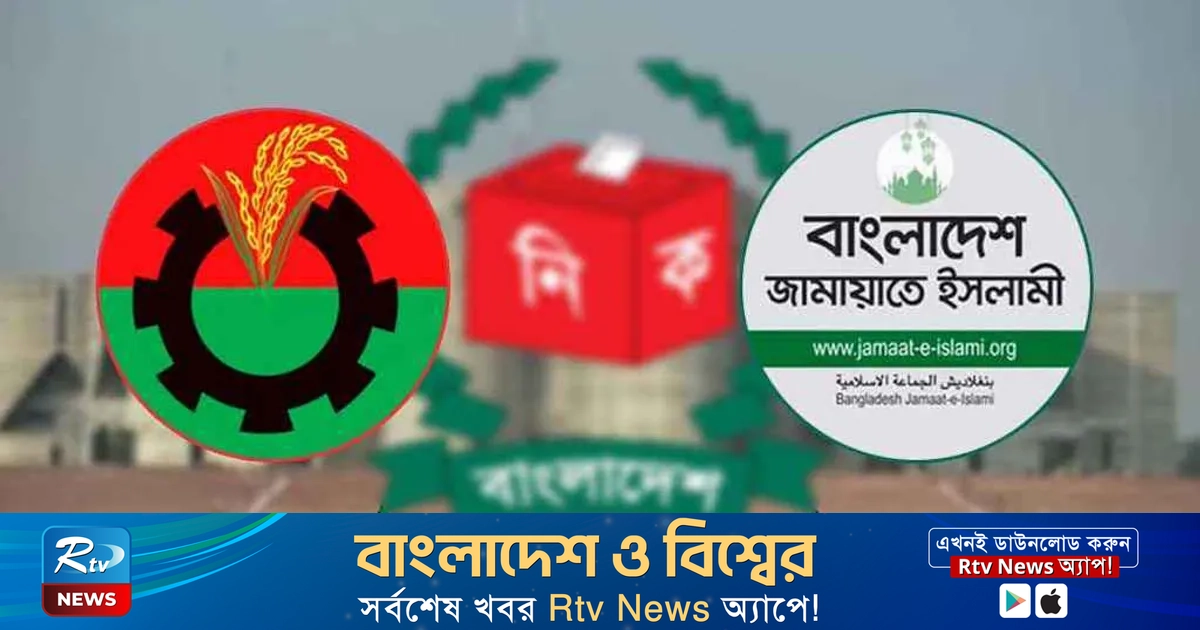
Alliance politics in this country is primarily a strategy for votes and a calculation for power—a tactic that often brings Left, Right, and Centrist ideologies under a single umbrella.
Historically, as national elections approach, the “game of alliances” begins as parties draft their electoral blueprints, and this year is no exception.
The political landscape is currently divided into two dominant poles. On one side is the BNP-led alliance, veterans of long-standing street movements; on the other is the Jamaat-led alliance.
In the absence of the Awami League, this election has effectively turned into a trial of strength between these two major blocs.
The BNP Coalition A total of nine parties have joined the BNP-led front. These include:
Nagorik Oikya, Ganosamhati Andolan, Gano Odhikar Parishad, Revolutionary Workers Party, BJP, NPP, Jamiat Ulema-e-Islam Bangladesh, and a faction of Jamiat Ulema-e-Islam.
The Jamaat-led Front Conversely, a 10-party alliance has formed to challenge for power, led by Jamaat-e-Islami. This group includes:
NCP, Islami Andolan Bangladesh, Khelafat Majlish, Bangladesh Khelafat Majlish, Bangladesh Khelafat Andolan, Jatiya Ganatantrik Party, Bangladesh Nezame Islam Party, Bangladesh Development Party (BDP), and LDP.
Strategy Over Ideology Both coalitions feature a mix of Right, Left, and Centrist forces. Political analysts suggest that these election-centric alliances are not built on shared ideology but are fundamentally tactical maneuvers to consolidate vote banks.
However, experts warn that such diverse groupings can sometimes leave voters feeling polarized or confused.
Observers also note that the window for reshuffling remains open; there is still a significant possibility of new parties joining either bloc or existing members switching sides before the polls.