
Bangladesh’s workforce is productive but strained. Rising financial anxiety, weak retirement readiness, and unmet mental health needs are affecting performance across the private sector—highlighting why employee well-being must sit at the centre of economic planning
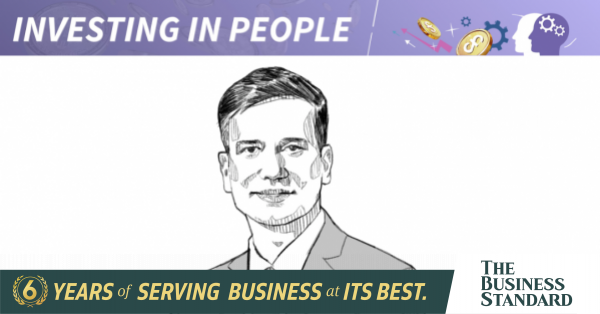
Ala Ahmad, CEO, MetLife Bangladesh. Sketch: TBS
“>

Ala Ahmad, CEO, MetLife Bangladesh. Sketch: TBS
Bangladesh is a nation defined by resilience. Over the past few decades, we have witnessed an economic transformation that has grabbed the world’s attention. From a bustling garment industry to a rapidly growing service sector, our growth trajectory has been remarkable.
At the heart of this success lies the private sector, a powerhouse that now contributes a lion’s share to our national GDP.
Illustration: TBS
“>

Illustration: TBS
However, when we celebrate these macroeconomic milestones, we often overlook the micro-level reality that is the human engine driving this growth. Millions of professionals who wake up every morning to keep diverse organisations running at full potential are the true architects of our economy.

But the question is: Are we really taking enough care of them?
As we navigate a rapidly changing economic landscape marked by numerous uncertainties, the definition of ’employment’ is shifting. It is no longer just about an individual’s earnings or salary.
For the private sector to continue thriving, we must acknowledge and confront underlying challenges in our workplaces: the increasing gap between what employees need for their holistic well-being and what they are currently getting.
The invisible burden on our workforce
In Bangladesh, we often wear our ‘hustle culture’ as a badge of honor. We praise long hours and relentless dedication. Yet, MetLife’s first-ever Employee Benefit Trends Study (EBTS) for Bangladesh reveals that this resilience often comes at a hidden cost.
Our research shows that financial insecurity is silently eroding the very productivity we strive for. A staggering 56% of employees admit that financial worries actively reduce their productivity. This is not just a personal issue; it is critical for business too. When more than half of a workforce is distracted by financial anxiety, innovation suffers and efficiency drops.
The study highlights a deep connection between financial health and mental well-being. 41% of employees explicitly link their financial stress to mental health issues. Financial planning and mental health are now significantly correlated; when one falters, the other inevitably suffers.
Furthermore, we also found a significant blind spot regarding the future in the study. More than 53% of employees have no retirement plan whatsoever. In a country where social safety nets are still developing, this lack of preparedness is a ticking time bomb for our workforce’s future security.
The business case for holistic care
For employers, these findings should serve not as a critique but as a strategic wake-up call.
The traditional view of employee benefits, which are often limited to basic medical coverage or a festival bonus, is no longer sufficient to retain top talent or drive high performance.
Our study indicates that employers are aware of the friction: 56% of employers identify productivity and 49% cite engagement as their biggest challenges.
While 72% of employees believe that their organisation cares about them, a ‘trust deficit’ emerges when that care does not translate into tangible support.
The return on investment for bridging this gap is clear. We found that 78% of employers say that insurance and wellness benefits explicitly make employees more loyal to their employer. In an era where talent mobility is high, benefits are not just a cost center; they are a retention engine.
If we look at global best practices for 2025, leading organisations are moving beyond transactional relationships with employees. The global trend is holistic well-being, which is a framework that supports the employee’s physical, mental, and financial life.
Globally, we see a massive shift toward Financial Wellness Programs. These are not just pension plans but active educational tools that help employees manage debt, save for emergencies, and plan for the future.
In Bangladesh, nearly half of the employees we surveyed expressed a desire for employer support to convert their savings into income. This is a great opportunity for employers because providing employees access to financial expertise can be just as valuable as the funds themselves.
Another global standard we must adopt is destigmatising mental health. Top global employers are integrating Employee Assistance Programs (EAPs) and mental health days into their core benefits. In Bangladesh, where over 40% of our workforce links financial stress to mental health, creating a safe space to discuss these pressures is essential.
Communication is the missing link
Another important aspect is that implementing these benefits is only half the battle; communicating them is the other. One of the most actionable insights from our study is that 70% of employees would use their benefits more if they simply knew how their peers were utilising them.
This suggests that many organisations might already have good tools in place, but they might be hidden behind corporate jargon or poor internal communication. We need to normalise conversations about benefits. Leaders should share their own experiences with utilising wellness programs. When an employee sees their manager prioritising well-being, it gives them permission to do the same.
Lead with care
The private sector has always been the forerunner of change in Bangladesh. We have led the way in industrialisation, digitalisation, and globalisation. Now, we have a unique opportunity to lead in humanisation.
Investing in comprehensive benefits, fostering a caring culture, and improving communication is no longer optional; rather, it is a strategic imperative. Employers who prioritise care and trust will not only unlock sustainable business performance but will also secure the loyalty of the very people building their success.
As we look toward the future of Bangladesh’s economy, let us ensure that the real muscle of our growth is well-protected and well-cared for.
Because when employees thrive, businesses thrive, and ultimately, Bangladesh thrives.