
The protesters, linked to the Inquilab Morcha, were demanding justice in the Osman Hadi case.
Hadi was shot in Dhaka’s Paltan area on December 12, 2025, airlifted to Singapore General Hospital three days later, and died soon after. His death triggered a series of violent incidents across the country targeting media houses, political and cultural sites, and diplomatic missions, according to the report.
Heavy police deployment was seen across Dhaka, with barricades set up and security forces using water cannons, tear gas and sound grenades as protesters surged toward Jamuna, the chief adviser’s residence. Several dozen protesters were injured during baton charges and a stampede following a coordinated dispersal operation by police and Border Guard Bangladesh personnel.

The confrontation comes at a politically sensitive moment, with the February 12 polls set to be Bangladesh’s first national election since the ouster of former prime minister Sheikh Hasina in 2024. The Awami League remains barred from contesting, contributing to a deeply polarised political environment.
The crisis gripping Bangladesh
Alongside the march toward Jamuna, government employees staged protests in the area demanding gazette notification and immediate implementation of the ninth national pay scale recommended by the Ninth Pay Commission.
Demonstrators alleged delays by the interim administration and raised slogans highlighting the rising cost-of-living crisis, saying, “There is no rice in the stomach–what development is there in the mouth?”
Protesters broke through initial police barricades near the National Museum and advanced toward the Hotel InterContinental crossing leading to the chief adviser’s residence, where they staged a brief sit-in before being dispersed.
Hasina’s ouster and the road to the February vote
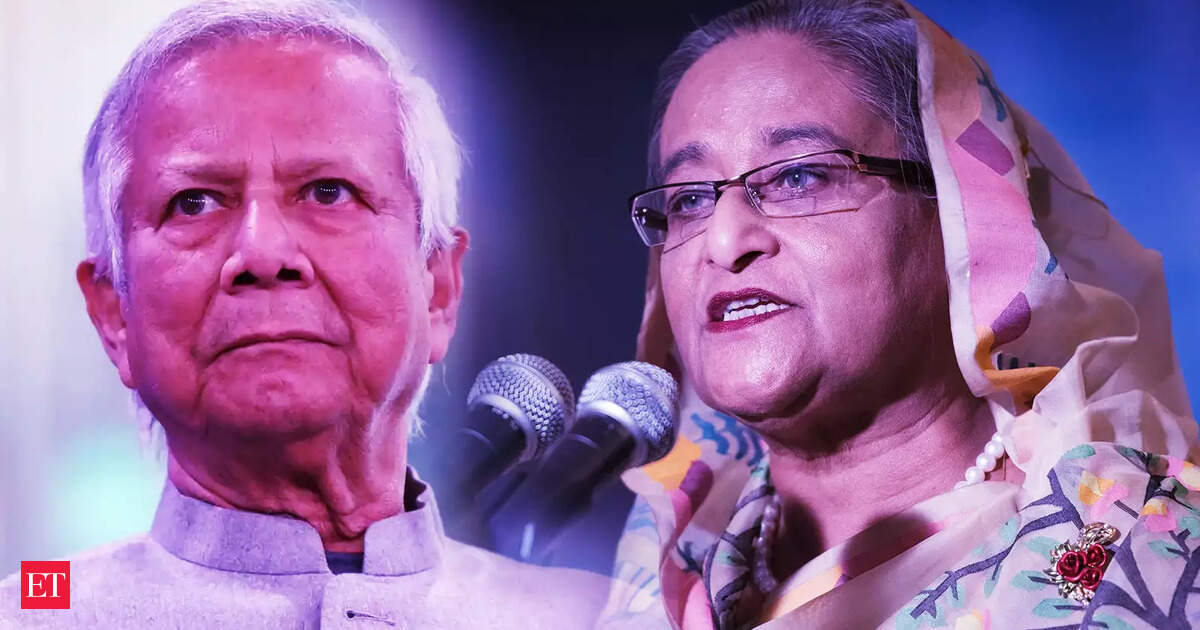
Sheikh Hasina was forced from power in August 2024 after weeks of nationwide protests, following which an interim administration led by Nobel laureate Muhammad Yunus assumed charge, according to The Economic Times’ reportage during the period.
Subsequent political developments included restrictions on the Awami League’s participation in the electoral process and continuing instability during the transition toward fresh national elections, ET reported.
The February 12 vote will therefore mark Bangladesh’s first parliamentary election since Hasina’s removal, taking place amid ongoing unrest and heightened security concerns.