
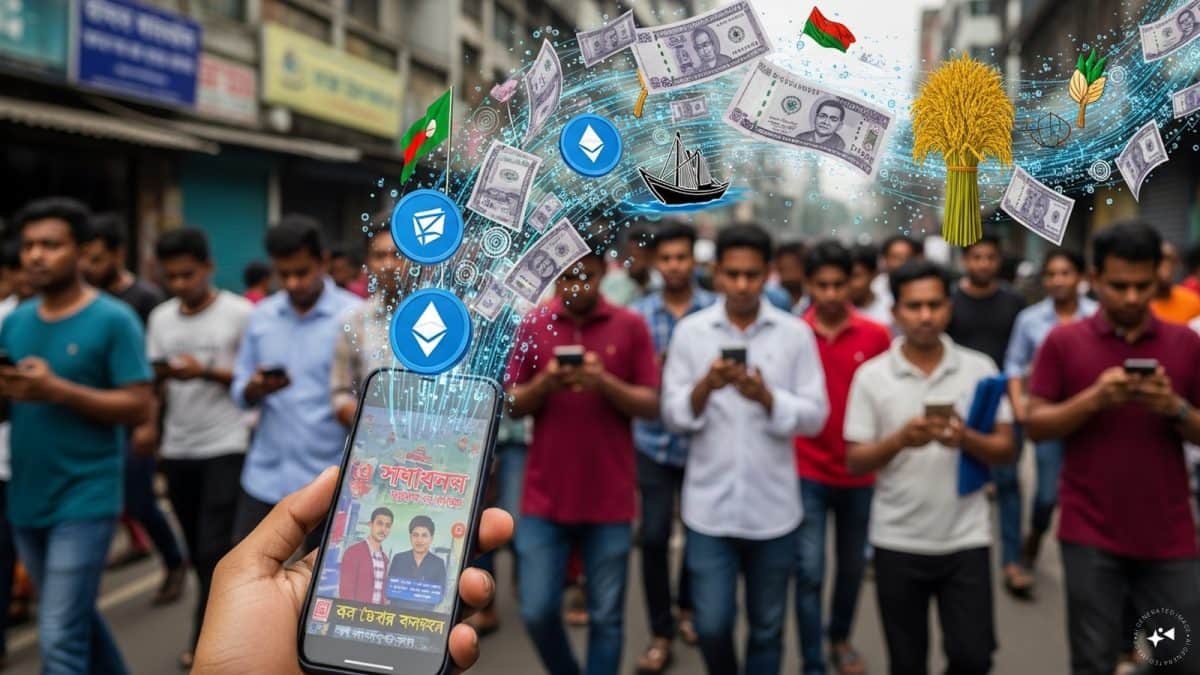
Bangladesh’s political parties are spending crores on Facebook ads ahead of the 2026 elections, turning social media into a key battleground as BNP and allies aggressively target young and undecided voters.
As Bangladesh heads towards a crucial general election, the contest is no longer confined to rallies, posters and television debates. Facebook has emerged as the principal theatre of political warfare with parties pouring crores of taka into targeted advertisements in an attempt to shape narratives and woo a digitally connected electorate.
Data on political advertising shows that the Bangladesh Nationalist Party (BNP) alone spent $96,171, roughly Tk 1.15 crore on 5,179 advertisements on the platform. The scale and intensity of this campaign signal how central social media strategy has become for the party, particularly as it seeks to consolidate support amid shifting political dynamics.
Jamaat-e-Islami and the 11-party alliance have also invested heavily in the digital push. Collectively, they used at least 104 Facebook pages to run 2,792 advertisements, spending no less than Tk 85 lakh. Within the alliance, Tk 4 lakh was spent by Khelafat Majlish and Bangladesh Khelafat Majlish, Tk 3.8 lakh by the National Citizen Party and about Tk 1 lakh by Amar Bangladesh (AB) Party.
The figures highlight a broader transformation in electioneering in Bangladesh, a move from street mobilisation to sophisticated micro-targeting.
Targeting Gen Z and first-time voters
The aggressive ad blitz comes at a time when Bangladesh’s young electorate is expected to play a decisive role. Reports indicate that Gen Z voters are particularly focused on jobs, governance reforms and freedoms, making them a strategic demographic for political messaging. Social media platforms, especially Facebook, offer direct access to this segment, many of whom consume news and political content primarily online.
Digital political campaigns allow parties to tailor messages by geography, age group and interests — a powerful tool in a fragmented political climate. Short videos, sponsored posts and issue-based campaigns can be deployed rapidly in response to developments on the ground, something traditional campaigning often cannot match.
For the BNP and its allies, Facebook advertising provides an opportunity to bypass mainstream media gatekeeping and directly challenge the ruling establishment’s narrative. Conversely, it also raises concerns about misinformation, echo chambers and opaque funding flows.
Bangladesh’s political arena has been marked by intense polarisation in recent years. Against this backdrop, online campaigns risk amplifying divisive rhetoric, particularly when algorithms reward emotive or controversial content. Analysts note that the digital shift has lowered entry barriers for smaller parties as well, enabling them to project influence disproportionate to their organisational size on the ground.
The 2026 election has already drawn attention internationally, with assurances from the Election Commission promising a free, fair and credible vote. Yet the battle for perception — both domestic and global — is increasingly unfolding online.
Regulation, transparency and the credibility question
The surge in political advertising expenditure also brings questions of transparency to the fore. While Meta’s ad library provides some disclosure on spending and sponsors, scrutiny over real-time compliance and content accuracy remains limited.
In a politically charged environment, ensuring that digital campaigning adheres to electoral norms will be a key test for authorities. Critics argue that without robust monitoring mechanisms, online spaces could become fertile ground for coordinated disinformation campaigns or foreign influence operations.
The scale of spending — crores of taka within months — reflects how seriously parties are taking the digital domain. Compared to traditional print or broadcast advertising, online promotions can be measured, optimised and amplified at speed, offering a return on investment difficult to ignore.
At the same time, the optics of heavy ad spending may cut both ways. For a population grappling with economic pressures, flashy digital campaigns risk appearing disconnected from everyday realities unless paired with credible policy proposals.
As Bangladesh moves closer to polling day, Facebook timelines may increasingly resemble campaign billboards. The digital scramble illustrates not just technological evolution, but a fundamental shift in how political legitimacy is contested in the world’s eighth-most populous country.
Whether this online surge will translate into votes at ballot boxes remains uncertain. What is clear, however, is that in modern Bangladesh, elections are no longer fought only in Dhaka’s streets — they are fought on screens across the nation.
End of Article