
Close Menu
  • Home
  • Editorial
  • Politics
  • Economic
  • Sports
  • Religion
  • Contact us
  • About Us
Donate
Hand picked for you
  • Bangladesh’s political reset and the regional ripple effect
  • Jamaat chief flays Bangladesh president for interview, exposing political fault line again
  • Six seats, big goals: What’s next for Bangladesh’s student-led NCP party? | Bangladesh Election 2026 News
  • Is Bangladesh ready for environmental democracy?
  • Economic recovery still fragile: MCCI

Subscribe to Updates

Get the latest news from raznitee.

Reach out to us
  • Facebook
  • Twitter
  • Pinterest
  • Instagram
  • YouTube
  • WhatsApp
Facebook X (Twitter) Instagram
raznitee
Contact us
  • Home
  • Editorial
  • Politics
  • Economic
  • Sports
  • Religion
  • Contact us
  • About Us
raznitee
Facebook X (Twitter) Instagram
Contact us
Home»Health & Education»Out-of-Pocket Expenditure on Medicines in Bangladesh: An Analysis of the National Household Income and Expenditure Survey, 2016-17
Health & Education

Out-of-Pocket Expenditure on Medicines in Bangladesh: An Analysis of the National Household Income and Expenditure Survey, 2016-17

August 31, 2024No Comments3 Mins Read
Facebook Twitter Pinterest LinkedIn Tumblr Email
Salman Preeom Mo1 Udd5ics Unsplash 1 636x351.jpg
Share
Facebook Twitter LinkedIn Pinterest Email

Out-of-Pocket Expenditure on Medicines in Bangladesh: An Analysis of the National Household Income and Expenditure Survey, 2016-17

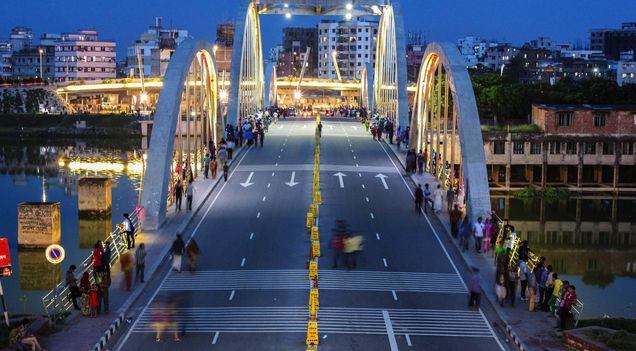
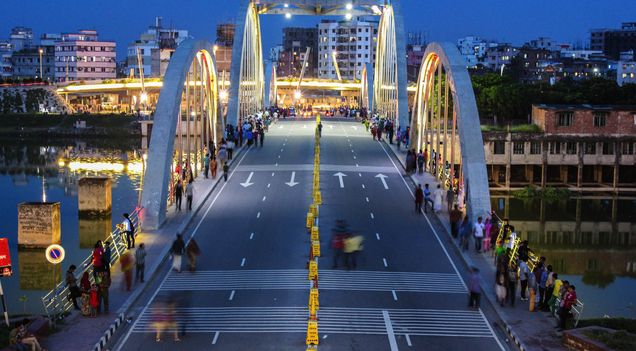
Dhaka, Bangladesh. Photo by Salman Preeom via Unsplash.

One of the most important concerns in low- and middle-income countries (LMICs) is increasing out-of-pocket healthcare expenditure (OOPE) made by households. OOPE is the amount of money paid by households to purchase health services and medicines to address a healthcare need. Healthcare costs are among the largest barriers to accessing health services and achieving universal health coverage, and among the most important factors associated with the reduction of the welfare of households. OOPE is also considered the most inequitable of all possible healthcare financing mechanisms.

Bangladesh, a country with over 160 million people and rapid urbanization, has made great progress in health, education and economic development over the past decades. However, Bangladesh faces significant challenges to improving the health and wellbeing of its population due to a lack of coherent social security or financial health protection. The country is experiencing a demographic shift toward longer life expectancy and an epidemiological transition from predominantly infectious diseases toward chronic diseases requiring sustained medication and life-long treatment. Bangladesh also spends a relatively low percentage of gross domestic product (GDP) on health compared to several other countries in the region and relies heavily on OOPE as the main source of health financing, with medicines as the largest component of OOPE.

A new journal article in PLOS ONE by Edson Serván-Mori, Md Deen Islam, Warren A. Kaplan, Rachel Thrasher and Veronika J. Wirtz studies household medicine expenditure and its associated determining factors to develop policies to protect households from financial hardship. Using the Bangladesh 2016-17 National Household Income and Expenditure Survey, the authors fill an important knowledge gap on OOPE on medicines in Bangladesh.

The article finds that health expenditures in Bangladesh are frequent and medicines represent nearly three quarters of all health-related OOPE. The findings show that poorer households pay proportionally much more for medicines than wealthier households and that the disparity is very large. Chronic diseases also have an increasing impact on household OOPE.

The results reflect a need for efficient financial protection for the population to protect households from increasing health and medicine expenditures. The authors determine that financial protection should support the poorest groups, ensure enrollment of rural households and incorporate outpatient medicines benefits, including those for non-communicable and chronic diseases.

Read the Journal Article

Out-of-Pocket Expenditure on Medicines in Bangladesh: An Analysis of the National Household Income and Expenditure Survey, 2016-17

Posted2 years ago
on Thursday, September 22nd, 2022

Share. Facebook Twitter Pinterest LinkedIn Tumblr Email

Related Posts

Extent of Knowledge about HIV and Its Determinants among Men in Bangladesh

February 10, 2025

An explanation of the stagnant under-5 mortality rate in Bangladesh using multilevel, multivariable analysis of three Demographic and Health Surveys

February 9, 2025

Bidhan for health insurance to develop public health

January 27, 2025

For real growth, invest more into education and health| The Daily Star

January 25, 2025
Add A Comment
Leave A Reply Cancel Reply

Subscribe to Updates

Get the latest news from raznitee.

We are social
  • Facebook
  • Twitter
  • Pinterest
  • Instagram
  • YouTube
  • WhatsApp
Latest Posts

Bangladesh’s political reset and the regional ripple effect

February 27, 2026

Jamaat chief flays Bangladesh president for interview, exposing political fault line again

February 27, 2026

Six seats, big goals: What’s next for Bangladesh’s student-led NCP party? | Bangladesh Election 2026 News

February 27, 2026
Follow us on social media
  • Facebook
  • Twitter
  • Pinterest
  • Instagram
  • YouTube
  • WhatsApp
Categories
  • Corruption (409)
  • Culture & Society (114)
  • Economic (1,904)
  • Environment (1,314)
  • Foreign Relations (359)
  • Health & Education (70)
  • Human Rights (5)
  • Politics (2,176)
  • Uncategorized (2)
Facebook X (Twitter) Instagram Pinterest Vimeo YouTube
  • About Us
  • Contact us
  • Disclaimer
  • Privacy policy
© 2026 Designed by raznitee.com

Type above and press Enter to search. Press Esc to cancel.