
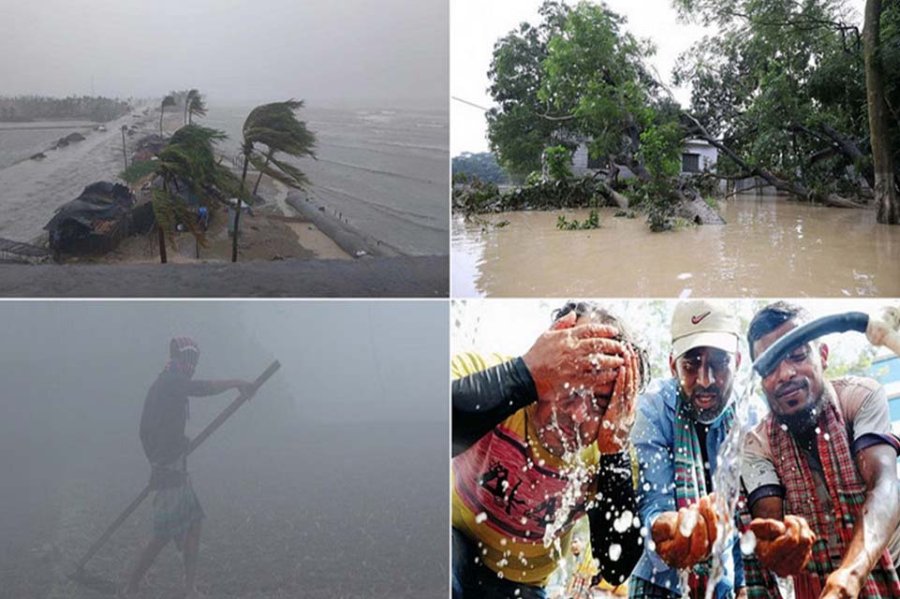
DHAKA – The fact that a climate debt has been accumulating in Bangladesh’s name is both alarming and unjust, especially considering the country’s minimal contributions to global climate crisis. According to a report citing data from the Dhaka-based research organisation Change Initiative, the country’s per capita climate debt climbed to nearly $80 (about Tk 9,500) in 2022 from just over $2 in 2009. This places an unfair burden on our citizens that they should not have to bear.
This debt has reportedly accumulated because Bangladesh has funded projects to address the impacts of climate change. In 2009, the Bangladesh Climate Change Trust Fund (BCCTF) was created to support adaptation and mitigation initiatives. Currently, around six to seven percent of the national budget is allocated for climate adaptation each year, with 75 percent of this funding coming from domestic sources. Still, Bangladesh had to take $12.78 billion in climate debt to finance multiple projects between 2009 and 2022.
This might not have been an issue if Bangladesh had received the international financial support pledged for climate-vulnerable nations. At COP15 in 2009, developed countries committed to providing $100 billion annually by 2020 to help vulnerable nations adopt adaptation and mitigation measures. But the developed countries—primary contributors to greenhouse gas (GHG) emissions—have failed to fulfil this commitment. In fact, in many cases, the pledges have turned into loans when those should have been grants (finance without any conditions).
Bangladesh, contributing just 0.56 percent of global GHG emissions, is ranked seventh in the long-term climate crisis index. Yet, between 2009 and 2022, the country received only $268 million in grants from the Green Climate Fund, Adaptation Fund, and LDC Fund. Meanwhile, as climate change worsens, the situation grows more severe: in coastal regions, around 3.6 crore people are now at heightened risk due to rising sea levels, river erosion, severe cyclones, and saltwater intrusion. Annual losses due to climate-related disasters are estimated at $3 billion, and climate-induced displacement is on the rise. Reversing these impacts in the country would require $230 billion, according to the National Action Plan (2023-2050). Why should we bear this cost when we have done so little to cause the crisis?
The refusal of developed countries to take full responsibility, leaving vulnerable nations saddled with debt, is unacceptable. Bangladesh must use COP29, which is being touted as the “Finance COP,” to emphasise the need for substantial increases in climate finance as grants, not loans. This is non-negotiable, and Bangladesh and other climate-vulnerable nations must stand firm. We hope the chief adviser attending COP29 will succeed in conveying the urgency of this situation and pressing for genuine climate justice.