
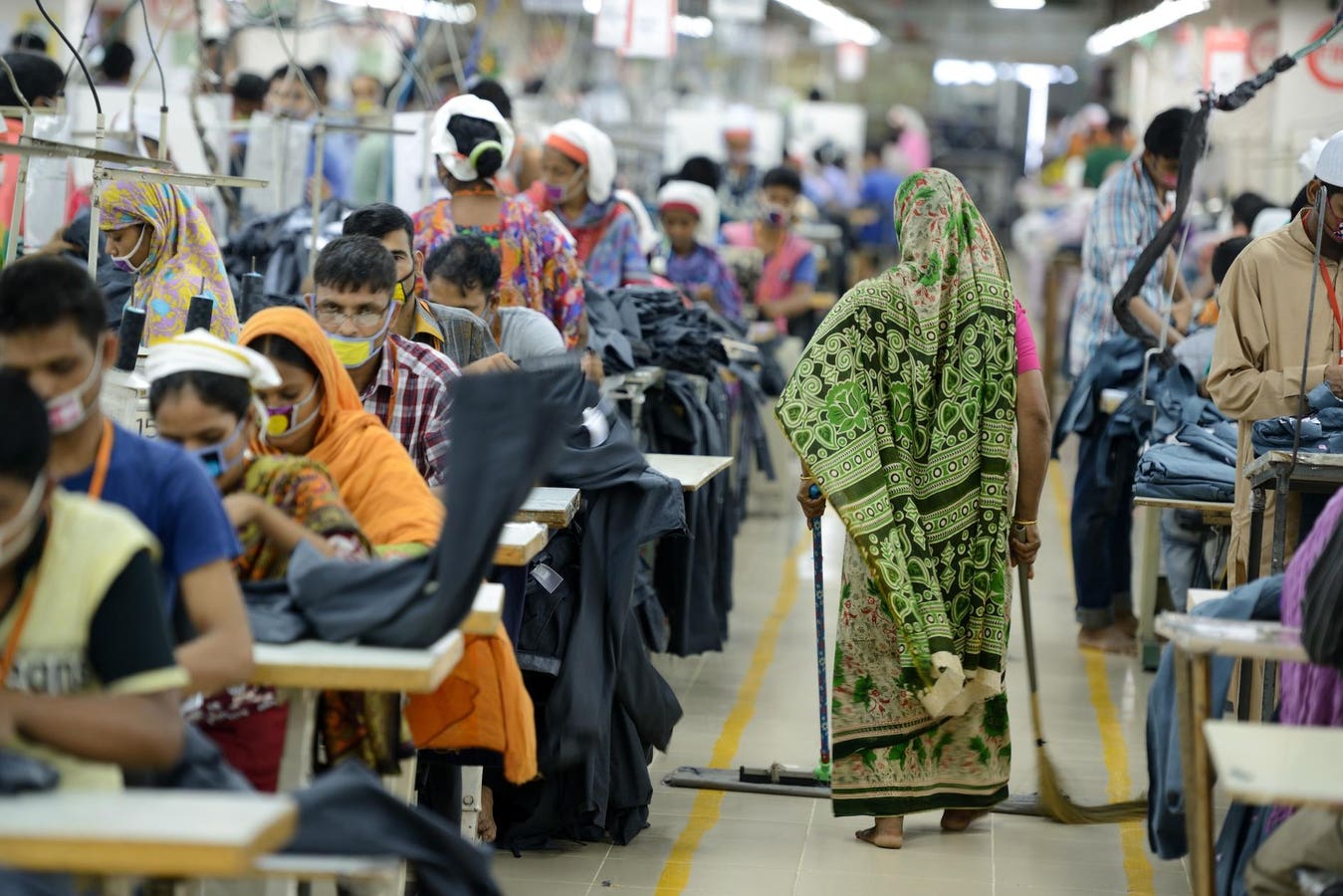
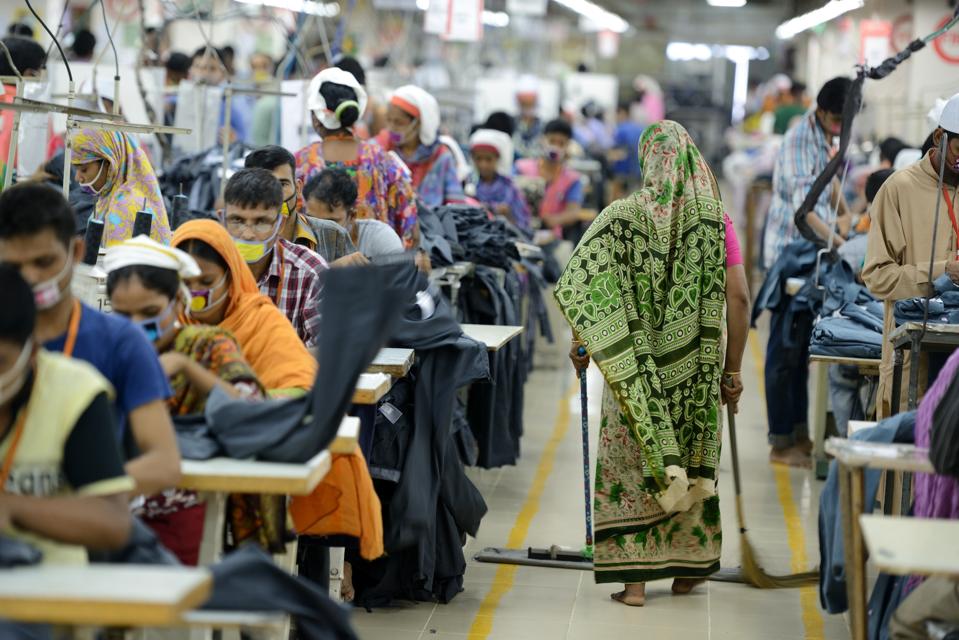
Textile factory in Savar, in the suburbs of Dhaka where work about six thousands employees.
In early August last year, Bangladesh witnessed a mini-revolution which saw the ouster of long-serving leader Sheikh Hasina and the installation of Nobel Peace Prize winner Muhammad Yunus as an interim leader. Expectations were riding high, particularly amongst the country’s youth, that Yunus would steady the political ship, combat corruption, and restore economic growth and opportunity.
While a year may be too short or even unfair to judge Bangladesh’s trajectory since the revolution, the verdict from the street is that Yunus and his technocratic-led administration has been way too cautious on all of the above fronts. Looming over this uncertainty is the growing impact of 35% Trump tariffs on the country’s once booming garments sector. Bangladesh needs a new economic plan and the interim government may be too timid to pursue it.
To illustrate Bangladesh’s dependence on textile exports, one must draw parallels with Saudi Arabia and its dependence on oil exports. In Bangladesh, textile exports of around $40 billion last year contributed to over 80% of the country’s export earnings, not very different from Saudi Arabia where the proportion is also around 80% for its oil exports. To put it simply, Bangladesh is the Saudi Arabia of the global garments industry, employing 4 million people and the sector contributes to around 10% to GDP.
What is likely to hurt the country even more is that competitors like Vietnam and neighbors India and Sri Lanka are likely to face lower tariffs. All of this could change of course if negotiations underway between Bangladesh and the Trump administration yield a lower tariff rate. However, the threat of higher tariffs has still sent a chill down the country’s economy, including rising unemployment.
In its most recent assessment, the International Monetary Fund (IMF) cautioned that Bangladesh’s economic challenges have increased since the popular uprising in the summer of 2024. “The timely formation of an interim government has helped stabilize political and security conditions, fostering a gradual return to economic stability” the IMF said on June 23. “However, the economic outlook has worsened due to persistent political uncertainty, continuation of tighter policy mix, rising trade barriers, and increasing stress in the banking sector.”
GDP growth is projected to be a low of 3.9% this year before rebounding to 5% in 2026, contingent upon lower tariffs. What are Bangladesh’s economic policy options at this vulnerable time? A positive trade deal with Washington D.C., currently being negotiated, will provide valuable breathing space. In theory, political uncertainty concerns could also recede once elections are held, as promised by Yunus, sometime next April. Analysts have warned that political polarization and unappetizing electoral options for voters may well yield a fractured vote.
Even so, Bangladesh needs a cohesive economic strategy which goes beyond garment exports. This will be difficult as the country’s economy is less broad-based compared with India and less cohesive compared with Sri Lanka, which has smartly recovered from its own revolution in 2022. The country does have latent strengths. Over three decades ago, interim leader Yunus pioneered the use of microfinance, which led to remarkable advances in gender empowerment and broader social indicators. The leader who will assume power after the April 2026 elections, which hopefully will be held, should build on those gains and make economic diversification the over-riding mantra. The fate and fortune of the country’s 171 million people will ride on these choices.