
US TARIFFS ON INDIA, CHINA
Former WB lead economist says
Staff Correspondent

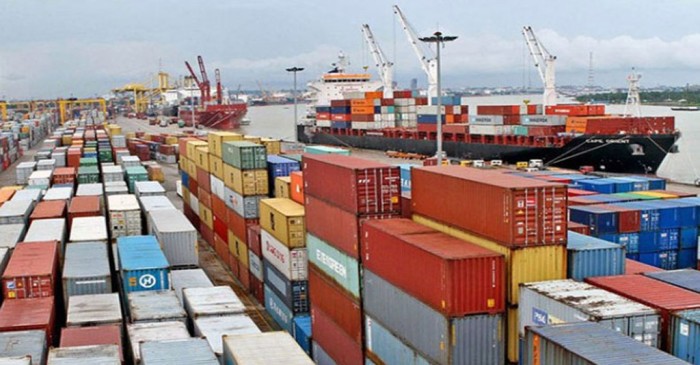
Bangladesh can gain additional $1.2-$2.32 billion worth of export orders in the 2025-26 financial year shifted from India and China due to higher tariffs imposed on these countries by the Trump administration.
Zahid Hussain, former lead economist at the World Bank’s Dhaka office, made the observation at ‘Moazzem Hossain Commemorative Lecture,’ organised by the Economic Reporters’ Forum at its office in the capital on Saturday.
He said that $1.2-$2.07 billion worth of export orders might divert from India alone due to a 30 per cent higher tariff, while those from China could range from $7 million to $250 million.
During his speech on ‘Macroeconomic Challenges and the Way Forward,’ Zahid said that economic activity in Bangladesh had picked up and overall stability had improved compared to FY23. However, he warned that conditions at the household level had worsened, with rising poverty and inequality.
‘Economic stability has been restored mainly due to the removal of those responsible for previous instability,’ he added,
He said that money laundering from the country had stopped, which accelerated a sharp fall in informal money transfers and a rise in foreign currency inflows.
However, the true condition of banks is yet to improve, as defaulted loans continue to increase despite the ending of large-scale laundering, he added.
He said that the impact of international developments was favourable to Bangladesh’s economy, highlighting a notable decline in value of the US dollar.
‘There has been a shift in economic management, with greater discipline in policymaking. But this does not mean all government decisions are correct,’ he added.
Despite these positive signs, Bangladesh remains stuck in middle-income trap, he warned, underlining the main obstacles that include ongoing power and energy crisis, a distressed banking sector, weaknesses in logistics system, underdeveloped labour markets and institutional decay.
Regarding reform efforts, he said that political will was necessary to ensure reform.
‘However, it alone is not effective as reform requires strong implementation capacity and coordinated action among the Council of Advisers, the administration, the business community and civil society,’ he added.
He said that without collaboration among these four groups, reforms would likely stall.
Regarding the current Council of Advisers, Zahid described them as ‘sincere and courageous in some areas others, yet helpless or directionless in some cases.’
Prominent businessman Mahbubur Rahman, president of the International Chamber of Commerce, Bangladesh, expressed disappointment that the changes anticipated following the July revolution had not materialised and that inequality had, in fact, worsened.
Doulat Akter Mala, president of the ERF, presided over the memorial lecture and general secretary Abul Kashem moderated it.
The ERF organises a commemorative lecture in memory of its founder president, late Moazzem Hossain, who was also founding editor of the English daily Financial Express.