
The Seamless Link
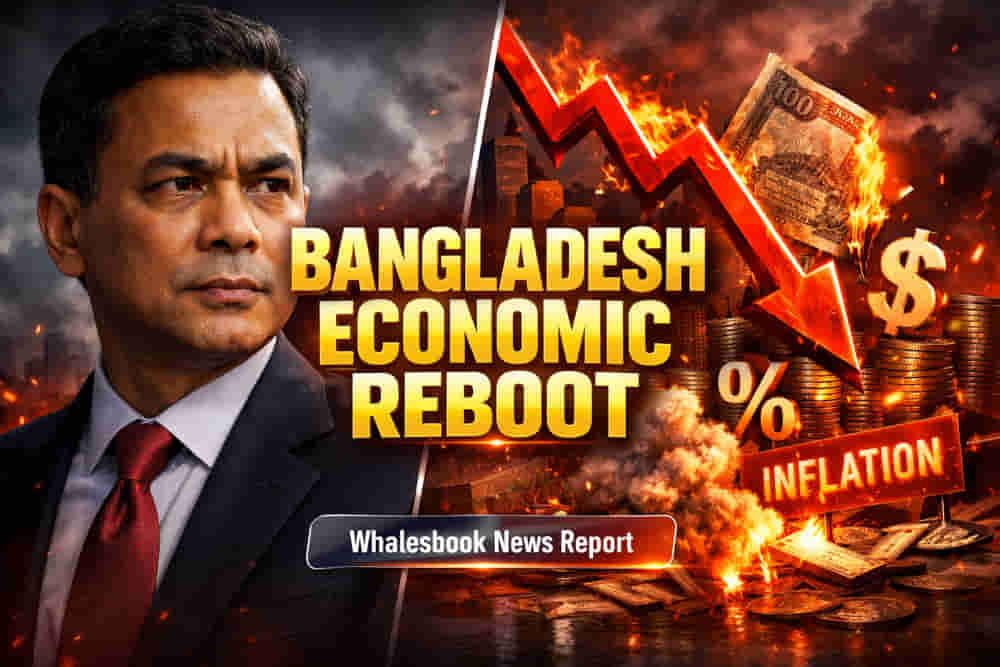
The transition to Prime Minister Tarique Rahman’s administration occurs against a backdrop of economic recalibration, moving away from the “Asian Tiger” comparisons of past decades. While the promise to double the nation’s GDP by 2034 is a powerful rallying cry, the path to achieving this ambition is fraught with significant hurdles that demand more than aspirational targets; it requires tackling fundamental structural issues and ensuring robust investor trust.
The Growth Imperative
Achieving a trillion-dollar economy by 2034, as pledged by the new administration, necessitates a sustained annual real GDP growth rate of approximately 9%. This figure starkly contrasts with recent economic performance and future projections. Bangladesh’s GDP growth for the fiscal year 2023-24 was estimated at 5.78% to 6.03%, with projections for 2025 ranging from 3.8% to 4.2%. Even the broader South Asian region is forecast to grow at 5.8% in 2025, a slowdown from previous expectations. Historical growth for Bangladesh has averaged around 6-7% annually over the past decade, with a notable dip to an estimated 3.3% in FY2024-25 due to political turmoil. The required doubling of GDP by 2034 demands a growth trajectory few countries have historically sustained without profound structural transformation, highlighting the potential disconnect between aspirational nominal targets and achievable real economic expansion.
Investor Confidence & Structural Hurdles
Rebuilding investor confidence is paramount, yet political instability continues to act as a significant deterrent. The aftermath of 18 months of political turbulence has been followed by elections that promise short-term stability but do not erase underlying structural risks. Foreign direct investment (FDI) inflows, crucial for capital formation and job creation, have remained modest, totaling $3.48 billion in 2022 and $3.25 billion in FY2022-23. The banking sector, a cornerstone of financial stability, faces amplified frailties, including weak liquidity and deteriorating asset quality, issues exacerbated by the recent political climate. Persistent inflation, hovering around 9-10.5% in 2023-2024, further erodes purchasing power and business viability. While the government has secured an IMF loan to bolster foreign reserves, addressing these deep-seated issues requires more than just financial support; it demands robust governance and effective policy implementation.
The Geopolitical Pivot
Prime Minister Rahman’s emphasis on economic needs driving foreign policy, including the pursuit of ASEAN membership, signals a strategic pivot aimed at leveraging regional integration. ASEAN integration offers potential benefits such as increased trade, investment, and job opportunities by reducing barriers within the bloc. This move could stabilize regional ties and tap into broader Southeast Asian economic networks. However, Bangladesh must also navigate complex geopolitical dynamics with regional giants like India and China, balancing economic interests with strategic autonomy. While ASEAN membership offers potential economic uplift, its success will depend on effective regional diplomacy and the country’s capacity to attract and retain investment amidst these geopolitical currents.
The Bear Case
The ambitious target to double the economy by 2034 may create a false sense of progress if it distracts from essential, often less glamorous, structural reforms. The feasibility gap between the required 9% annual growth and current projections presents a significant risk. Should these targets prove unachievable, it could lead to disillusionment and further undermine investor confidence. The nation’s economy is also vulnerable to external shocks, including global trade barriers and volatile commodity prices that impact inflation and import costs. Furthermore, credit rating agencies like Fitch and S&P have already downgraded Bangladesh, citing political instability and banking sector weaknesses. A misstep in policy, prioritizing headline growth figures over sustainable development, could trap Bangladesh in a cycle of economic fragility rather than foster genuine prosperity.
Forward Outlook
Despite challenges, Bangladesh is recognized for its potential as a fast-growing economy, with a young demographic poised to contribute to its workforce. The World Bank projects South Asia’s growth to reach 6.6% in 2025 before moderating to 5.8% in 2026. For Bangladesh specifically, forecasts vary, with some projecting around 4.6% for the current fiscal year while others indicate 4.2% for 2024. The new administration faces the critical task of translating its mandate into concrete policy actions that foster a stable investment climate, address inflation, strengthen the financial sector, and implement long-term structural reforms to bridge the ambitious growth targets with economic reality.
Disclaimer:This content is for educational and informational purposes only and does not constitute investment, financial, or trading advice, nor a recommendation to buy or sell any securities. Readers should consult a SEBI-registered advisor before making investment decisions, as markets involve risk and past performance does not guarantee future results. The publisher and authors accept no liability for any losses. Some content may be AI-generated and may contain errors; accuracy and completeness are not guaranteed. Views expressed do not reflect the publication’s editorial stance.