
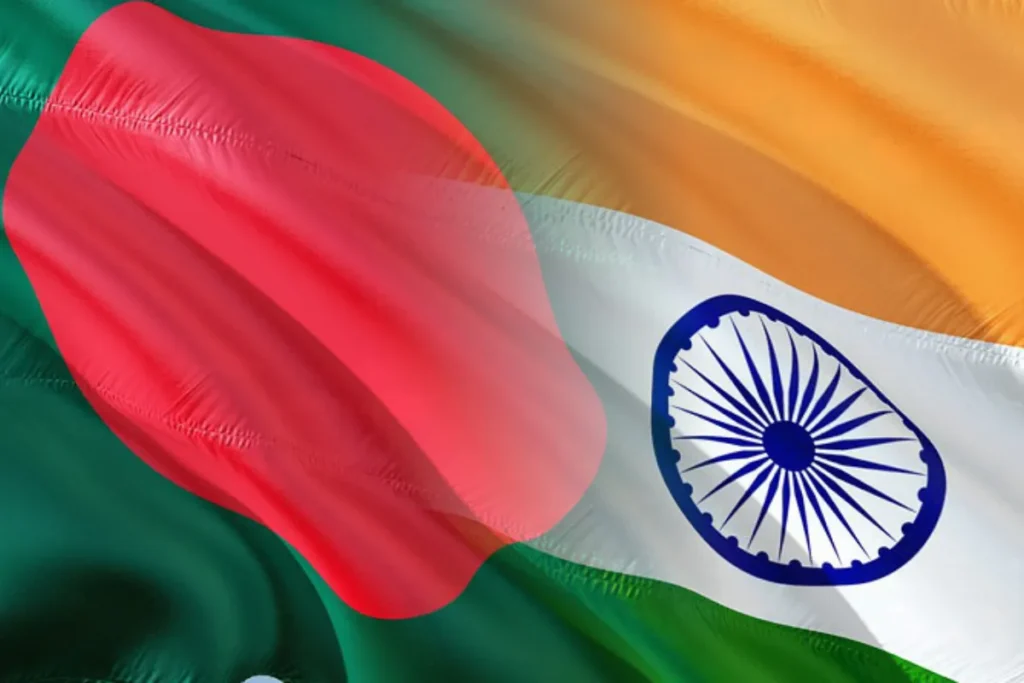
Bangladesh and India share a relationship shaped by history, geography, and culture. From the 1971 Liberation War—where India played a crucial role in Bangladesh’s independence—to contemporary economic and diplomatic ties, the bond between the two nations has largely remained stable. However, political turmoil in Bangladesh, triggered by the removal of Prime Minister Sheikh Hasina on August 5, 2024, has strained this long-standing partnership.
The current interim government in Dhaka, led by Nobel laureate Muhammad Yunus, lacks democratic legitimacy, raising concerns both domestically and internationally. Yunus, a celebrated economist but a political novice, heads a council of advisers with no prior experience in governance. Meanwhile, the role of the military in facilitating Hasina’s departure and backing the Yunus administration has fueled further instability. Additionally, the rise of student-led movements wielding disproportionate power has resulted in a volatile political environment, marked by censorship, repression, and religious intolerance.
India, which has maintained a historically pragmatic relationship with Bangladesh, now faces a diplomatic challenge. The erosion of democratic norms in Dhaka, coupled with an increase in anti-India rhetoric, has pushed bilateral relations into uncharted territory.
A key concern for India is the sharp deterioration in Bangladesh’s treatment of its Hindu minority. Shortly after the fall of the Awami League government, reports of communal violence against Hindus surfaced, leading to protests in Indian states like West Bengal, Assam, and Tripura. Matters worsened when a prominent Hindu priest from ISKCON Chinmay Das in Bangladesh was arrested on charges of sedition, sparking outrage among Indian political and religious groups.
Symbolic acts of defiance, such as Bangladeshi students stepping on the Indian flag, have further deepened the divide. These incidents have not only embarrassed many Bangladeshis but have also led to a strong reaction from Indian authorities. The closure of Bangladeshi consular offices in Assam and Tripura signals a major diplomatic setback.
The Indian government has historically supported democratic stability in Bangladesh, but the actions of the Yunus administration—especially its perceived alignment with anti-India elements—have made New Delhi increasingly wary. Bangladesh’s current leadership has failed to engage constructively with India, allowing anti-India narratives to gain traction. The political inexperience of the interim government has left it ill-equipped to manage bilateral relations effectively.
India has consistently maintained that it does not interfere in Bangladesh’s internal politics, but the current crisis presents a unique challenge. While New Delhi has refrained from direct intervention, it remains deeply concerned about developments in Dhaka. The visit of Indian Foreign Secretary Vikram Misri to Bangladesh was a strategic move aimed at reaffirming India’s commitment to stable relations. However, the Yunus administration’s demand for the extradition of Sheikh Hasina—who currently resides in India—has only widened the diplomatic rift.
India has made it clear that it will not hand over Hasina, recognizing the risks of politically motivated trials in Bangladesh’s volatile environment. The Indian government is aware that Hasina, a long-time ally, would not receive a fair trial under the current circumstances. This refusal has further aggravated tensions, with Yunus’s administration doubling down on its stance, making reconciliation increasingly difficult.
At the same time, India must carefully navigate its response. A complete breakdown in relations with Bangladesh could have security and economic implications. Bangladesh is a key trade partner, and instability in Dhaka could disrupt cross-border trade, affecting businesses and consumers on both sides. Additionally, the potential for increased migration into India due to political instability in Bangladesh is a significant concern.
The only viable solution to Bangladesh’s crisis is the restoration of democratic governance. The longer an unelected government remains in power, the deeper the instability will grow. The current administration’s inability to provide effective leadership, coupled with its failure to manage diplomatic ties with India, underscores the urgency of holding early elections.
A legitimately elected government in Dhaka would provide India with a stable partner to engage with diplomatically. While India has maintained diplomatic ties with different ruling parties in Bangladesh, it has always preferred working with governments that have clear mandates from the people. The democratic process ensures greater accountability, making it easier for both nations to navigate complex issues such as trade, security, and cross-border relations.
For Bangladesh, holding elections would not only restore its democratic institutions but also help mend its deteriorating international standing. The Yunus administration’s failure to address domestic grievances and its mismanagement of foreign relations have isolated Bangladesh at a time when regional cooperation is crucial. An elected government could take steps to rebuild trust with India and reassure other international allies that Bangladesh remains committed to democratic norms.
The political crisis in Bangladesh has created a precarious situation for India, forcing New Delhi to balance its strategic interests with its commitment to democratic values. While India cannot dictate Bangladesh’s political future, it must continue advocating for democratic stability in its neighboring country.
For Bangladesh, the lesson from this crisis is clear: sustained political stability cannot be achieved through military-backed interim regimes or unelected administrations. The restoration of democracy is not just a domestic necessity but a prerequisite for maintaining strong regional ties, particularly with India.
As both nations navigate this period of uncertainty, their shared history should serve as a reminder of the importance of cooperation. Bangladesh’s relationship with India has withstood many political shifts, and with the right leadership in place, it can recover from this crisis. The bridge to New Delhi has not yet collapsed, but it requires immediate diplomatic and political action to ensure that it remains intact for the future.