
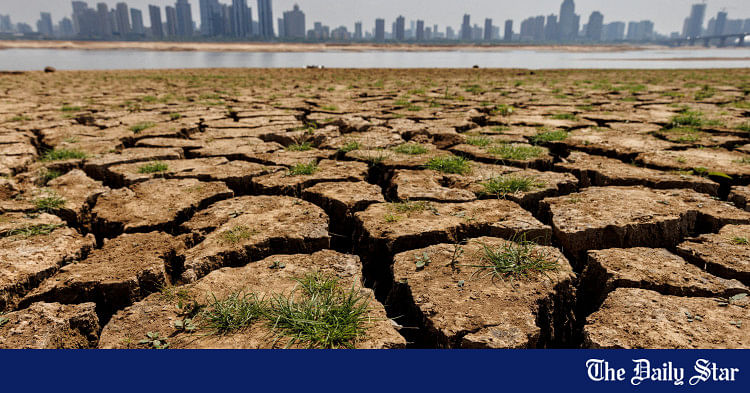

The incessant scare stories have driven some Western governments to enact immensely costly policies. File photo: REUTERS
“>
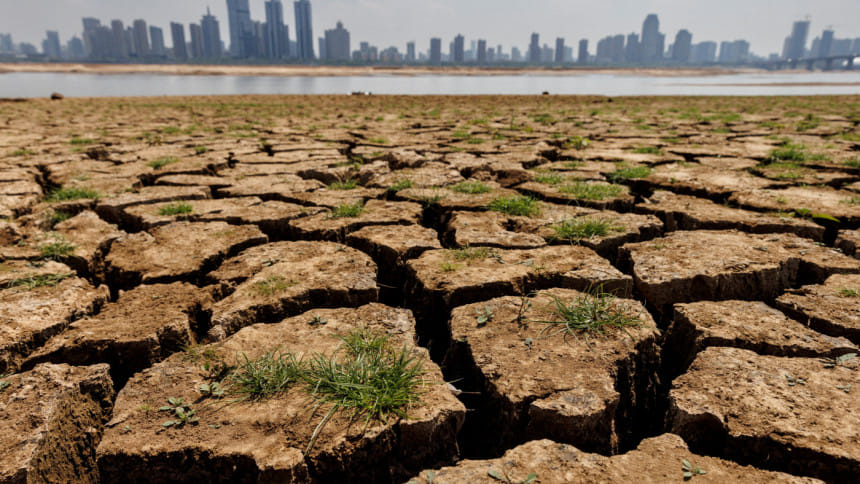
The incessant scare stories have driven some Western governments to enact immensely costly policies. File photo: REUTERS
In recent years, climate anxiety has taken over many Western governments and most international organisations. The result has been ruinous policies that help little but undermine future prosperity needed to deal with a host of other problems. Fortunately, Bangladesh can avoid repeating their mistakes.
Climate change is a man-made problem, but campaigners and irresponsible politicians have blown this out of proportion and call it an existential threat that could eradicate humanity. No further action on climate will result in a problem, but it would not be the end of the world.
 For all latest news, follow The Daily Star’s Google News channel.
 The incessant scare stories have driven some Western governments to enact immensely costly policies. The UK has gone further in climate policies over the past two decades than nearly any other country. As a result, the inflation-adjusted electricity price, weighted across households and industry, has increased significantly from 2003 to 2023. By comparison, the US electricity price has remained almost unchanged over the same period.
At the same time, the rich world is increasingly realising that it faces many other expensive challenges, including an ageing population bringing higher pension and healthcare costs, crumbling infrastructure, poor educational outcomes and a need for larger defence spending. Yet the EU has committed itself to climate goals which will cost it severely.
Bangladesh should not repeat the mistakes made by Western countries by diving headlong into ineffective climate policies. It has a record of huge achievements, vast potential, and—like every other country—a myriad of complex challenges. Bangladesh must get the balance right between the challenges and opportunities in front of it. A considered, balanced response to climate change means rolling out solar and wind in the areas where that is sensible, while realising that the longer-term solution to climate change must be innovation.
In 1970, when hunger stalked the developing world, the answer was not to make the whole world eat less to redistribute food. Innovation through the Green Revolution dramatically increased yields and brought better varieties and more fertiliser. Likewise, we will not solve climate change by being poorer, colder and with less power. Instead, the leading industrial nations that are responsible for the majority of carbon emissions need to ramp up innovation in future generations of low-carbon energy. Once they innovate clean energy to be cheaper than fossil fuels, everyone will be able to switch.
Adaptation is another vital climate change response. Farmers across Bangladesh know this already: they adapt to suit changes in the climate. In cities, we know that adaptive infrastructure like green areas, more reflective surfaces, and water features helps keep temperatures cooler. Adaptation can avoid a large part of the climate problem.
Finally, poverty alleviation is a crucial part of the response to climate change. Lifting people out of poverty reduces their vulnerability to climate shocks like heat waves or hurricanes. Moreover, wealthier, more prosperous societies can afford better protection from the elements, along with better nutrition, healthcare and social protection. Wealthy countries can spend more on environmental protection, and all other good things.
Being smart about climate change also means that governments will have more resources to invest in solving other important challenges.
One such investment: we should boost maternal and newborn health through a simple package of basic emergency obstetric care and more family planning. Globally, this could save the lives of many mothers and newborns every year. Another phenomenal investment: agricultural research and development to help Bangladesh’s farmers become more efficient.
Bangladesh has immense possibilities if it can seize the opportunity to invest wisely and judiciously. It should avoid the singular climate focus of some Western countries and invest based on rigorous economic science in areas where it can make the most impact and the greatest progress.
Bjorn Lomborg is president of the Copenhagen Consensus, visiting fellow at Stanford University’s Hoover Institution, and author of False Alarm and Best Things First.
Views expressed in this article are the author’s own.
Follow The Daily Star Opinion on Facebook for the latest opinions, commentaries, and analyses by experts and professionals. To contribute your article or letter to The Daily Star Opinion, see our guidelines for submission.