
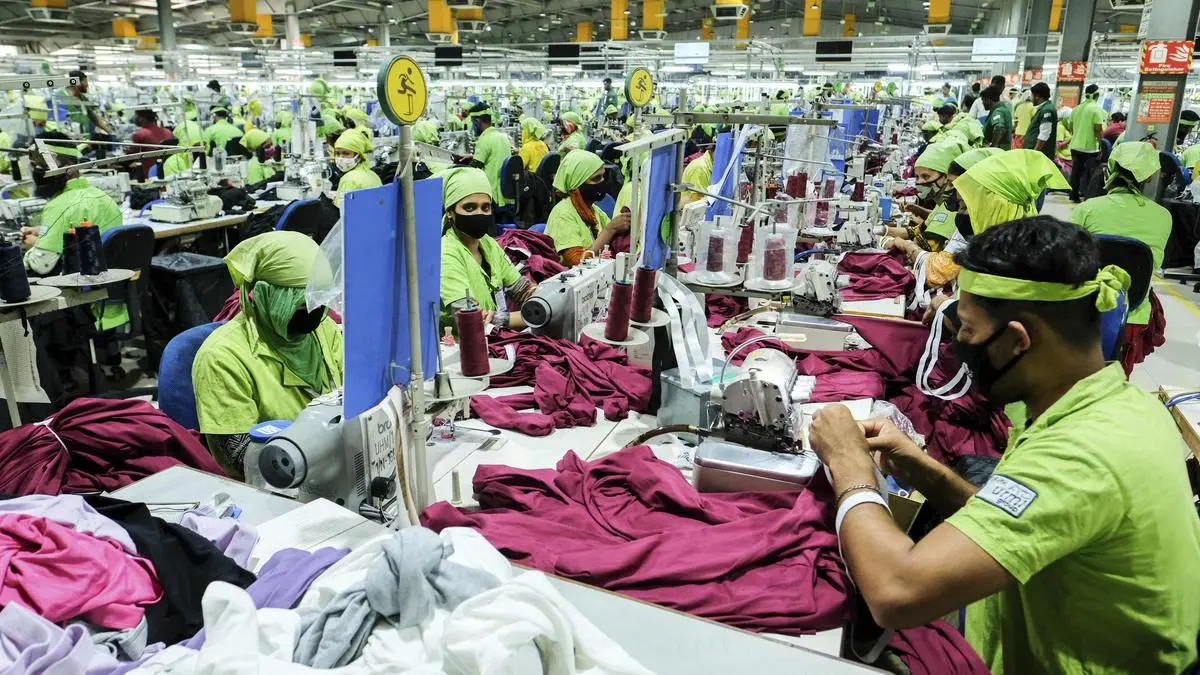
After months of investor hesitancy triggered by acute political turbulence following the July–August 2024 student protests, Sheikh Hasina’s resignation, and the formation of an interim government, Bangladesh is registering tangible foreign capital inflows at a moment when its economic narrative is being rewritten. The return of foreign interest coincides with the stewardship of an interim government and the announcement of a fresh electoral timetable, both of which have recalibrated expectations in global financial circles.
With a national poll scheduled for February 12 this year, the prospect of a return to a fully elected government within less than two months has lifted sentiment among investors who had remained on the sidelines amid uncertainty.
Bangladesh, a nation of more than 180 million people, possesses one of the youngest populations in Asia, with nearly 60 per cent under the age of 30. At a time when demographic ageing constrains growth across much of the developed world and parts of East Asia, such a workforce represents a rare strategic advantage.
Yet optimism about demographics alone cannot obscure a persistent gap between economic performance and perception. Critics of the interim administration have labelled its economic stewardship uninspiring, often failing to acknowledge the fragility of the macroeconomic foundations inherited when it assumed office.
Before the political upheaval, Bangladesh routinely posted headline growth figures of 6 to 7 per cent a year, burnishing its reputation as a rising South Asian economy. Those figures, though, masked deep structural weaknesses: chronically weak revenue mobilisation, widening current account deficits, politically influenced credit allocation, and a regulatory environment riddled with bottlenecks. These vulnerabilities eroded investor confidence long before the crisis erupted, leaving the economy exposed when political stability fractured.
The interim government, led by Nobel laureate Muhammad Yunus, has resisted the temptation to disguise these weaknesses behind optimistic statistics. It has opted instead for an unusually candid appraisal of economic reality. That frankness, though politically risky, has begun to resonate with international investors who value transparency over theatrics.
The numbers behind the rebound
In fiscal year 2024–25, net foreign direct investment (FDI) rose by nearly 20 per cent year on year to approximately $1.7 billion, marking the first meaningful rebound after several years of stagnation in foreign capital flows.
A closer examination of the numbers reveals a more complicated picture. The increase in FDI has been driven largely by reinvested earnings, which rose by over 23 per cent, and intra-company loans, which surged by more than 180 per cent. Equity capital—the component most closely associated with fresh investor commitment—fell by about 17 per cent and accounted for only one-third of total inflows, down from nearly half the previous year. Confidence is returning, but cautiously, and the scale of new capital formation remains insufficient to drive rapid structural transformation.
Several developments stand out. The most consequential is the expansion of Chittagong Port, a strategic infrastructure project valued at roughly $1.1 billion and backed by substantial foreign financing. Denmark’s A.P. Moller–Maersk Group has committed around $550 million over the next three years, while the World Bank has pledged $650 million for a climate-resilient breakwater and dredging works. For a trade-dependent economy, the modernisation of its primary port is not merely symbolic but essential to long-term competitiveness.
Early signs of industrial diversification are emerging alongside infrastructure. The inauguration of a Chinese HONOR smartphone assembly plant in Gazipur marks a rare foray into consumer electronics manufacturing, a sector long overshadowed by ready-made garments. The Netherlands has unexpectedly emerged as Bangladesh’s largest source of FDI in the most recent fiscal year, contributing nearly $454 million, or about 27 per cent of total inflows—a dramatic increase from the previous year. Dutch investment has focused on food processing and energy, suggesting a gradual broadening of Bangladesh’s industrial base.
Other countries remain important contributors, including the United Kingdom, China, South Korea, Singapore, and India, though their year-on-year growth has been far more modest. Net investment from the United States turned negative for the first time in recent records, reflecting divestments in the energy sector amid political uncertainty. This retreat underscores a broader trend among global investors: a willingness to maintain existing exposure while deferring new commitments until regulatory clarity and political stability are firmly re-established.
Fragile foundations
The macroeconomic backdrop against which these shifts are occurring remains fragile. After slowing sharply in the wake of political upheaval, Bangladesh avoided outright contraction but settled into a lower growth trajectory. The International Monetary Fund (IMF) has projected GDP growth of around 4.9 per cent for the current fiscal year, well below the highs of the previous decade. Inflation, while easing from double-digit levels, remains elevated, particularly for food staples, eroding household purchasing power and constraining domestic demand.
External assistance has provided breathing space. Multilateral lenders, including the World Bank, have signalled budget support of around $500 million, reflecting cautious international backing for the stabilisation effort. Yet fiscal space remains limited. Tax revenues lag far behind regional peers, and rising debt servicing costs squeeze the government’s ability to invest in infrastructure and social protection. The head of the National Board of Revenue has openly warned of the risk of a debt trap—a rare public acknowledgment of the scale of the challenge.
Nowhere are the structural weaknesses more evident than in the financial sector. When the interim government assumed office, the banking system was already deeply compromised. Officially reported non-performing loans exceeded Tk 1.7 trillion (about $14 billion), or roughly 11 per cent of outstanding credit, though independent analysts believe the true figure is significantly higher due to years of loan rescheduling and evergreening. Political interference in lending decisions, regulatory forbearance, and poor governance had hollowed out balance sheets across the sector, particularly among several large Islamic banks with vast deposit bases and fragile capital positions.
Breaking with past practice, the Yunus administration empowered the central bank to reassert supervisory authority and pursue long-delayed corrective action. Boards of troubled banks were reconstituted, and for the first time in years, consolidation was pursued rather than avoided. Five crisis-ridden Islamic banks (First Security Islami Bank, Global Islami Bank, Union Bank, Exim Bank, and Social Islami Bank) were merged into a single institution holding more than Tk 1.1 trillion ($9 billion?) in deposits. Shareholders absorbed losses, capital structures were rebuilt, and withdrawal restrictions were gradually lifted, stabilising depositor confidence. These measures signalled a shift away from politically motivated bailouts toward transparency and resolution, though analysts caution that cleaning up legacy bad loans could take years and require substantial additional capital.
Remittances as a lifeline
Private sector investment has been slow to respond. Imports of capital machinery fell by about 25 per cent in fiscal year 2024–25, and letters of credit for such equipment declined by similar margins. Private credit growth dropped to around 6.5 per cent, a historic low that reflects both weak demand and banks’ reluctance to lend amid balance sheet stress. High borrowing costs and lingering uncertainty have discouraged firms from expanding capacity, reinforcing a cycle of subdued investment.
Against this sobering backdrop, remittances have emerged as the economy’s most reliable stabiliser. Expatriate Bangladeshis sent home a record $32.8 billion in 2025, a more than 20 per cent increase from the previous year. These inflows helped rebuild foreign exchange reserves to above $33 billion, easing pressure on the balance of payments and stabilising the currency. Structural factors have played a role: tighter controls on informal money transfer channels, competitive exchange rates, and government incentives have encouraged migrants to use formal banking systems. Confidence in the domestic financial system, though fragile, has improved enough to stem capital flight through informal networks.
Yet remittances, for all their importance, cannot substitute for productive investment. Compared with peers such as Vietnam and India (FDI-to-GDP ratios DATA?), Bangladesh’s FDI as a share of GDP remains modest (?), reflecting deep institutional barriers. Complex tax regimes, inconsistent policy implementation, and regulatory opacity continue to deter long-term capital. Fiscal incentives alone are insufficient; what investors seek is predictability, efficient dispute resolution, and credible governance.
There are signs of latent interest. The Bangladesh Investment Summit 2025 generated substantial declarations of intent across infrastructure, logistics, digital services, and higher-value manufacturing. Translating these pledges into realised projects will take time, but the interest itself suggests that Bangladesh’s fundamentals have not been irreparably damaged. The country’s demographic dividend, strategic location near major Asian supply chains, and impending graduation from least-developed-country status by 2026 could further enhance its appeal if reforms are sustained.
The interim government has recognised that structural reform is no longer optional. Simplifying tax policy, broadening the tax base, improving compliance, and strengthening institutions are essential not only to restore fiscal health but also to signal seriousness to global capital. Without such reforms, Bangladesh risks repeating a cycle of growth without resilience.
Faisal Mahmud is the Minister (Press) of Bangladesh High Commission in New Delhi. The views expressed here could reflect those of the Government of Bangladesh.
Also Read | Bangla turmoil and the question of who gets to play the beast
Also Read | Tarique Rahman is back. Now what?