
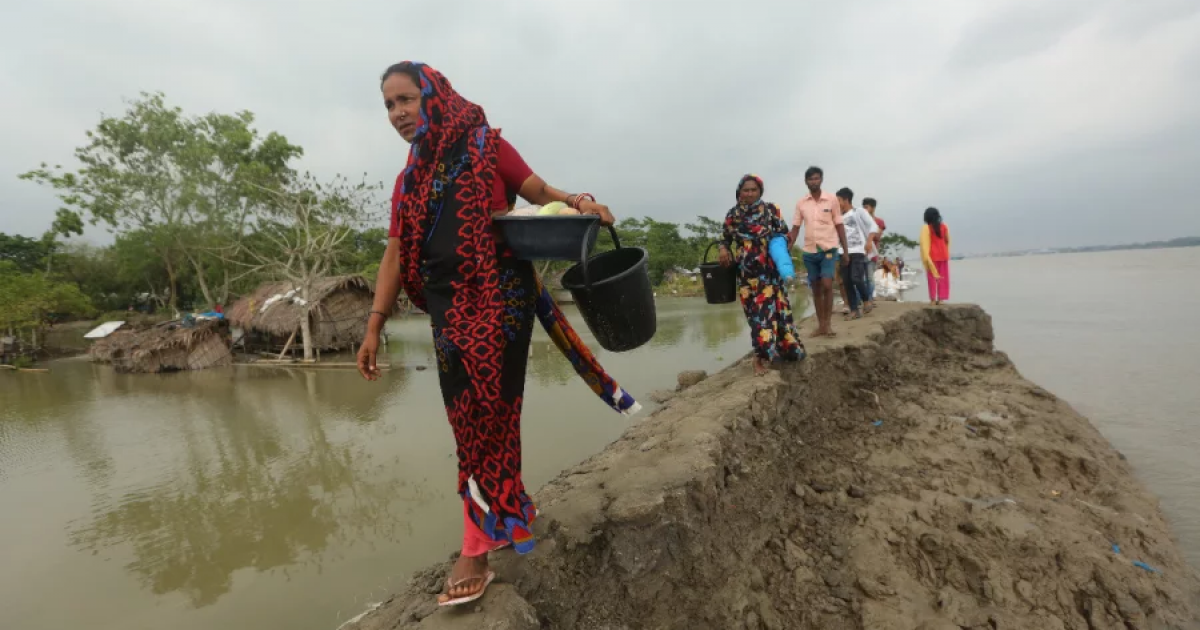
A global climate finance system dominated by loans is pushing Bangladesh and dozens of other climate-vulnerable nations into a dangerous debt spiral, warns the Climate Debt Risk Index 2025 (CDRI’25), released Sunday by Change Initiative and Young Power in Social Action (YPSA).
Covering 55 frontline countries, the index finds 47 already facing High or Very High climate-linked debt risk, with Bangladesh projected to slip into the most severe category by 2031 if current financing patterns persist.
Analysts say the combination of loan-heavy financing, slow disbursement and extreme climate vulnerability is locking countries least responsible for global emissions into what they describe as a “structural climate-debt dependency.”
According to researchers Sabrin Sultana and Samira Basher, who presented the findings, the imbalance is stark.
In 2023, the 55 climate-exposed countries paid $47.17 billion to external creditors but received only $33.74 billion in climate finance.
Per-capita climate-labelled debt now stands at $23.12 on average across these countries, with South Asia carrying the heaviest burden.
The report warns that the pattern reveals an alarming trend, “climate hardship is financing banks, not protection,” and notes that rising climate-related debt ratios in countries such as Cabo Verde, Niger, Solomon Islands and Bangladesh are already squeezing fiscal space needed for adaptation and resilience.
The index, which integrates indicators related to financing structure, climate exposure, income, poverty and creditworthiness, projects a significant worsening of vulnerability by 2028 and 2031.
Countries such as Djibouti and Guinea are expected to shift into the Very High risk category within the next three years.
By 2031, Bangladesh, Liberia and Uganda are among those projected to enter the same category if current financing patterns continue.
Small island developing states face some of the steepest per-capita debt pressures, while nations in the Sahel and coastal West Africa remain in what the report describes as “systemic danger” due to recurring and intensifying climate shocks.
One of the most concerning findings is the extremely weak ratio of disbursement to commitment.
Angola’s disbursement rate stands at only 0.18, Bangladesh at 0.63 and the Solomon Islands at 0.33, with Yemen delivering a mere 0.13.
The loan-to-grant imbalance is equally stark; Bangladesh’s climate finance mix shows a ratio of 2.70, far above Nepal’s 0.10.
Several African countries are experiencing creeping increases in loan shares, while many small island states continue to rely on small, unpredictable grants.
The sectoral breakdown further illustrates the problem.
Nearly a third of global climate finance flows into large, loan-funded energy projects, while essential sectors such as health, disaster preparedness, agriculture, population protection and ecosystem restoration receive only marginal support.
The report argues that this funding pattern suggests climate finance is being directed toward infrastructure that “looks bankable on paper” but does not actually safeguard vulnerable communities.
The study also highlights recurring problems involving misclassification and inflation of climate finance figures.
Billions of dollars labeled as climate spending have in reality gone to coal plants, hotels, luxury retail and canceled projects.
The report cites examples such as Japan counting coal power projects in Bangladesh and Indonesia as climate finance, US funds supporting a Marriott hotel in Haiti and Italian financing for luxury chocolate shops in Asia.
The World Bank has reported more than $41 billion in untraceable climate-related spending.
Analysts warn that these distortions compromise global trust and inflate the true scale of support to vulnerable nations.
Lead author M Zakir Hossain Khan said many countries are effectively “paying twice, first for the damage, then for the debt.”
He argued that climate funds “arrive late and arrive as loans,” weakening the fiscal space needed to protect people and ecosystems.
Research analyst Samira Basher said frontline youth increasingly question why nations most affected by the climate crisis must borrow money “to survive a disaster they did not cause.”
Experts from YPSA, LUCCC and CANSA Bangladesh added that Bangladesh and other vulnerable countries are already experiencing rising poverty, migration and livelihood losses linked to climate-driven debt pressure.