
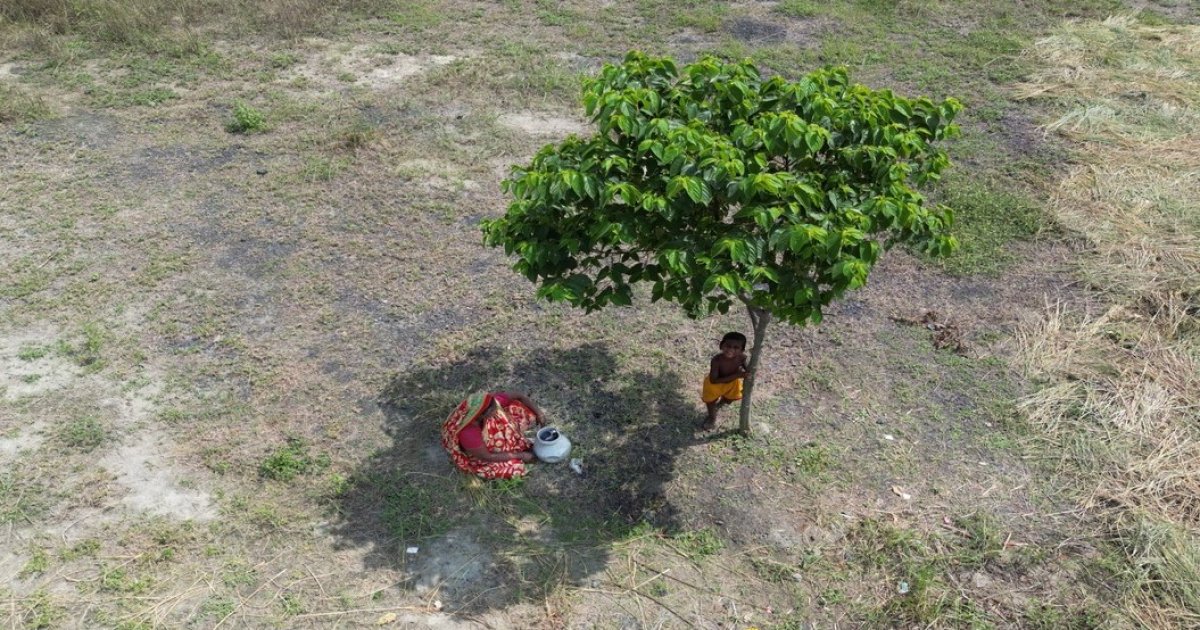
Bangladesh’s temperature could rise by as much as 4.5°C by the year 2100, according to a recent report.
The report “The Future Climate of Bangladesh” was unveiled on Wednesday at Hotel Sheraton Dhaka, an initiative of the Bangladesh Meteorological Department (BMD), Save the Children, and the Norwegian Meteorological Institute.
The report provides a comprehensive and evidence-based analysis to date of Bangladesh’s long-term climate projections, warning of a significant temperature rise.
The report stated that the country is likely to experience more intense heatwaves, rising sea levels, heavier rainfall, and a substantial increase in climate-related health risks.
Senior government officials, climate scientists, development partners, and members of the media attended the event. A keynote presentation was delivered by the Norwegian Meteorological Institute, followed by a detailed technical session led by BMD.
The report highlights that severe and widespread heatwaves could last for 15 to 25 days during the peak season, up to 18% of Bangladesh’s coastal land faces the risk of permanent inundation, and monsoon rainfall could increase by as much as 15%, raising the risk of floods and landslides. It also warns that a 1% rise in extreme heat could increase the risk of child stunting by 56%.
Speaking as the chief guest, Norwegian Ambassador Håkon Arald Gulbrandsen said: “This report clearly presents Bangladesh’s climate projections. Temperatures may rise by up to 4.5°C by 2100, sea-level rise will endanger coastal communities, and intense heatwaves will put pressure on health, agriculture, and access to safe water. These are important warnings for all of us.
He added: “For the Norwegian government, supporting Bangladesh, BMD, and national partners in strengthening climate resilience remains a priority. Bangladesh is a strong and resilient nation, and this report reminds us that sustained commitment to climate action is essential. With elections ahead, I hope political parties will integrate these projections into their future planning.”
Chair of the session and BMD director, Md Momenul Islam, said: “Climate change is accelerating, and global warming is now clearly visible. According to the World Meteorological Organization, 2024 is among the warmest years ever recorded, and this October has already been marked as one of the warmest in global history.”
He added: “If greenhouse gas emissions continue at current rates, Bangladesh could see a temperature rise of 1 to 2°C by mid-century and 1.5 to 4.5°C by the end of the century. Rainfall patterns will also change significantly, with monsoon rainfall potentially increasing by up to 15%, particularly in the northern regions.”
He also said that Bangladesh is already implementing key adaptation measures under the National Adaptation Plan (NAP), including climate-resilient agriculture, food and nutrition security, sustainable urbanization, and nature-based solutions. These initiatives demonstrate how crucial scientific climate projections are for tackling future risks.
Save the Children Bangladesh emphasized the urgent need to apply future climate projections to anticipatory action, community preparedness, and child-centred climate resilience.
They noted that evidence-based planning will be essential for protecting vulnerable populations from growing climate disasters.
“The Future Climate of Bangladesh” was jointly developed by BMD and the Norwegian Meteorological Institute, with technical support from Save the Children. The report provides essential scientific foundations for national planning, adaptation strategies, and disaster risk reduction efforts.