
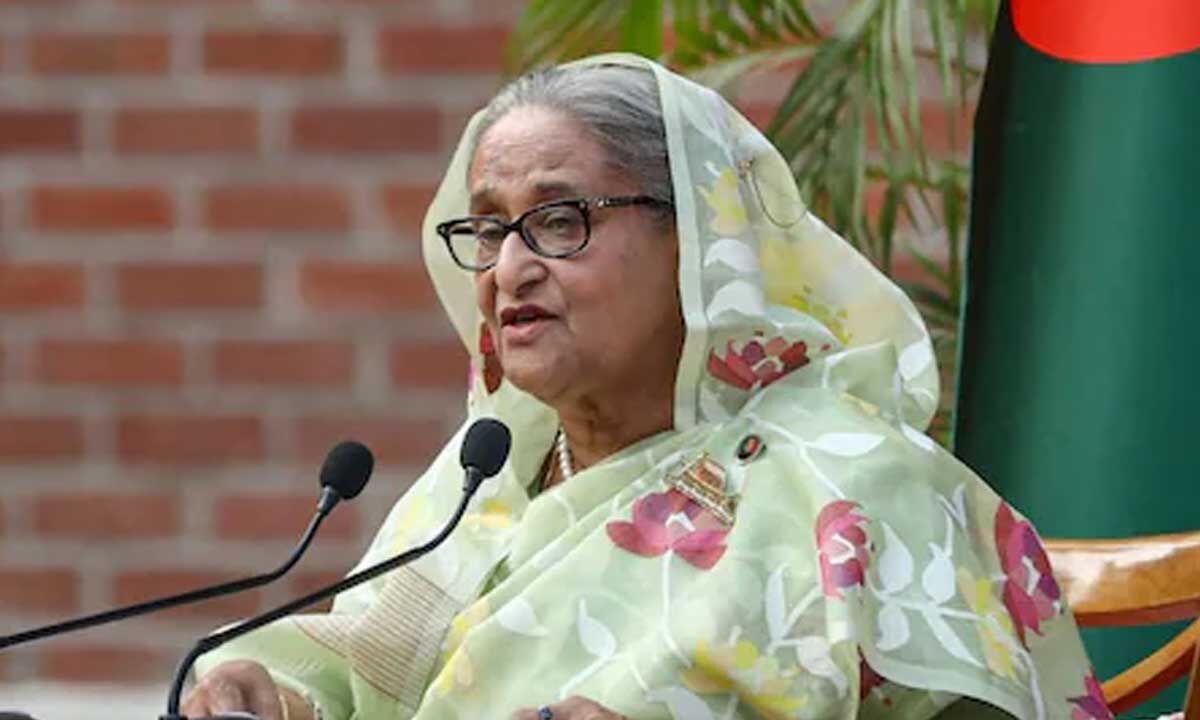
Bangladesh’s interim government has voiced strong concern over former prime minister Sheikh Hasina’s first public address from India, describing it as “shocking” and warning that the speech could disrupt political stability ahead of the country’s general elections scheduled for February 12. Hasina, who is living in exile, delivered a fiery message accusing the interim administration of violence, repression and failure to ensure free and fair polls.
Reacting to her remarks, Dhaka said permitting Hasina to speak at a public event in New Delhi set an alarming precedent and could have serious implications for future relations between Bangladesh and India. Officials cautioned that such statements risk inflaming tensions at a sensitive moment in the country’s democratic transition.
In a statement issued by the foreign ministry and carried by state-run news agency Bangladesh Sangbad Sanstha, the interim government said it was both “surprised” and “disturbed” that Hasina was allowed to make political comments from Indian soil targeting the current leadership. The ministry warned that her remarks threatened peace, security and the ongoing transition process.
The Bangladeshi government also reiterated that India has yet to act on its obligations under the bilateral extradition treaty, despite repeated requests for Hasina’s return following a death sentence handed down by the International Crimes Tribunal last year. The ruling related to allegations that she ordered the use of lethal force during protests in August 2024. Dhaka said it was deeply aggrieved that, instead of being extradited, Hasina was permitted to make what it termed inciteful and inflammatory statements.
According to the foreign ministry, allowing the event to take place and enabling what it described as hate speech ran counter to established norms of interstate relations, including respect for sovereignty, non-interference and good neighbourly conduct. Officials warned that such actions could seriously undermine the ability of any future elected government in Bangladesh to build and sustain constructive ties with India.
The interim administration further said that recent statements by leaders of the Awami League highlighted the reasons behind the ban on the party’s political activities. It warned that the government would hold the group responsible for any incidents of violence or unrest in the run-up to the elections and would take firm measures to thwart any attempts to destabilise the process.
In her address, delivered via a pre-recorded audio clip played at a Delhi event, Hasina launched a scathing attack on interim chief Muhammad Yunus. She accused him of presiding over what she called an era of terror, alleging widespread human rights abuses, persecution of minorities, suppression of the media and a collapse of law and order. She also claimed her government was removed through a carefully planned conspiracy in August 2024, though she did not present evidence to support the allegation.
Hasina urged citizens to unite to restore the constitution and protect minority communities, and called for a United Nations-led independent investigation into developments over the past year. Her speech came just as campaigning began for the February 12 parliamentary elections, from which the Awami League has been barred.