
Close Menu
  • Home
  • Editorial
  • Politics
  • Economic
  • Sports
  • Religion
  • Contact us
  • About Us
Donate
Hand picked for you
  • Bangladesh’s political reset and the regional ripple effect
  • Jamaat chief flays Bangladesh president for interview, exposing political fault line again
  • Six seats, big goals: What’s next for Bangladesh’s student-led NCP party? | Bangladesh Election 2026 News
  • Is Bangladesh ready for environmental democracy?
  • Economic recovery still fragile: MCCI

Subscribe to Updates

Get the latest news from raznitee.

Reach out to us
  • Facebook
  • Twitter
  • Pinterest
  • Instagram
  • YouTube
  • WhatsApp
Facebook X (Twitter) Instagram
raznitee
Contact us
  • Home
  • Editorial
  • Politics
  • Economic
  • Sports
  • Religion
  • Contact us
  • About Us
raznitee
Facebook X (Twitter) Instagram
Contact us
Home»Environment»Bangladesh Winter Disappearing | No winter in Bangladesh by 2100? | Bangladesh Warming to Rise by 4.5 Degrees by 2100
Environment

Bangladesh Winter Disappearing | No winter in Bangladesh by 2100? | Bangladesh Warming to Rise by 4.5 Degrees by 2100

November 24, 2025No Comments1 Min Read
Facebook Twitter Pinterest LinkedIn Tumblr Email
Climate .jpg
Share
Facebook Twitter LinkedIn Pinterest Email

Thu Nov 20, 2025 10:31 PM
Last update on: Fri Nov 21, 2025 08:28 AM

New study warns of temperatures rising by 4.5°C if greenhouse gas emissions not reduced


Thu Nov 20, 2025 10:31 PM Last update on: Fri Nov 21, 2025 08:28 AM

Star file photo

“>


Star file photo

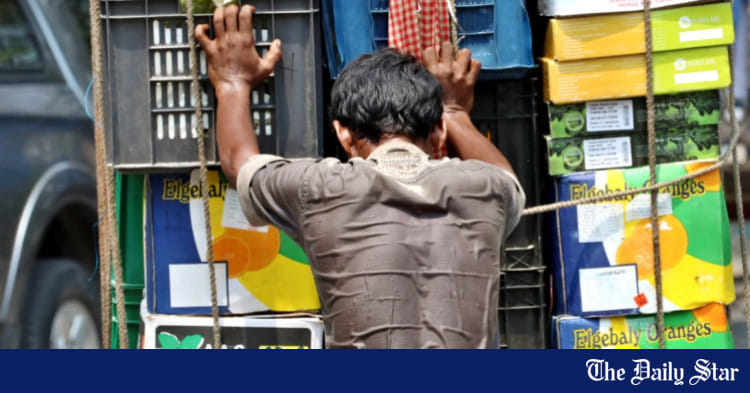
Bangladesh’s average temperature could rise sharply in the coming decades — potentially by up to 4.5°C by 2100 — if greenhouse gas emissions are not reduced, a new study has warned.

The study warns that winter could vanish entirely by the century’s end, with nearly 18% of the nation’s coastal land at risk of going underwater.

Google News LinkFor all latest news, follow The Daily Star’s Google News channel.

Rising sea levels and intensified flooding could also displace around 900,000 people across Bangladesh by 2050, the study also said.

The findings were presented in a new research report titled “Bangladesh’s Future Climate”, which was released on Wednesday at a Dhaka hotel.

The report was jointly prepared by the Bangladesh Meteorological Department and the Norwegian Meteorological Institute, with technical support from Save the Children. It was led by meteorologist Md Bazlur Rashid.

Speaking to The Daily Star, Bazlur Rashid said the study report provides forecasts for five types of climate scenarios. It divides the remaining part of the century into two periods: 2041–2070 and 2071–2100.

Norwegian climatologist Hans Olav Hygen delivered the keynote presentation.

Hygen told The Daily Star that the positive side of the report is that Bangladesh can take preventive measures before these threats become unmanageable.

The report also says Bangladesh is likely to experience far more intense and frequent heatwaves. Western districts, in particular, may face extreme heat almost throughout the year. By the 2070s, pre-monsoon heatwaves in western regions could last up to 20 days, and by the century’s end, nearly 70 of the 90 pre-monsoon days may experience heatwave conditions.

Dhaka, too, is projected to encounter at least two severe heatwaves every year — one before and one after the monsoon, the report read.

The study warns that Bangladesh’s winter season may nearly disappear within decades. In the country’s northeast, mild cold spells may occur for only a day or two during December–January, while winter characteristics across southern districts may vanish entirely.

Monsoon precipitation could increase by an average of 118mm by 2070 and by 15 percent — or around 255mm — by the end of the century.

The report estimates that coastal waters around Bangladesh may rise 3.8 to 5.8 millimetres annually — more than double the global average of 2.1mm. As a result, 12–18 percent of coastal lands may be permanently submerged by 2100.

The Sundarbans could lose up to 918 square kilometres — about 23 percent of its area — to rising waters.

Share. Facebook Twitter Pinterest LinkedIn Tumblr Email

Related Posts

Is Bangladesh ready for environmental democracy?

February 23, 2026

Low pressure over equatorial Indian Ocean, Southeast Bay: BMD

February 21, 2026

Signing of the Memorandum of Cooperation between the Ministry of the Environment of Japan and the Ministry of Environment, Forest and Climate Change of the Government of the People’s Republic of Bangladesh on Environment | Press Release

February 21, 2026

How thousands of Bangladeshis fight climate-fueled disease

February 20, 2026
Add A Comment
Leave A Reply Cancel Reply

Subscribe to Updates

Get the latest news from raznitee.

We are social
  • Facebook
  • Twitter
  • Pinterest
  • Instagram
  • YouTube
  • WhatsApp
Latest Posts

Bangladesh’s political reset and the regional ripple effect

February 27, 2026

Jamaat chief flays Bangladesh president for interview, exposing political fault line again

February 27, 2026

Six seats, big goals: What’s next for Bangladesh’s student-led NCP party? | Bangladesh Election 2026 News

February 27, 2026
Follow us on social media
  • Facebook
  • Twitter
  • Pinterest
  • Instagram
  • YouTube
  • WhatsApp
Categories
  • Corruption (409)
  • Culture & Society (114)
  • Economic (1,904)
  • Environment (1,314)
  • Foreign Relations (359)
  • Health & Education (70)
  • Human Rights (5)
  • Politics (2,176)
  • Uncategorized (2)
Facebook X (Twitter) Instagram Pinterest Vimeo YouTube
  • About Us
  • Contact us
  • Disclaimer
  • Privacy policy
© 2026 Designed by raznitee.com

Type above and press Enter to search. Press Esc to cancel.