
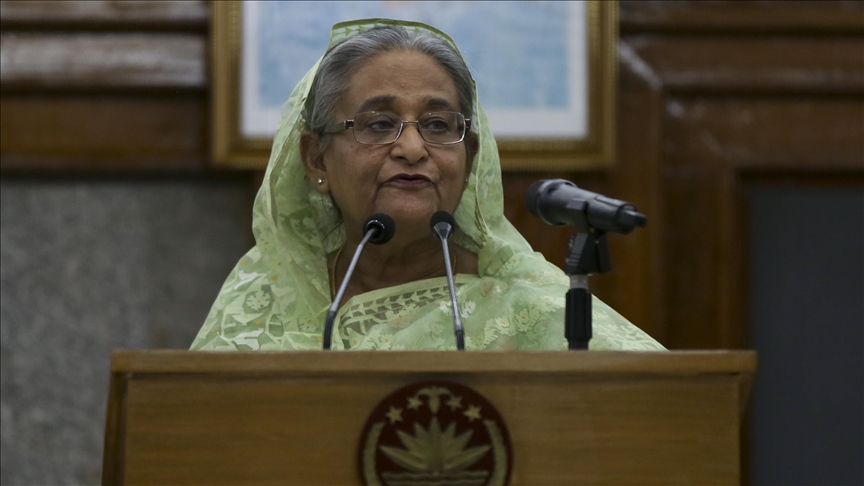
Bangladesh’s former Prime Minister Sheikh Hasina has claimed the US was behind her ouster as she refused to hand over Saint Martin Island, which would have given Washington influence over the Bay of Bengal, according to a media report.
Hasina “alleged that the USA aimed to oust her from power due to her refusal to cede” control of Saint Martin Island, “which would have allowed the USA to exert influence over the Bay of Bengal,” Indian daily The Economic Times reported on Sunday.
Citing a message conveyed through her “close associates,” the report said Hasina, 76, “could have stayed in power” by surrendering the sovereignty of Saint Martin Island.
Locally known as Narikel Zinzira, or Coconut Island, Saint Martin Island, a small landmass covering just three square kilometers, is located in the northeastern part of the Bay of Bengal, about 9 kilometers (about 5.59 miles) south of the tip of the Cox’s Bazar-Teknaf peninsula. It marks the southernmost point of Bangladesh.
However, the report added: “She chose not to compromise on the island’s sovereignty, highlighting the island’s strategic importance and the potential geopolitical influence it represents in the region.”
Ahead of her ouster which brought an end to her 15-year rule, Hasina had claimed in May that a plot was “on to carve out ‘a Christian state like East Timor’ taking parts from Bangladesh and Myanmar.”
Without identifying any nation by name, Hasina said she was “offered a hassle-free reelection in the January 7 polls if she allowed a foreign country to build an airbase in Bangladesh territory,” according to Dhaka-based Daily Star.
Hasina also expressed “sorrow” regarding the ongoing political unrest in Bangladesh after her resignation on Aug. 5, which began with protests demanding the elimination of the controversial quota system in public jobs.
Hasina’s US-based son, Sajeeb Wazed, said on X: “The recent resignation statement attributed to my mother published in a newspaper is completely false and fabricated.”
“I have just confirmed with her that she did not make any statement either before or since leaving Dhaka,” said Wazed, who earlier served as IT entrepreneur and ICT adviser to prime minister of Bangladesh.
Hasina fled Bangladesh on Aug. 5 to neighboring India where she is currently staying “for the moment,” according to Indian officials.
According to daily Prothom Alo, at least 580 deaths were reported since July 16 during protests against Hasina’s government, with 326 such killings reported in three days between Aug. 4 and 6.
Soon after she fled on Aug. 5, Bangladesh army chief Gen. Waker-uz-Zaman said Hasina had resigned. Zaman also announced the formation of a transitional government.
A day later, Bangladesh President Mohammed Shahabuddin dissolved the parliament, which was elected in January when Hasina became the prime minister for a fourth time.
Nobel laureate Muhammad Yunus took the oath of office as “chief adviser” on Aug. 8 to lead a 17-member transitional administration in Bangladesh.
The main opposition Bangladesh Nationalist Party has demanded a national election within three months to hand over power to the people’s representatives.