
Bangladesh’s image in abroad is very good: Finance Adviser
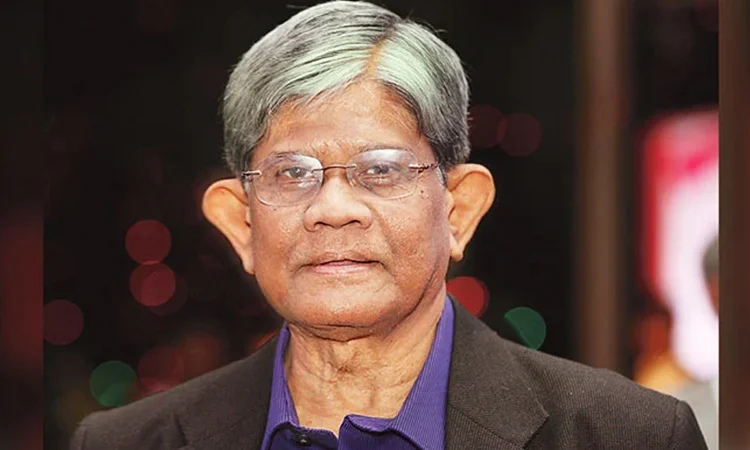
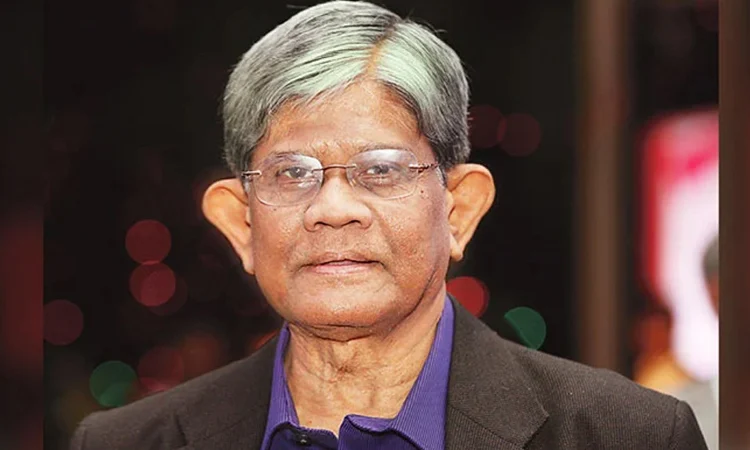
Finance Adviser Dr Salehuddin Ahmed. File Photo
DHAKA, Sept 29, 2025 (BSS) – Noting that the image of Bangladesh in abroad is now very good, Finance Adviser Dr Salehuddin Ahmed today urged all concerned to remain alert so that the country does not face any such danger in the coming days and thus it could move forward in a speedy manner.
Citing that the interim government has both the positive and negative aspects, Dr Salehuddin Ahmed, also the former central bank governor, said that the image of Bangladesh in abroad is now very good as the development partners including the multilateral ones acknowledge it.
He also urged all concerned to remain vigil so that no barrier can hinder the forward march of Bangladesh as well as the country can move forward in a speedy manner.
The Finance Adviser said this while addressing the “Inauguration of Academic Programmes of ERF Institute” and a seminar on “Financial Transparency in Corporate Sector”, held at the ERF Auditorium in the capital this afternoon.
He also called for stronger auditing, greater transparency and improved practical training for journalists and investigators to protect Bangladesh’s economic interests and strengthen public trust.
Finance Secretary Dr Md Khairuzzaman Mozumder, FRC Chairman Dr Md Sajjad Hossain Bhuiyan and ICAB President NKA Mobin spoke as guests of honour.
Presided over by ERF President Doulot Akter Mala, its general secretary Abul Kashem moderated the event.
“Our people are very hard working and intelligent. We have patriotism and if we can do hard work, then definitely we can move forward in a speedy manner taking alongside all,” the adviser added.
He criticized what he described as “clever maneuvers” by some actors who divert funds to finally siphon that abroad.
Such practices underscore the need for robust oversight by Bangladesh Bank and other regulatory bodies, and for auditors to adopt more rigorous, evidence-based methods, he added.
“The problem is not only that money moves, but that it moves in ways that evades ordinary scrutiny,” he said.
The Adviser urged specialized social auditors and investigative teams to look beyond books and statements and develop the intuition and methodology needed to follow the money.
“Audit can’t be a paper exercise, it must verify where numbers come from and how they were generated,” he said.
The Adviser also criticized media coverage that, he said, sometimes amplifies narratives that weaken the government or empower fascists.
He called upon journalists to be constructive and measured and also to present verified facts rather than one-day headlines that disappear quickly. “When we speak positively about what is working, that helps build confidence; reckless narratives do the opposite,” he said.
Highlighting the importance of investigative journalism for accountability, Dr Salehuddin Ahmed recommended short, practical training programmes focused on verification, analytical methods and case studies.
He argued that journalism education should emphasize hands-on reporting, interviewing farmers, tracing supply chains, and validating statistics so that reporters can produce credible, long-lasting stories that matter to people on the ground.
Citing agriculture as an example, he recalled a columnist’s field interviews with farmers and experts that revealed genuine contributions of agricultural initiatives, but also stressed that such reporting must connect numbers to their sources so readers can trust the findings. “If the numbers aren’t verifiable, the story loses credibility,” he added.
The Adviser also praised the dedication and patriotism of many professionals working in the country’s public and private sectors and urged institutes and media organizations to build institutional discipline and stronger verification systems.
He urged leaders to foster an environment where accurate, constructive reporting and disciplined auditing go hand in hand to support national development.
Finance Secretary Dr Md Khairuzzaman Mozumder lauded the role of economists and financial analysts in shaping pragmatic fiscal policies, citing their constructive suggestions during the preparation of the national budget.
He recalled his longstanding relationship with the Institute of Chartered Accountants of Bangladesh and other professional bodies, saying that expert opinions have often influenced key decisions in budget formulation.
He mentioned that last year, when the government was considering whether to adopt an expansionary or contractionary approach in the face of inflationary pressures, analytical reports and suggestions from economists and from media played a decisive role.
“We had initially thought of going for a larger budget, but based on your recommendations, we opted for a more realistic and relatively smaller budget. This credit goes to you,” he noted.
The secretary said the government values the contribution of economic professionals, even though direct interaction with them is not very frequent. He assured that their policy inputs will continue to be taken seriously in future fiscal planning.
Highlighting the establishment of a modern training institute as an example of joint progress, he said such initiatives reflect Bangladesh’s growing capacity and commitment to strengthening institutional frameworks.
He also expressed optimism that closer engagement with economic experts would further enrich the country’s economic governance and policymaking.