
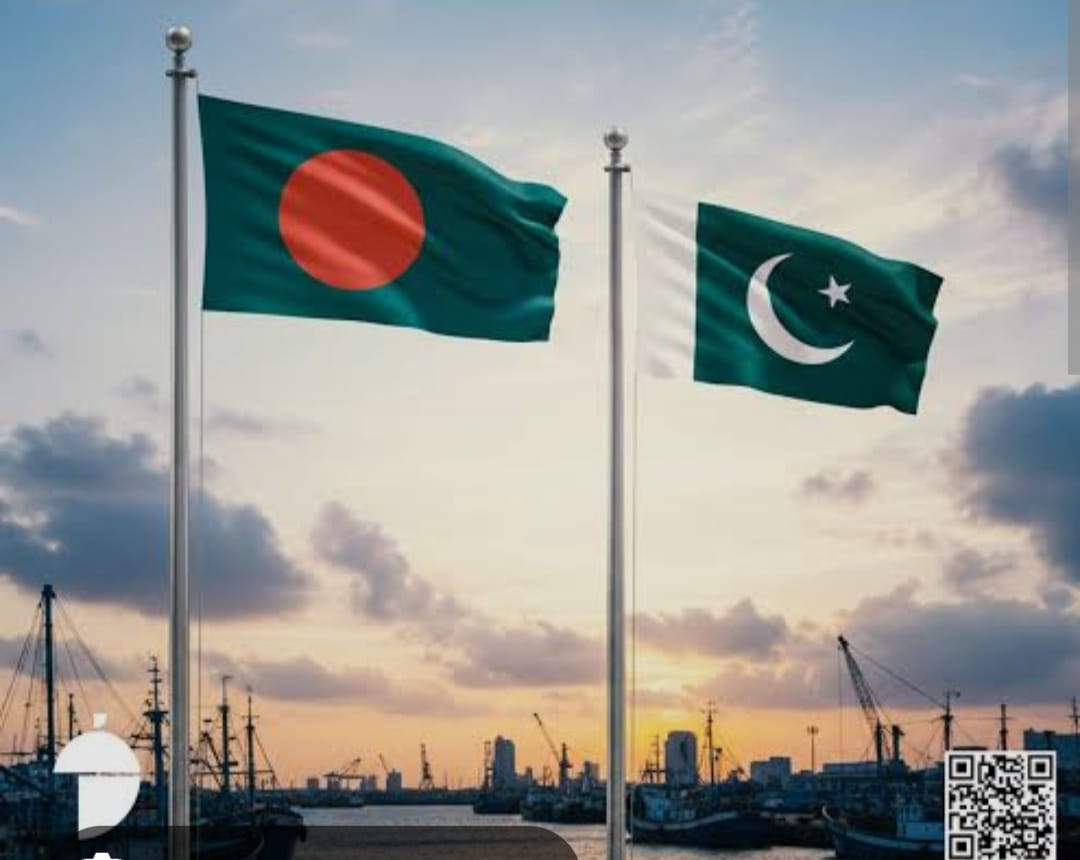

TBT DESK: As Bangladesh and Pakistan seek to redefine their economic relationship, business leaders on both sides are calling for a shift from traditional trading patterns towards deeper, long-term cooperation. Recent discussions on the “Strategic Frontiers of Bangladesh–Pakistan Retail and Textile Trade” have highlighted how the two countries can transform existing commercial ties into a more integrated and resilient partnership.
Speaking at the forum, Asfandyar Farrukh, Chairman of the Chainstore Association of Pakistan, and Amin Sakhia, Director of Karachi-based Al Faz, emphasised that the relationship between the two nations should no longer be viewed through the narrow lens of competition. Instead, they argued, it should be shaped by collaboration and mutual benefit. Pakistan’s strong retail culture and established fashion brands, particularly in lawn and cotton-based products, complement Bangladesh’s globally recognised garment manufacturing industry and rapidly expanding local brands.
Industry insiders believe this natural synergy provides an opportunity to build sourcing partnerships, franchise networks, and joint ventures that could connect both economies more closely. By doing so, Bangladesh and Pakistan could gradually move from simple import–export transactions towards a shared regional supply chain capable of serving international markets.
Despite these positive prospects, trade between the two countries remains unbalanced. Pakistan continues to dominate exports, mainly through cotton, textiles, and agricultural goods, while Bangladesh’s shipments, including jute products, tea, and pharmaceuticals, remain comparatively modest. To address this imbalance, business leaders are urging both governments to encourage cooperation in a wider range of industries, from chemicals and processed foods to digital services and light engineering. They argue that a more diversified trade structure would reduce vulnerability and create more sustainable growth.
Bangladesh is increasingly seen as an attractive destination for Pakistani investors, particularly due to its proven manufacturing ecosystem and strong links with major global buyers. Interest has been growing in fast fashion, knitwear, functional apparel, and environmentally responsible production processes. However, investors are proceeding cautiously. Most prefer to begin with sourcing offices, pilot ventures, and brand collaborations, allowing confidence and regulatory clarity to develop before committing to large-scale investments.
Policy support is widely regarded as essential for turning ambition into reality. Experts have called for preferential trade measures, even if limited to specific sectors, to lower customs duties and speed up clearance procedures. Mutual recognition of standards is also viewed as crucial for building trust among businesses, while improved logistics and e-commerce infrastructure could open new channels for direct consumer sales across borders.
Alongside regulatory reforms, there is growing recognition that human capital will play a decisive role in future cooperation. Collaborative training programmes, shared digital platforms, and exchanges of designers, students, and retail professionals are being promoted as ways to strengthen institutional links and raise industry standards in both countries.
These developments come at a time when bilateral trade is showing renewed momentum. In the 2025–26 period, trade reached a six-year high of around US$865 million, following a reported 20 per cent increase in the previous financial year. This growth has been supported by improved diplomatic relations and the resumption of direct maritime shipping between Karachi and Chattogram, which has significantly reduced transport costs and delivery times.
For decades, political tensions and high tariffs limited commercial engagement between Bangladesh and Pakistan. Recent geopolitical shifts and improved dialogue under the interim administration in Dhaka have helped ease these barriers, creating a more favourable environment for business cooperation. The establishment of a Joint Business Council has further strengthened institutional links between private-sector stakeholders.
While challenges remain, particularly in addressing tariff structures and historical sensitivities, industry leaders remain cautiously optimistic. They believe that with consistent policy support, sustained dialogue, and genuine private-sector engagement, Bangladesh and Pakistan can transform their economic relationship into a balanced and forward-looking partnership.
As one participant remarked, “This is not just about selling to each other. It is about growing together.” In an increasingly competitive global market, such shared growth may prove to be the strongest foundation for lasting regional prosperity.