
ADB has worked closely with both the previous and interim Governments of Bangladesh to invigorate public and private investment in climate strategies, facilitate climate actions through technological innovation and protective policies, and start a shift away from fossil fuel usage. From 2022 to 2025, ADB’s work on the Climate Resilient Inclusive Development program committed $800 million in concessional financing toward these efforts, in coordination with an additional $1.2 billion of cofinancing from other development partners (Agence Française de Développement and Asian Infrastructure Investment Bank).
Whole-of-government approach
ADB worked with the government, led by the Prime Minister, to convene the National Committee for Environment and Climate Change in 2023, which gathered into a single committee every ministry involved in climate change. Under this Committee, the Bangladesh Climate Development Partnership was established in 2024 as a cross-sector, multi-stakeholder partnership to drive effective climate action through coordination, planning and investment. It brings together key government agencies and nongovernment stakeholders, such as the private sector, civil society, and development partners. To enhance the government’s capacity to collect and use information for decision-making, the following actions were taken:
- The Ministry of Planning began collecting climate indicators with district-level granularity, and plans to implement sub-district granularity in the near future.
- The government tagged climate-related expenditures in the budget.
- Bangladesh Bank (the central bank) mandated climate risk disclosures for financial institutions and issued guidelines for climate risk management in order to direct private investment toward climate-resilient projects.
Strategic coordination outcome
The Climate Resilient Inclusive Development program established a foundation to enhance coordination and collaboration among government and development partners, thus aligning policy actions to create synergies among these initiatives. Development partners—including ADB, Agence Française de Développement, Asian Infrastructure Investment Bank, International Monetary Fund, Japan International Cooperation Agency, and the World Bank—demonstrated strong coordination in their support, effectively minimizing duplication across implementing agencies. Furthermore, key bilateral donors and United Nations agencies provided complementary assistance for reinforcing a harmonized and efficient approach to development cooperation.
- The Local Government Engineering Department under the Ministry of Local Government, Rural Development, and Co-operatives established the Climate Resilient Local Infrastructure Centre. Co-financed by the German Development Bank and the Green Climate Fund, this permanent office aims to strengthen climate-resilient infrastructure planning and implementation.
- The National Urban Policy was supported by the United Nations Development Programme (UNDP) and the Foreign, Commonwealth & Development Office of the UK Government.
- The Locally Led Adaptation Framework was supported by ADB, UNDP, and the World Bank for amplifying local voices in climate related decision-making process.
- The Ministry of Disaster Management and Relief adopted the Disaster Risk Financing Strategy supported by multi-development partners.
- The Local Government Division developed the Climate Vulnerability Index, a collaborative initiative involving UNDP, UN Capital Development Fund, Governments of Sweden and Denmark, and the European Union. It is now being used to guide budget allocation at the Union Parishad (local government institutions).
Precedent for climate-conscious growth
The Integrated Energy and Policy Master Plan was implemented, focusing on shifting irrigation in agriculture from diesel to solar power. Other efficiency enhancements initiated include: (i) Strategic Transport Master Plan for Dhaka (2025–2041) to reduce road congestion, improve walkways for pedestrians, and shift passenger transport to the metro rail system; (ii) new policies to promote energy and operational efficiency in rail lines; and (iii) guidelines for rating a building’s environmental footprint and enforcement for building energy audit regulations.
Robust adaptation in a changing world
The Climate Resilient Inclusive Development program coordinates climate adaptation solutions, with a drive to incorporate local voices into the goals of preserving vital wetlands, fortifying infrastructure, and prioritizing nature-based solutions.
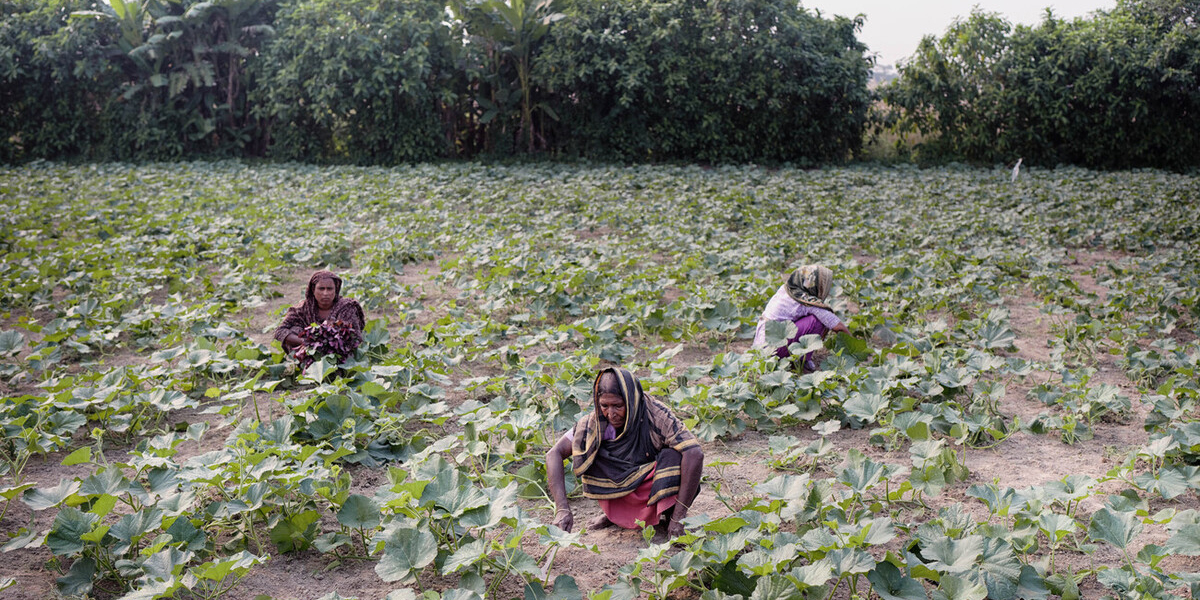
Using the Locally Led Adaptation Framework, a holistic and inclusive approach that involved consultations with marginalized groups, the program’s adaptation component reached cities and rural areas. In the villages, agricultural extension services focused on women farmers, and encouraged dialogue and knowledge sharing of best practices for climate resiliency. Meanwhile, for cities, the program implemented four targeted climate-resilient urban action plans, including the Climate Vulnerability Index, a criterion for resource allocations for the prioritization of climate-resilient investments. It also crafted the National Urban Policy, which promotes integrated urban drainage management and eco-engineered waste management; climate-resilient water, sanitation, and hygiene facilities; and urban wetlands and biodiversity conservation.
Further, the Climate Resilient Inclusive Development’s Haor Area Master Plan improved flood management, coastal erosion management, and irrigation in wetlands and enhanced early warning systems in flood-prone (often agricultural) areas.