
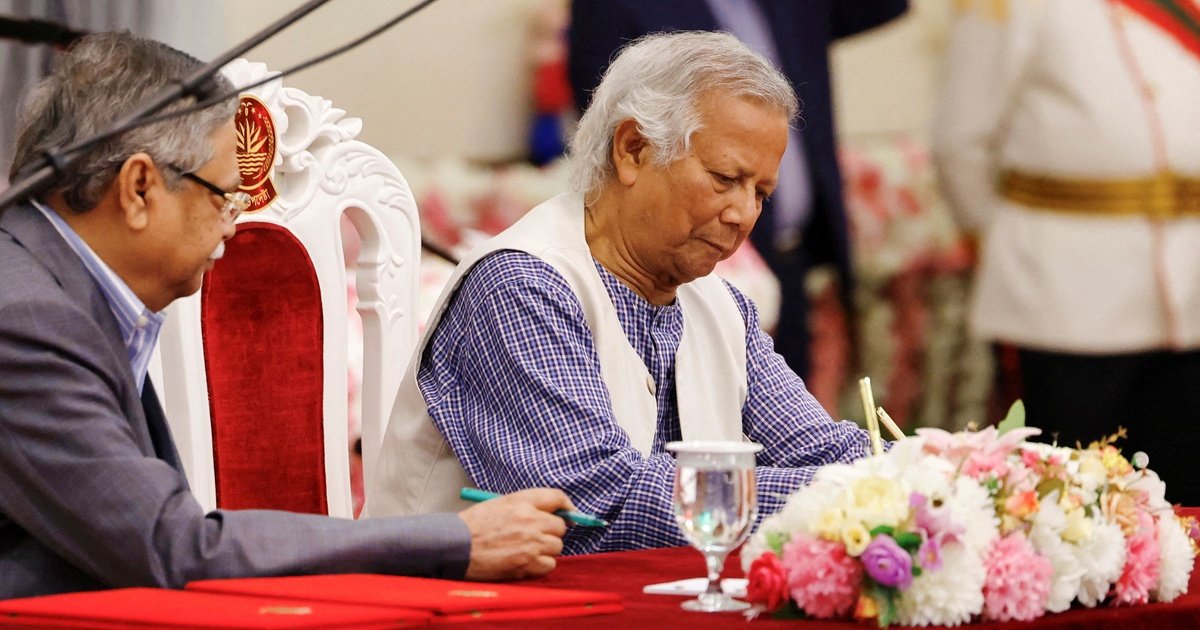
After this summer’s protests in Bangladesh, which dislodged long-ruling and increasingly authoritarian Prime Minister Sheikh Hasina and dealt a blow to her Awami League Party, there was jubilation in the streets of Dhaka and some other parts of the country—at least initially. The military, unlike in previous times of unrest in Bangladesh, did not step in and assume long-term power, but instead paved the way for a transitional caretaker government led by respected Nobel laureate Muhammad Yunus. The military, which in the past has been relatively close to Hasina and the Awami League, even initially said some of the right things in support of accountability for those involved in crackdowns and brutality during this past summer’s protests.
But now, several months after the caretaker government assumed power and announced plans to reform state institutions and call new elections at some time in the future—elections that could lead to a broader swath of political parties than the two giants that have dominated Bangladeshi politics—Yunus’ government is struggling to maintain even basic stability. The caretaker government has plans to reform the security forces, the civil service, the judiciary, the police, financial institutions, and the election commission, among other institutions. All of these reforms—if successful—could go a long way toward reducing the often-violent polarization that has characterized Bangladeshi politics for decades and the patronage politics that have destroyed democratic institutions.
More on:
Yunus may also try to reform some of the patronage-ridden economy, which would open the door to greater foreign investment outside of the already prosperous garment sector. The United States, recognizing this possibility, has dangled the chance of greater aid to Bangladesh’s interim government. But Bangladesh needs far more than reform plans, which it cannot fund itself. It could desperately use something akin to a donor conference, say, organized by Japan (which has led many other such conferences), through which a sizable amount of aid would flow into the country for the caretaker government to use for rebuilding state institutions, preparing the way for elections, reforming the economy, and achieving many other goals.
However, with so many other global crises happening right now—and with India, one of two key external powers, having a tense relationship with Bangladesh now caused by India’s toleration of Hasina for years—such a donor conference seems highly unlikely. Bangladesh ultimately may go back to relying more again on support from China, as it did in the Hasina years, which might provide the needed capital for Bangladesh but also could further stoke rivalries over the country between India, China, and other regional powers.
The army, meanwhile, says the right things but is not trusted by many of the activists and other youths who toppled Hasina. The military’s top command continues to say that it will support Yunus’ plans for the reforms “come what may”—i.e., even if those reforms include trying to purge the military of civilian influence and make it a more professional force, something it has rarely been, if ever, in Bangladesh’s history. Yet, the army chief also says elections should not be held until a year to a year-and-half from now.
This is too long for many young Bangladeshis involved in politics. They do not want to take the chance that, over such a long time period, the caretaker government might continue to fail in some areas of basic administration such as security in Dhaka and other parts of the country hit by mob violence and basic services like garbage removal and police functioning (which have improved in the last month), resulting in the army stepping in and asserting itself, as it has done so many times before.
After all, with Yunus’ control of state institutions—especially the security forces—still relatively limited, the army has been providing security, including from communal violence, in many parts of the country already. Even so, while security has improved somewhat, as have some public services since the total (almost failed-state level) breakdown of services in August and early September, they are still in poor shape. The police force basically collapsed in August and is struggling to right itself; Yunus himself recently has admitted that mob violence and killings, including inter-ethnic and inter-religious killings, remain a major problem, and one with no clear end. Indeed, law and order and other public services remain huge problems, and if they continue, it will reflect poorly on the caretaker government and possibly undermine its authority. Additionally, the sizable reforms to the country’s institutions that Yunus may roll out, while necessary, will face huge obstacles from entrenched patronage networks and the two powerful major parties, one of which could still win the next election, even with all of Yunus’ changes. If one of the two major parties does win, it is hard to imagine even the most ambitious reforms lasting a long time.
More on: