
Investing in climate adaptation and resilience is not a cost, it is a powerful economic strategy that can generate trillions in global economic gains, create millions of jobs, and safeguard vulnerable countries like Bangladesh, according to a report released Thursday.
The report, “Returns on Resilience: Investing in Adaptation to Drive Prosperity, Growth & Competitiveness, was unveiled by a consortium of 20 organizations led by the international group Systemiq during the World Bank and IMF Annual Meetings in Washington, D.C.
It finds that every dollar invested in adaptation can yield returns equivalent to ten dollars. For countries like Bangladesh, strategic investment in climate resilience and adaptation now could protect the economy from future losses.
The analysis estimates that climate resilience investment could create 28 million new jobs across developing countries by 2035.
At the same time, the global adaptation market is projected to reach $1.3 trillion annually by 2030.
Former UN Secretary-General Ban Ki-moon said: “Investing in climate resilience means protecting people and their livelihoods in the face of storms, heatwaves, and floods. It is also an urgent economic imperative: building resilience ensures that hard-won development gains are not destroyed. This is a call to world leaders to make resilience and adaptation the investment agenda of our time.”
Bangladesh’s progress and potential
The report highlights that Bangladesh has already made notable progress in priority areas of climate resilience, including climate-smart agriculture, drought- and salt-tolerant crops, mangrove restoration, embankment protection, early warning systems for cyclones and floods, resilient health systems, and water and sanitation infrastructure.
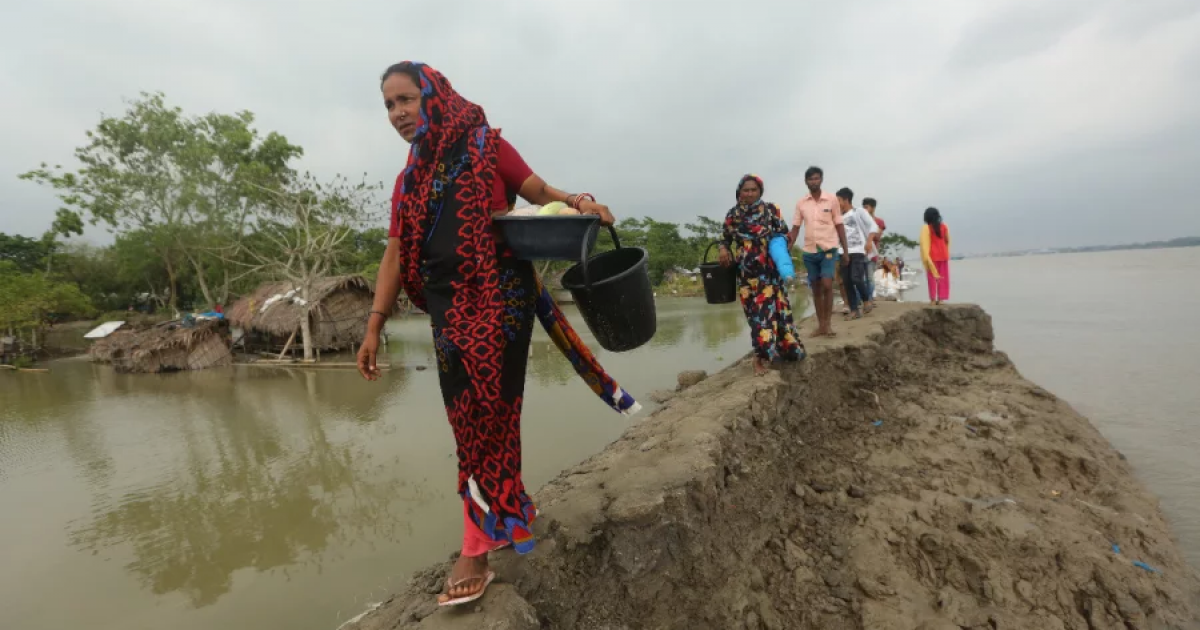
Despite these efforts, the country continues to face substantial annual financial losses from rising sea levels, cyclones, river erosion, salinity intrusion, and floods.
Developing countries experience ten times more damage from extreme weather than high-income nations and take four times longer to recover.
If current trends continue, global GDP could decline by 18%–23% by 2050, with particularly severe consequences for countries like Bangladesh that rely heavily on agriculture, fisheries, and coastal settlements.
Investing in climate resilience could create hundreds of thousands of jobs in Bangladesh’s agriculture, construction, and infrastructure sectors by 2035.
Scaling up adaptation measures could increase economic growth in developing countries by up to 15% by 2050, reduce foreign debt costs, and prevent up to two million avoidable deaths annually through improved water, health, and sanitation systems.
Financing gap remains a major challenge
The report warns that achieving global climate resilience requires $350 billion in annual investment by 2035.
Currently, only $54 billion is being invested, leaving a $296 billion gap.
For every $1 invested in resilience, $87 is still being spent on infrastructure vulnerable to climate risks.
Pep Bardouille, climate adviser to the Prime Minister of Barbados and Director of the Bridgetown Initiative, said: “Resilience is the bedrock of prosperity, yet it remains the most undervalued investment of our time. Our investment policies still constrain this sector. COP30 must be a turning point—to rewrite the rules, recognize the real returns of resilience, and unlock the financing that vulnerable countries need.”