
October 25, 2024
DHAKA – The incessant rain, flash floods, distraught environmental migrants, and land erosion that we have witnessed in Bangladesh in recent years is not unforeseen, but exactly what scientists predicted decades ago. It is not based on a ‘hunch’ and it is definitely not fear-mongering as many climate crisis deniers claim. It is equivalent to one’s house being on fire while they carry on with their tasks with a blindfold on.
The World Risk Index 2023 has ranked Bangladesh ninth worldwide for climate disaster risk, stating it is set to lose 30 percent of its arable land by 2050 owing to rising sea levels. Rice, a staple in the Bangladeshi diet, will see a steep decrease in its production as well. On top of that, the country is predicted see a loss of 17 percent of its overall territory. As Bangladesh is highly reliant on agriculture and dangerously overpopulated, that will prove to be disastrous on several fronts with food insecurity as well as possibilities of famine close at hand. Unemployment, housing crisis, and poverty would also be widespread.
It is rueful to witness the disastrous effects of rising sea levels in Bangladesh although the country has contributed to less than 0.1 percent of the greenhouse gas emissions since its genesis in 1971. Known as the land of rivers, the melting of the Himalayan Glaciers is a looming threat to its river system overflowing and causing excessive flooding. The unpredictable nature of climate change necessitates a sturdy approach to its consequences, but the Bangladeshi government fails to construct any operational policies to tackle the climate crisis effectively.
While Bangladesh’s own unstable political mood contributes to minimal attention paid to its policies regarding climate change, it also boils down to climate politics of the Global North. Although this is a global crisis and not a regional one, its record of blatant disregard for the disproportionate impact of climate change on the marginalised Global South warrants a discussion.
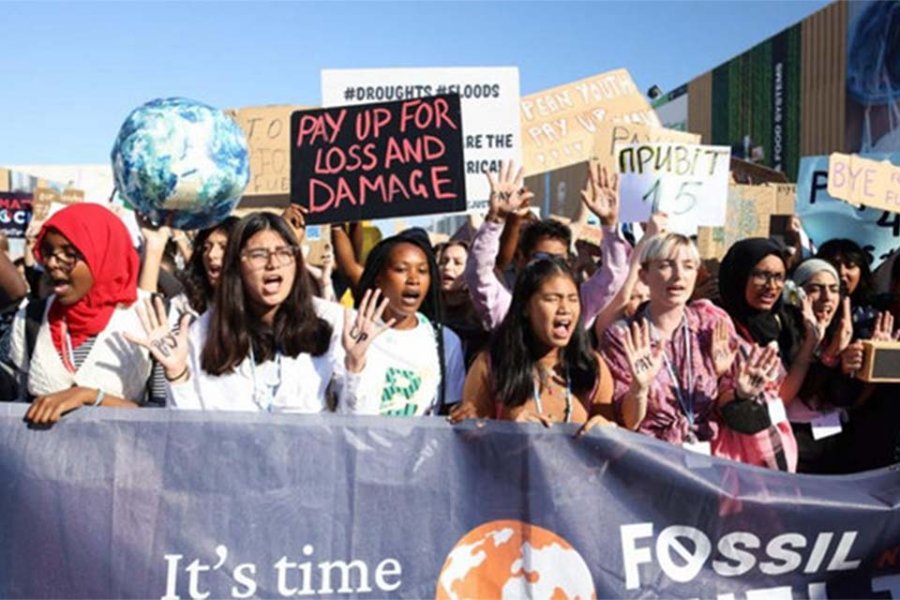
We can see the risks of flagrant climate apartheid in the making—the wealthy countries have the luxury to escape the heat, floods, droughts, and diseases caused by the climate crisis, all because they have the resources to do so, resources which they have shamelessly hoarded by exploiting the Global South through colonialism and imperialism. The best example is perhaps the Netherlands, a former colonial power and Bangladesh, a former colony. Owing to the rising sea levels and both countries lying in a delta, they face similar challenges, but one has the requisite infrastructure in place to tackle the crisis while the other utterly lacks it. Climate apartheid is prevalent within the borders of Bangladesh itself. Many have pointed out that the recent floods in Feni and Sherpur paint a stark picture of the different reactions to people’s suffering. While the former region with a wealthy population received an outpour of support, the latter was largely overlooked as its population is not as wealthy.
From the abovementioned instances, we can conclude that the havoc the climate crisis will wreak will not be experienced equally. It will, however, definitely be experienced unfairly. The Industrial Revolution began in Europe and North America from the mid to late eighteenth century respectively, and resulted in most countries on these continents boasting the ‘developed’ status in the past few decades. It is estimated that 92 percent of the greenhouse gases were emitted from the Global North over the last two centuries. Despite it all, the blame of the climate crisis is dishonestly heaved on the ‘developing’ nations. Not only that, the West also continues to selfishly demand that developing nations restrain their industrialisation, even though it undoubtedly entails the slowing down of economic growth for those nations along with spikes in unemployment and poverty.
While there is no doubt that greenhouse gas emissions must be immediately reduced if not entirely halted, there is a need for constructive solutions in these developing nations. These solutions require funds which have been promised by the wealthy West but they have consistently failed to provide them. Instead of exporting the requisite technology and funds, they have been exporting reprimands to the Global South. On the same vein, those self-proclaimed environmentally conscious countries set up their air and river polluting factories there and add a ‘responsibly sourced’ tag to greenwash their products in the West. The hypocrisy of the West continues, but the reality is that the situation is rapidly deteriorating, and that warrants Bangladesh to act swiftly. Historically, the country has placed climate change at the very bottom of its concerns, but now it needs to be given the utmost priority.
The UN reports that due to the climate crisis, between the years 2030 and 2050, every year 250,000 people globally are estimated to be killed. Hence, it is a battle for existence for many communities, which indubitably makes it a human right concern.