
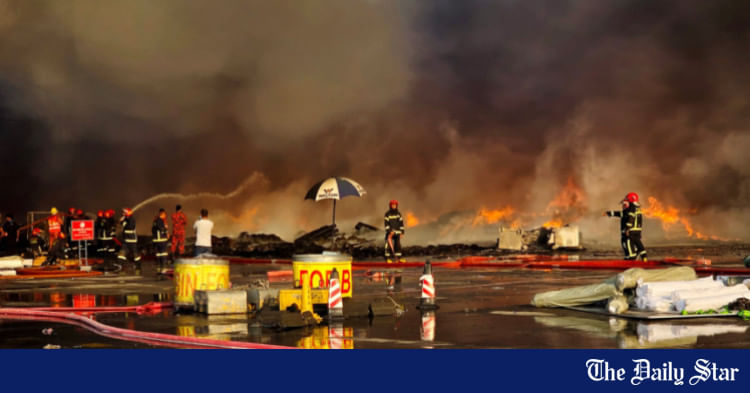

According to experts, dry weather and dusty winds heighten fire risks by creating highly flammable conditions. FILE PHOTO: COLLECTED
“>

According to experts, dry weather and dusty winds heighten fire risks by creating highly flammable conditions. FILE PHOTO: COLLECTED
Bangladesh is facing a growing fire crisis. Data from the Department of Fire Service and Civil Defence, compiled by Dataful, shows roughly 250,000 fires occurred nationwide between 1997 and 2018. The trend is accelerating: over 24,000 incidents were reported in 2022, jumping to more than 26,600 by 2024. Over the past two decades, fires have claimed nearly 2,650 lives and left more than 13,000 injured.
In recent times, three massive fires in Dhaka and Chattogram have caused loss of life and billions of dollars, starkly revealing persistent shortcomings in safety standards, infrastructure maintenance, and emergency preparedness. However, climate shifts may also have a major role in fire hazards, as seen in other countries.
 For all latest news, follow The Daily Star’s Google News channel.
 Rising global temperatures, caused by human-driven greenhouse gas emissions, have increased the risk of wildfires worldwide, as evidenced by the record-breaking US fires of 2017–2018 and in 2024–2025. Experts warn that extreme heat, prolonged droughts, and erratic rainfall will increasingly contribute to large fires across the globe, adding to the risks from poor maintenance and regulatory failures.
In January 2025, unusually severe fires swept Los Angeles, fueled by dry conditions and powerful Santa Ana winds. The deadly wildfires were twice as likely and burned an area 25 times bigger than they would have in a world without global warming. Reports suggested that over 50,000 acres burned and around 16,000 structures were damaged, forcing authorities to advise more than 180,000 people to evacuate.
The same erratic pattern has made summer blazes in southeastern Europe up to ten times more likely. Between March 2024 and February 2025 alone, more than 3.7 million square kilometres of land—an area larger than India—went up in flames. Over 100 million people were affected, with homes and infrastructure worth $215 billion at risk.
Climate scientists from World Weather Attribution at Imperial College London say climate change—through reduced rainfall, parched vegetation, and extreme winds—intensified both the severity and likelihood of these fires in the US and Europe.
According to experts, dry weather and dusty winds heighten fire risks by creating highly flammable conditions. Low humidity and parched fuels, combined with strong winds, significantly increase the likelihood and rapid spread of fires, often prompting high fire danger alerts.
The May 2025 fires in central Israel were intensified by prolonged heat, drought, and strong winds, which fuelled the rapid spread of fire. Officials linked the extreme conditions to broader climate change trends, showing how firefighting efforts were stretched beyond capacity.
In October 2025, the National Weather Service issued a Red Flag Warning as strong winds of 60 mph and critically low humidity drove high fire risk across Colorado’s Eastern Plains and Front Range, recalling the deadly East Troublesome Fire in October 2020.
A recent study published in Nature Cities reveals that rising temperatures could heighten urban fire risks across 2,847 cities in 20 countries, including the US, UK, Australia, New Zealand, and China, threatening buildings, vehicles, and outdoor spaces. Drawing on historical records and Intergovernmental Panel on Climate Change (IPCC) climate scenarios, the research finds that each one-degree Celsius increase in temperature drives a 4.7 percent rise in outdoor fires and a 2.5 percent rise in vehicle fires. High-emission warming can potentially boost outdoor fires and vehicle fires by 22 percent and 11 percent, respectively, by the year 2100.
Urban areas are particularly vulnerable, as hotter, drier weather directly fuels faster-spreading fires, overwhelming emergency services and threatening infrastructure.
Pollution, urban heat from rapid urbanisation, poor infrastructure, and regulatory gaps are all fuelling more frequent and intense fires, as trapped atmospheric heat raises temperatures, disrupts weather patterns, and worsens drought conditions.
In Bangladesh, experts link the higher pollution levels in Dhaka and Chattogram to their dense concentration of industries, commercial hubs, and employment opportunities. As the country’s main economic centres, both cities suffer from severe air pollution caused by industrial emissions, traffic, construction, household fuel use, and open-air waste burning.
The growing influence of major climatic shifts on urban environments necessitates a focused investigation into the rising incidence of devastating fires across Bangladesh, especially in key cities such as Dhaka and Chattogram. Consequently, a proactive and interdisciplinary approach, merging rigorous scientific analysis with robust policy frameworks, is crucial to understanding these complex dynamics and mitigating the risk of future large-scale emergencies.
Abdul Kader Mohiuddin is an alumnus of the Faculty of Pharmacy at Dhaka University.
Views expressed in this article are the author’s own.
Follow The Daily Star Opinion on Facebook for the latest opinions, commentaries, and analyses by experts and professionals. To contribute your article or letter to The Daily Star Opinion, see our guidelines for submission.