
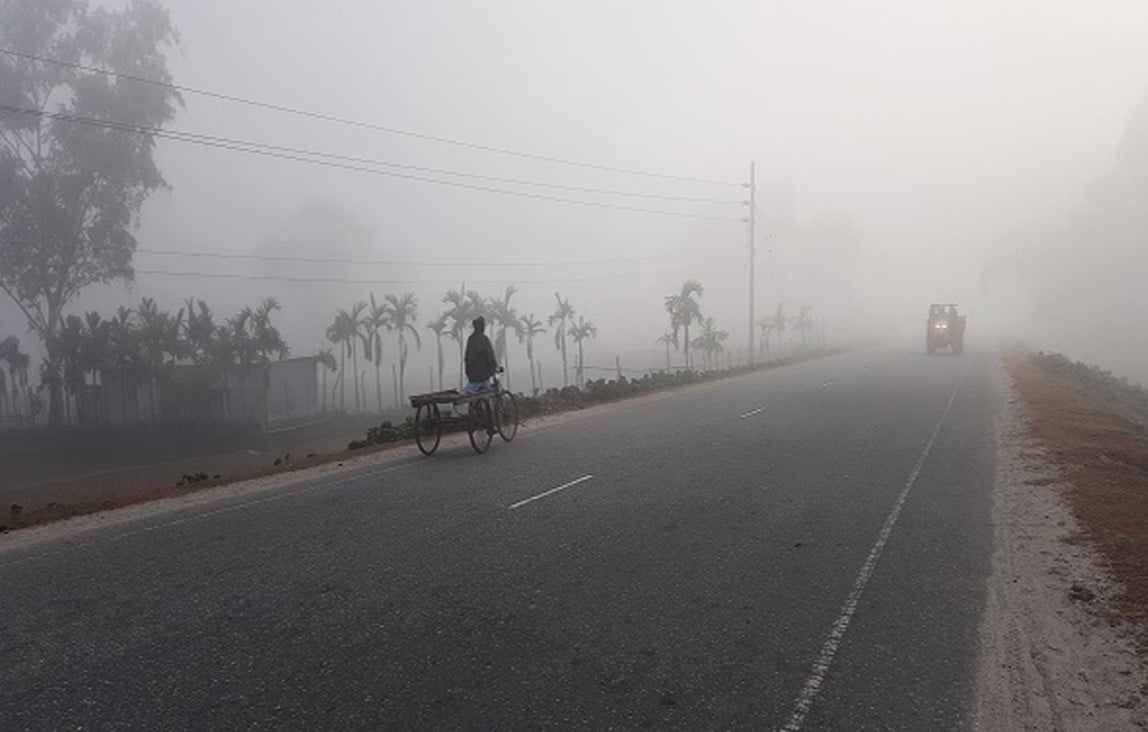
Climate change has caused unusual weather in northern region
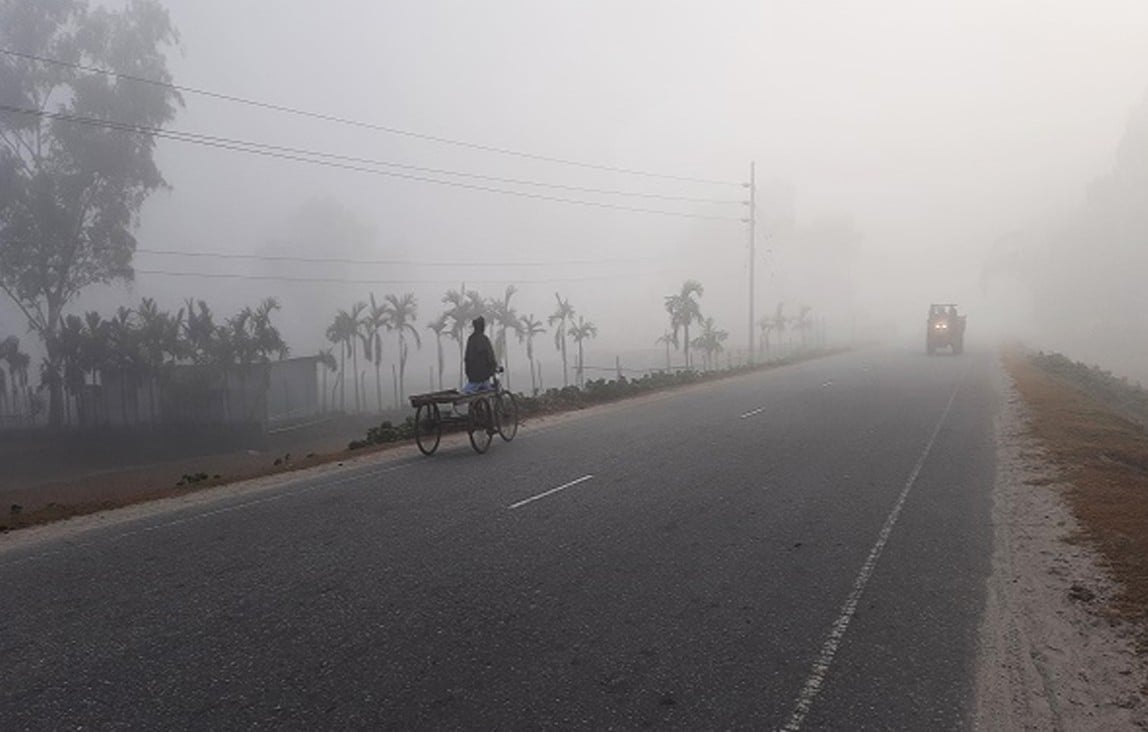
Photo : BSS
By Md Mamun Islam
RANGPUR, Jan 17, 2026 (BSS) – With few exceptions, people are facing unusual weather conditions in recent days during the ongoing winter season, with temperatures dropping sharply in the morning and rising again in the afternoon.
Experts say that climate change is causing rivers to dry up, groundwater levels to drop, and the unilateral withdrawal of river water upstream is causing rapid changes in weather patterns, and the ultimate consequences are unknown.
Noted Agriculturist Dr MA Mazid, who got the Independence Award 2018 (food security), told BSS that the present weather trend behaves peculiarly with unpredictability due to climate change causing uncertainty to every sector, including agriculture..
Due to climate change, the average temperature of the day and night has been changing significantly over the years, creating a peculiarity in the climate pattern and causing extreme cold in winter or extreme heat in summer.
The continuous and unilateral withdrawal of water from common international rivers upstream is causing the rivers to dry up, leading to a decline in groundwater levels and negative impacts on agriculture, biodiversity, and the environment.
If the main rivers and tributaries had uninterrupted water flow throughout the year, as they did five to six decades ago, and the groundwater level in the region had not dropped every year, the weather conditions could have been different and favorable.
“The situation has forced our scientists and researchers to develop flood, drought and salinity tolerant crops to increase agricultural production in the changing climate. But, the time has come to develop cold and heat tolerant crops for human survival,” he said.
Dr Tuhin Wadud, environmentalist and director of Riverine People and professor at Begum Rokeya University, said that the northern region is facing a strange climatic situation due to climate change and unilateral withdrawal of common river-waters.
The Brahmaputra, Teesta, Dharla, Dudhkumar, Yamuna, Kartoa, Atrai, Jamuneswari, Punarbhoba and many other rivers are drying up and their bottoms are filling with silt due to decades of unilateral withdrawal of water upstream amidst changing climate.
“For example, India’s unilateral withdrawal of water upstream has caused the Teesta river to dry up, severely affecting the lives and livelihoods of nearly two crore people in the northern region, as well as the environment, biodiversity and ecosystem,” he said.
Talking to BSS, environmentalist Md Mamunur Rashid, a PhD Fellow in the Department of Agricultural Extension at Haji Mohammad Danesh University of Science and Technology, discussed the adverse impacts of changing climate.
The changing climate has already caused concerns to agriculture, ecology, bio-diversity, environment, weather, underground water level, public health and habitation.
“As a result of climate change, rainfalls, floods, cyclones, droughts, extreme cold and heat, sea and surface warming, water contamination, water and soil salinity, degradation of aquatic systems, silting and drying up of rivers and erosions are taking place,” he said.
Dr Syed Samsuzzaman, Chairman of North bengal Institute of Development Studies, a research-based organisation, expressed concern over silting up of riverbeds at abnormal rate causing untimely flash floods and erosion and reducing cultivable land area.
He said climate change has already changed the appearance of different crop framing seasons causing concern to the agriculture sector in the northern region and Bangladesh as a whole.
“Because of the huge change in overall climatic patterns, the seasonal rainfalls, floods, dry seasons, periods for sowing or planting the seed and seedlings and harvesting are severely being changed affecting agro-productions,” he added.
Locals said that for the past few weeks, the northern region had been experiencing severe cold and unbearable suffering since dawn when the minimum temperatures ranged between 7 degrees to 12 degrees Celsius amid dense fog.
However, with the appearance of sunlight in the afternoon, the weather had improved significantly again and the maximum temperature increased to between 22 degrees and 28 degrees Celsius.
However, the weather marked significant improvement in recent days across the sub-Himalayan northern region of the Brahmaputra basin.
According to Rangpur Met Office sources, the minimum temperatures ranged between 9 degrees and 12.5 degrees Celsius and maximum temperatures ranged between 26.5 degrees and 28 degrees Celsius in the region on Saturday.