
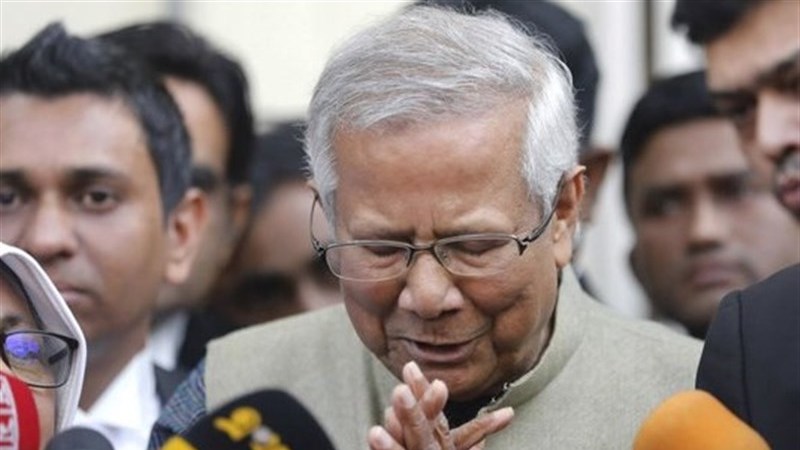
The assumption of power by the interim government under Dr. Muhammad Yunus has generated both hope and apprehension among the public. Such transitions are usually seen as opportunities for reform, yet Bangladesh’s past experiences—and the political and economic context surrounding Dr. Yunus’s leadership—have sparked deep concern.
Among the main sources of anxiety are theuncertainty surrounding the next election, thesense of limitless unpredictability about the future, and above all,fears that corruption may become even more entrenched and widespread.
Bangladesh has consistently ranked among the most corrupt countries in the world, according to Transparency International’s Corruption Perceptions Index and other global indicators. The roots of this corruption run deep in both society and the state— entwined with decades of political rivalry, bureaucratic inefficiency, opaque regulatory systems, and a weak rule of law.
Historically, Bangladesh’s interim or caretaker governments have been regarded as neutral custodians, expected to guide the nation toward fair elections and political stability. Yet, ironically, the current administration has become a fertile ground for institutional irregularities. In the absence of strong parliamentary oversight—and under pressure to “fix” or “clean up” the system—power has become concentrated in the hands of a few, undermining institutional balance and accountability.
Nobel Laureate and founder of Grameen Bank, Dr. Muhammad Yunus, is internationally acclaimed for his contributions to microfinance and social entrepreneurship. His appointment as the head of Bangladesh’s interim government was, at first glance, viewed as an opportunity to infuse integrity and innovation into the political sphere. However, the circumstances surrounding this appointment have also exposed certain vulnerabilities for Dr. Yunus.
One major concern is that, under the broader framework of American soft-power diplomacy, Bangladesh’s national interests might become subordinate to U.S. strategic interests. This fear has been reflected in public protests against the leasing of seaport management to foreign entities.
As someone outside formal politics, Dr. Yunus has shown visible signs of difficulty in navigating administrative complexities and bureaucratic structures effectively. Many now believe that politicians loyal to him and his government are exploiting his inexperience to advance their own interests under the guise of reform.
Dr. Yunus’s global reputation and prestige were expected to foster an atmosphere of confidence—that his government would operate with professionalism and integrity. Yet some of his early actions have shaken that belief. Within just a few weeks of assuming office as Chief Adviser, he dismissed three criminal cases filed in 2011 by the Anti-Corruption Commission against himself and his associates, involving allegations of corruption, money laundering, and labor law violations.
He also reinstated previous tax exemptions for Grameen Bank, Grameen Telecom, and related institutions, reduced the government’s ownership stake in Grameen Bank from 25% to 10%, and exempted his Nobel Prize earnings from taxation. Moreover, the approval of Grameen University, the granting of export licenses, and preferential treatment for Grameen-affiliated entrepreneurs have all raised serious questions about his integrity in the public mind.
Critics argue that Dr. Yunus has overseen the establishment of several new companies under the “Grameen” umbrella, blurring the line between his personal brand and official authority. Giving preferential treatment to Grameen-affiliated entrepreneurs, they contend, effectively means favoring a private network, which suggests misuse of public office.
In matters of diplomatic appointments and selection of advisers, important state institutions have reportedly been bypassed, with preference given to individuals from his personal circle. To many observers, this is seen as an example of nepotism and political bias.
As a result, the message received by government advisers, bureaucrats, and senior officials is that curbing nepotism and corruption is not a core agenda of the interim government. On the contrary, Dr. Yunus’s actions have been perceived as encouraging such practices.
Under the current caretaker administration, bureaucratic dominance prevails across ministries. To understand how damaging such dominance can be, one might recall the real-life experiences of Professor Kaushik Basu, recounted in his memoir Policymaker’s Journal: From New Delhi to Washington, D.C.. Reflecting on his tenure as Chief Economic Adviser to Prime Minister Manmohan Singh’s government, Basu shared several striking anecdotes—especially about the mindset of bureaucrats.
In development economics, institutions, governance, and bureaucracy are widely discussed because they are key determinants of development. Naturally, Basu sought to understand India’s bureaucracy deeply. In fact, he once counted that a bureaucrat addressed his superior as “Sir” sixteen times in a single minute—a revealing symbol of hierarchical culture and administrative rigidity.
Like Basu, I too have sought to understand bureaucracy as a student of economics. My PhD dissertation, titled “Growth and Corruption in Bangladesh”, required me to study corruption among bureaucrats firsthand. Taking leave from the University of Bath, I spent one and a half years in Bangladesh collecting data and conducting dozens of interviews to understand the mechanics of bureaucratic corruption.
Professor Geoff Wood of the University of Bath, who has researched Bangladesh for over four decades, once described several revealing incidents. In one such case, he concluded by saying, “Right before my eyes, a representative of a foreign company offered a bribe to a secretary to secure a contract.”
Let me record a few more anecdotes and brief incidents from the fieldwork.
- Prime Minister Ataur Rahman Khan of the Ershad government once said, “The linemen even cut the telephone line to my house. Then you have to pay bribes to get it reconnected.” It is worth noting that the bribe money is shared up to the senior officials in the office — I learned this from multiple linemen.
- BNP’s Law Minister, Barrister Moudud Ahmed, declared in Parliament that “after a draft law on bureaucratic corruption was finalized, the bureaucrats changed the wording without informing me to make it favorable to themselves, and that is how the law was passed in Parliament.”
After his removal from power, General Ershad said, “It was the bureaucrats who sank me. Because of the bureaucrats, development works could not be completed.” While imprisoned, another bureaucrat was assigned to accompany him; he was so enraged at the bureaucrats that he had that official removed from his cell.
A psychological analysis is needed to understand problems in bureaucratic appointments. The fact that bureaucrats repeatedly call their superiors “Sir” is a sign of sycophancy. Whichever party comes to power, the bureaucrat must become a submissive instrument of that government and follow partisan directives in state affairs. Otherwise he will not be promoted, and paying bribes will not save him from punishment. Spending an entire career inside the government’s narrow grid destroys their capacity for innovation; they do not develop the ability to think “out of the box.” After long exposure to a corrupt environment, even relatively small acts of principled revolt—such as administering a genuinely free and fair election in the national interest—become impossible for them.
The dominance of bureaucrats grows even more when the minister is incompetent. Then the bureaucrats wield the real power over the minister. Having worked for many years, they present exhaustive lists of legal niceties and flaws to compel the government to take on projects from which there is greater opportunity for embezzlement. There is a large body of corruption research and articles documenting how bureaucrats push through projects that favor their ability to misappropriate funds.
During the current interim government in Bangladesh, almost all advisers have demonstrated an alarming degree of incompetence. In this vacuum, the dominance of bureaucrats has grown unchecked. At a roundtable discussion organized by Prothom Alo, economist Hossain Zillur Rahman also delivered an extended speech about the government’s—particularly the advisers’—collapse in capacity, the spread of institutional corruption, and the growing control of the bureaucracy.
The only way out of this situation is to hold elections and transfer power to elected representatives. Bureaucrats face no accountability, but the very essence of representative democracy is accountability. It is accountability that compels people to act with integrity and efficiency.
As ordinary citizens, we should avoid blindly trusting any so-called reformer—no matter how celebrated—and instead consciously demand transparency, accountability, and a genuine commitment to public welfare. Only then can Bangladesh emerge from this transitional phase stronger and relatively free from the corrosive effects of corruption. Even though the future remains uncertain, by identifying potential risks and emphasizing transparency, Bangladesh can still move toward a just and equitable society.