
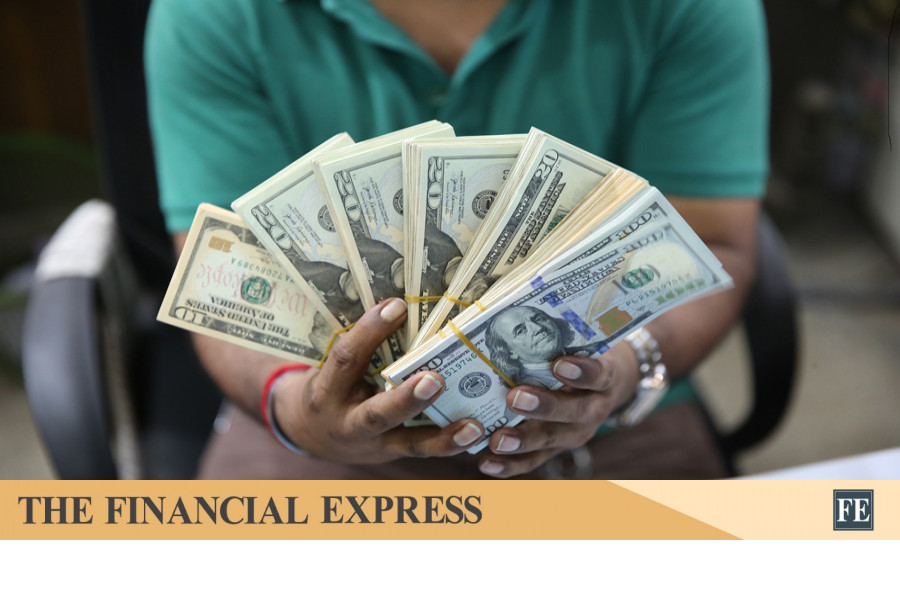
Exchange rates, the price of one currency in terms another currency, are crucial in international finance for influencing trade balance, investment flows and inflation. Factors influencing exchange rates include interest rates, economic activity, inflation and market confidence. For economies like Bangladesh, exchange rate is an important economic variable. Changes in it affect economic activity, inflation and balance of payments.
An exchange rate regime is the framework a country’s central bank or government employs to determine its currency’s relative value in the international market. Foreign exchange regimes classify how countries manage their currency value relative to others, ranging from floating (market-driven) to fixed (pegged) systems. Major types include free-floating (e.g., USD, Euro), managed floating (e.g., China, India), and fixed/pegged systems (e.g., Hong Kong, many African nations). These choices reflect economic priorities, trade, and stability.
Geopolitical shifts and policy volatility (such as tariff changes) are reshaping trade, with developing economies often facing the highest risks. International organisations like the World Trade Organisation (WTO), International Monetary Fund (IMF), and World Bank play central roles in regulating, facilitating, and providing technical support for international trade finance.
The historical shifts in currency regimes have been driven by a complex interplay of economic, geopolitical, and policy factors. These transitions have shaped how countries value and exchange currencies, often reflecting a delicate balance between stability, policy objectives, and market forces. However, over the last half a century the neoclassical economic doctrinaire view largely dominated how actually exchange rates are determined where it is assumed that an equilibrium between trade balances and productivity levels pull currencies towards their fundamental value. If a country runs a persistent trade surplus, its currency should appreciate and if its productivity rises than its trading partners, its purchasing power should follow.
Nevertheless, the US dollar demonstrated resilience for decades in the face of ongoing trade deficits-a trend that persisted until its recent 10 per cent decline. China posted a record trade surplus of about US$1.2 trillion in 2025, driven by 5.5 per cent export growth despite new U.S. tariffs. This highlights the resilience of its manufacturing sector and reliance on exports amid a weak domestic economy, while its real effective exchange rate fell by around 20 per cent. This is a clear sign of the productivity gains achieved by China.
Global trade and finance are deeply interconnected, with over 90 per cent of the $28.5 trillion global trade volume relying on trade finance, including credit, insurance, and guarantees to mitigate risks. This sector acts as a lubricant, enabling cross-border commerce by bridging gaps between shipments and payments. Financial instruments like, such as, letters of credit and receivables finance are essential tools used in this process.
Persistent overvaluation of the US dollar is the key mechanism of trade imbalances, keeping imports cheap despite widening trade deficits. So how is it possible that currency markets, which are the largest markets in the world in terms of sheer trading volume, do not equilibrate?
The divergence between the traditional perspective that links trade balance to exchange rates suggests that additional factors are influencing the movements of major world currencies beyond the trade balance itself. We now need to focus on the volatile world of capital flows and financial cycles to understand the disconnect.
According to the latest data released by the Bank of International Settlement, daily turnover of foreign exchange has surged to $9.6 trillion, which is roughly 70 times the foreign exchange transactions related to the volume of world trade.This indicates that the exchange rate reflects asset prices to a greater extent than it does the prices of goods and services. Exchange rates have emerged as an indicator of investor confidence in a given currency, influencing decisions to invest or withdraw capital accordingly.
This takes us to the alternative model of equilibrium for currencies and that suggest savers selecting investment alternatives among different nations. Within this equilibrium framework, currency values adjust to ensure that investors are indifferent to holding assets denominated in various currencies on an ex ante risk-adjusted basis.
However, this alternative model becomes rather complicated when a nation’s currency is a reserve asset as is the US dollar. The demand for the US dollar (USD) and the US Treasury Securities(UST) is not anchored in balancing trade or optimising risk-adjusted returns. Much of the demand for both is inelastic with respect to economic or investment fundamentals. These reserves facilitate international trade and provide a vehicle for large pool of savings, often held for policy reasons such as reserve, currency management or sovereign wealth fund rather than return maximisation.
The demand for reserve assets often results in considerable currency overvaluation, as observed with the US dollar, which can have substantial effects on the real economy. The reserve asset producer must run current account deficits because of exporting reserve assets. When the US exports USTs, it earns foreign currency that is then used for imports. The US runs current account deficits because it must export USTs to provide reserve assets to facilitate global growth. But as the US economy shrinks relative to global GDP, and the rest of the world grows, an overvalued dollar incentivises imports leading to the rising current account deficits.
U.S. sanctions, tariffs, runaway debt, and political interference at the Federal Reserve have pushed the world toward de-dollarisation. Gold prices are rising, central banks are selling USTs, and many Americans overlook their reliance on the dollar’s global position for their standard of living.
In a world of deep financialisation, capital flows just do not only reflect reality, but they also create it. If investors expect currency depreciation, capital flows out, thus causing the very depreciation they feared, regardless of whether the trade balance is in surplus or deficit.
Additionally, an economic downturn characterised by subdued domestic demand and declining property prices is contributing to deflationary pressure on the real economy. Despite gains in productivity, there remains insufficient demand for assets denominated in the local currency, such as RMB, which continues to exert downward pressure on its value. This is happening when China’s record-breaking trade surplus that hit $1.2trillion in 2025.
The neo-classical insistence on Purchasing Power Parity as the principal anchor for determining exchange rates has become increasingly irrelevant in a world where exchange rate has an asset price, guided by the laws of finance rather than the laws of trade. To ignore this reality is to risk being blindsided by the changes that are taking place in the global economy.
The central place given to finance has come at the expense of the real economy, leading to less investment in manufacturing as capital is steered elsewhere, widening economic inequality and increasing economic and social vulnerability. This is particularly a concern for developing countries which are often more vulnerable to the negative impacts of financialisation including facilitating laundering of stolen and tainted money out of developing countries.
For developing countries like Bangladesh financialisation can lead to capital flight, currency volatility, and increased debt burdens, undermining the country’s economic growthand stability. The current macro-economic environment in Bangladesh is marked by slowing economic growth, high inflation and unemployment, looming debt burden and a banking system in deep crisis.
The global financial system also enables money laundering, pointing to weak enforcement of anti-money laundering laws. Based on recent reports, an estimated $234 billion was siphoned out of Bangladesh during the 15-year rule of the former Sheikh Hasina regime (roughly 2009-2024), according to studies cited by the interim government. Tainted money has primarily flowed to the USA, UK, Canada, Australia, Singapore, Hong Kong, the UAE, Malaysia, and tax havens like the Cayman Islands.In 2024, Bangladeshi funds in Swiss banks hit a three-year high of around 589.5 million Swiss francs (Tk 8,800 crore), reflecting illicit outflows and capital flight rather than legal transactions.A 2017 Global Financial Integrity Report found illicit financial flows from Bangladesh the highest among LDCs. These illegal outflows also show how some foreign banks and jurisdictions may have enabled or ignored the laundering of stolen funds. The stolen funds were often laundered through foreign banks, shell companies, and offshore jurisdictions. In fact, corruption and illicit transfer of funds have now become a major drag on economic growth of the country.
muhammad.mahmood47@gmail.com