
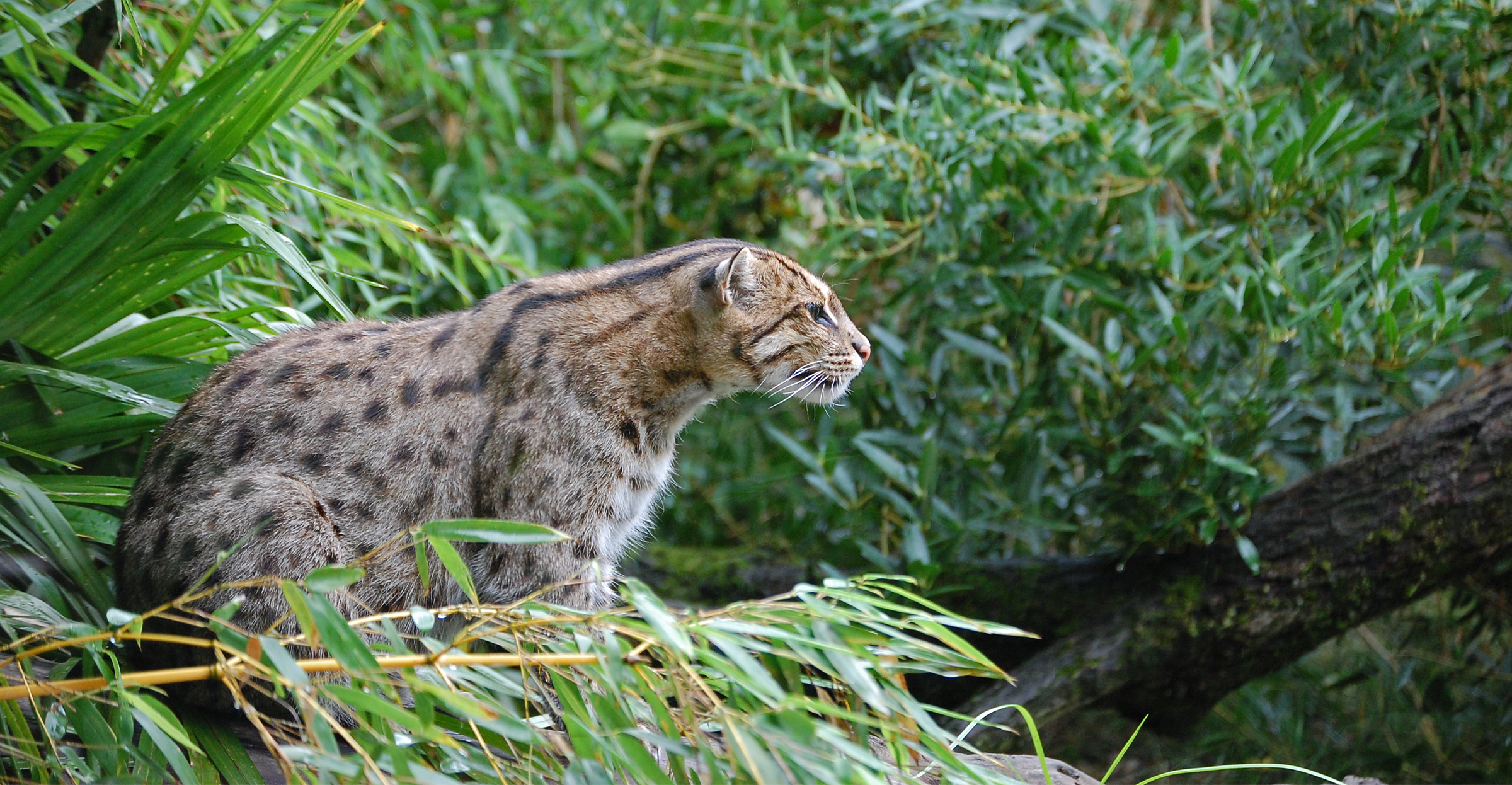
- Fishing cats in Bangladesh are facing near-extinction as they struggle to adapt to living alongside humans in Bangladesh.
- Wildlife experts recommend hotspot-based, short-term conservation strategies to immediately halt killings of the small carnivores.
- They also urge long-term solutions, as the interim measures are insufficient.
Wildlife researchers have confirmed the presence of endangered fishing cats in 158 subdistricts that cover about 32% of Bangladesh’s territory. At first glance, this may seem like charming news.
But a grim situation was uncovered by researchers who analyzed more than 360 media reports published between 2005 and 2021.
Their study, published in June, estimates that 31% of the analyzed media reports conveyed news of the death of 160 fishing cats (Prionailurus viverrinus), most of which were chased and trapped by fish and duck farmers and their associates.
The study, characterizing negative interactions between humans and fishing cats, finds that about 47% of the cases demonstrated a kill-on-sight reaction.
Calling fishing cats “true ambassadors of the wetlands of South and Southeast Asia,” the study’s corresponding author, Muntasir Akash, tells Mongabay, “In Bangladesh, the situation is dire. Our study results show that around one-third of Bangladesh has breeding fishing cat populations, and more than 95% of these regions are outside protected areas. Bangladesh’s fishing cats are experiencing the same colonial-era purge of big cats.”
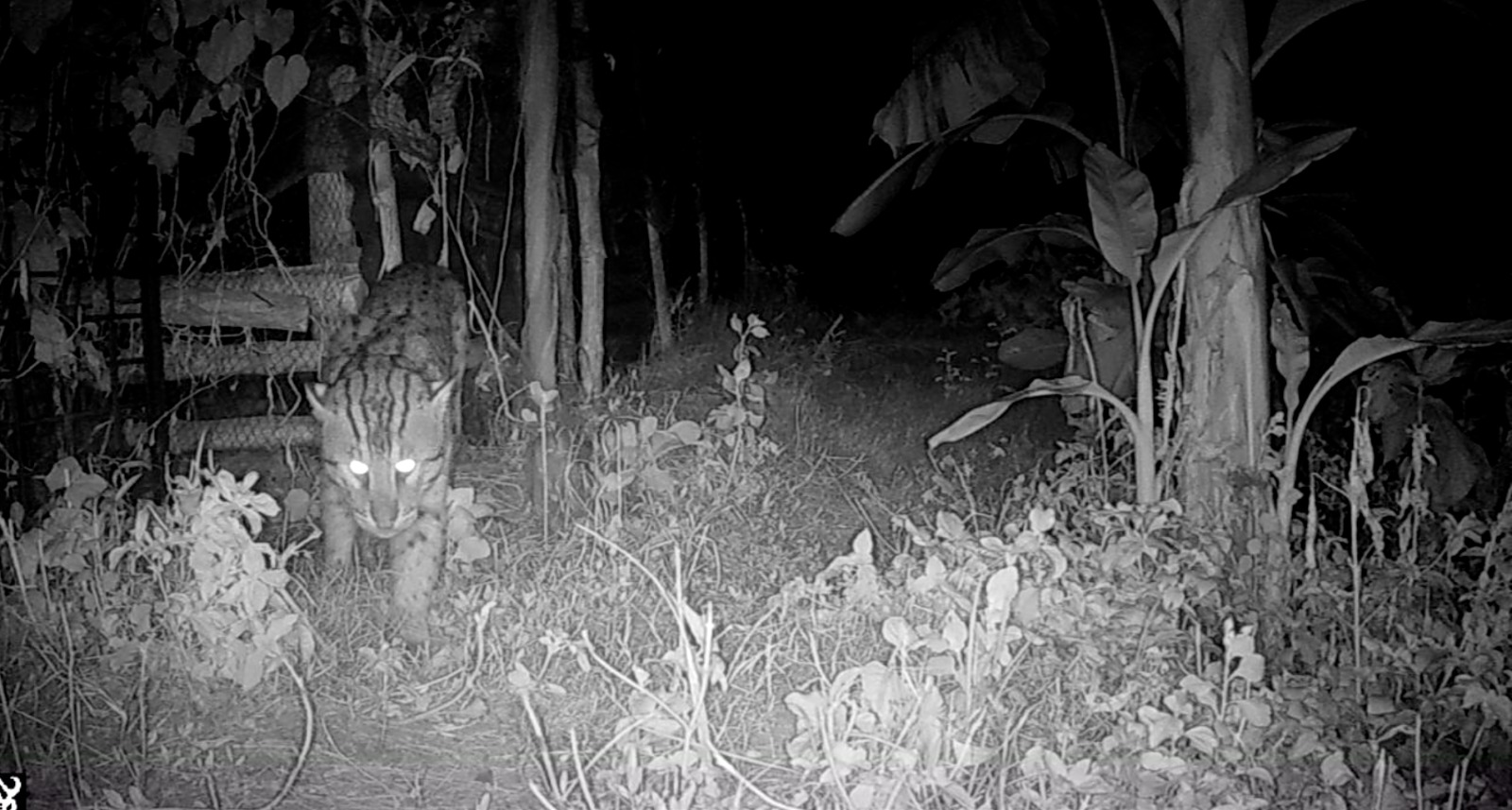
The researchers counted at least 395 adult fishing cats and 170 kittens involved in recorded conflicts. Of them, 117 were released back into the wild, while 34 were sent to zoos or rescue centers more than 20 kilometers (12 miles) from the sites of conflict.
However, those released individuals might face recurring experiences as human settlements rapidly expand into natural habitats.
“Whether the same fishing cat individual gets into recurring conflict incidents is another aspect to look at to solve this intense conflict scenario,” says Akash, also an assistant professor of zoology at Dhaka University.
In Bangladesh, where wildlife is being increasingly cornered by urban growth, a troubling trend has emerged in videos, circulating on social media, showing people beating or strangling fishing cats accused of attacking poultry and fish farms.
Conservationists have expressed sheer concerns over the trend.
Why do people consider fishing cats as their threat? Many of them match the small cats with “harmful” tigers. Actually, the fishing cat has a brownish olive-gray coat, a stocky body with short pinnae and a muscular tail. From head to tail and on their flanks, fishing cats are marked with .
Bangladesh’s environment and forest ministry, in response to rising killings, recently enacted a new wildlife crime control law that strictly prohibits the killing of around 250 animals, including the fishing cat, and bans the posting of wildlife torture videos online.

Wildlife experts say strict enforcement of these laws is essential.
They also argue that proactive co-management by local administrations, Forest Department staff and communities can help shift public attitudes in favor of the species.
The experts also suggest a compensation scheme for the human-fishing cat conflict areas so the local people’s rights to livelihoods, depending on farming fish and ducks, are not denied.
Another research project, carried out from 2020 to June 2024, found that fish and duck farmers were among the most frequent attackers of fishing cats.
The study focused on four districts in the northeastern Sylhet region, which was previously identified as a conflict hotspot. The region’s landscape is dominated by scattered haors (large bowl-shaped wetlands), patchy reserve forests and tea gardens, the ideal habitat for fishing cats.
During the study period, researchers recorded the rescue of 86 live fishing cats and seven dead individuals.
Of the live cats, 76 were released within one to seven days at or near the locations where they were found. Thirty-five of these were kittens.
The findings, published in December, described the release success as “phenomenal.”
The study’s corresponding author, Rezaul Karim Chowdhury, who serves as the divisional forest officer of the Sundarban East Forest Division, says most fishing cat killings today occur in the wetland-rich districts of Jashore, Kushtia and Jhenaidah.
“This also used to happen in the Sylhet region. However, since 2020, due to various conservation initiatives by the Forest Department, fishing cats are now still captured there but can often be rescued alive. Our research focused on improving the rescue and release process, which is why we worked specifically in the Sylhet region,” he says.
Their research documented a high success rate in reuniting rescued kittens with their mothers when released as quickly as possible. One successful attempt in Sylhet, where a lone kitten was left at the site of capture and retrieved by its mother within hours, encouraged more trials.
But the researchers did not see success in every case. Ten kittens’ reunifications failed because their releases were delayed or because their mothers had escaped from the area because of heavy human disturbance, the study says.
According to the researchers, timing is crucial. To give kittens the best chance of being reunited with their mothers, they recommend releasing kittens back into their natal habitat within 24 hours.
They also recommend capacity building of the Forest Department.
During the research period, they observed that proactive efforts of the Forest Department staff, in response to community-based volunteers’ information, were the key to rescuing fishing cats from conflict situations.
The study warns that many cats would likely have been killed if rescue teams had taken longer to arrive.

Recommended conservation
As a short-term measure, researchers recommend installing protective net-fencing around fishponds and duck farms situated along water bodies to reduce the likelihood of fishing cat intrusions.
They also suggest clearing vegetation around farms and installing light posts to further reduce predation risks.
Mahfuz Ahmed Russel, custodian of the community-based Pittachhara Forest in Khagrachhari district, agrees with the research focus on rescue and release.
But he warns that net-fencing is not a straightforward solution.
“Nets can trap and potentially kill birds and snakes. Moreover, species like fishing cats, cormorants and kingfishers generally prey on weaker fish,” he says.
Russel says that experienced fish farmers often do not consider fishing cats a major threat, believing that stronger fish escape quickly on seeing the predator, and this helps them grow and become healthier.
He stresses the need for long-term solutions.
Responding to concerns about net-fencing, professor M. Monirul H. Khan, another author of the Sylhet-based study, says fencing has been recommended only for commercial fish and duck farms.
“Fishing cats are killed because they go after fish and ducklings. If the commercial farms are fenced, the fish and ducklings will be protected, and the fishing cats will also be safe from attacks by farmers,” he says.
Khan, a zoology professor at Jahangirnagar University, stresses that short-term measures alone will not be enough.
He calls for long-term conservation efforts based on identifying conflict hotspots and preserving wetland-dominated habitats that sustain fishing cat populations.
Banner image: A fishing cat (Prionailurus viverrinus). Image by Dulup via Flickr (CC BY-SA 2.0).
Navigating the rise in conflicts between humans and fishing cats in Bangladesh
Citations:
Akash, M., Zakir, T., Saniat, T., Dheer, A., & Srivathsa, A. (2025). No country for small cats: Systematic analysis of media-reported incidents unravel a troubled scenario for the fishing cat Prionailurus viverrinus in Bangladesh. Global Ecology and Conservation, 59, e03505. doi:10.1016/j.gecco.2025.e03505
Chowdhury, M. R. K., Khan, M. M. H., Hamza, A., Rahman, M. A., & Aziz, M. A. (2025). Persecution, rescue and release of globally vulnerable fishing cats in human-dominated landscapes of Bangladesh. Global Ecology and Conservation, 64, e03978. doi:10.1016/j.gecco.2025.e03978
