
Bangladesh’s coastal belt endured a year of relentless climate stress in 2025, with repeated floods, low-pressure systems, salinity intrusion, and disease outbreaks affecting millions, even without the direct landfall of major cyclones, officials and experts said Friday.
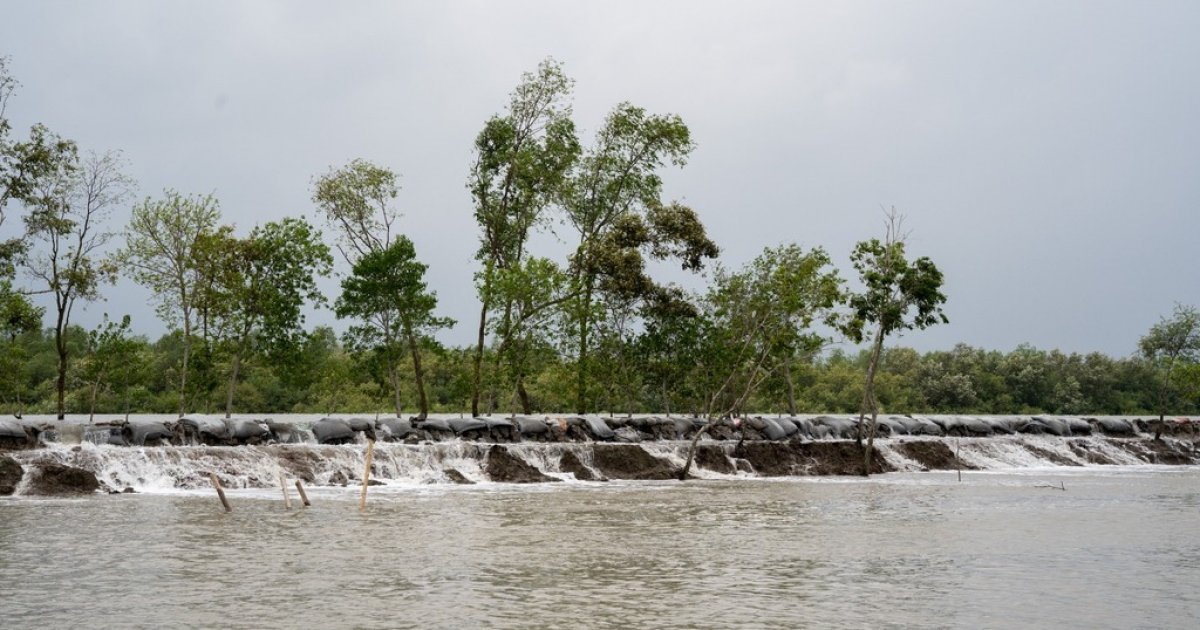
Standing beside a collapsed embankment in Anulia Union of Ashashuni Upazila, Satkhira, residents expressed quiet resignation. What was once called a “climate emergency” has become a familiar cycle of loss and recovery.
According to the Bangladesh Meteorological Department (BMD), at least five low-pressure systems and deep depressions formed in the Bay of Bengal between May and November 2025. Several intensified rapidly, triggering storm surges, heavy rainfall, and abnormal tides across coastal districts.
A deep depression in late May crossed the West Bengal–Bangladesh coast, inundating parts of Satkhira, Khulna, Barguna, Bhola, and Patuakhali. Embankments failed at multiple points, rivers overflowed, and thousands of households were temporarily submerged.
“Low-pressure systems are becoming more frequent and more destructive due to rising sea surface temperatures,” said Prof Ainun Nishat, emeritus professor at BRAC University and adviser at the Centre for Climate Change and Environmental Research (C3ER).
“These systems often escape the attention given to cyclones, yet their cumulative damage is comparable, if not greater. Coastal governance, embankment maintenance, and community preparedness are now more crucial than ever,” he said.
In July, another deep depression caused tidal surges three to four feet above normal in 14 coastal districts, according to the Department of Disaster Management (DDM). October and November saw repeated low-pressure formations, placing prolonged stress on already weakened embankments.
Floods in 2025 showed a clear southward shift toward coastal zones. Early July flash floods submerged five upazilas and two municipalities in Feni district, affecting 106.15 square kilometers and nearly 78,000 people, according to government data. Similar flooding hit Noakhali and Lakshmipur, where women and children faced severe hardship in overcrowded shelters. Health officials reported a surge in diarrhea, skin infections, and other waterborne diseases.
In Cox’s Bazar, intense rainfall triggered landslides in Rohingya camps in Ukhiya and Teknaf, damaging around 1,400 shelters, the UN Refugee Agency (UNHCR) said.
“This pattern of upstream rainfall and downstream flooding is consistent with climate change projections,” said a program manager at an international NGO disaster response unit. “The coast is increasingly absorbing the shock of both riverine and coastal hazards.”
One of the year’s most symbolic disasters occurred during Eid-ul-Fitr, when a breached embankment in Anulia Union allowed saline water from the Kholpetua River to flood at least 10 villages, affecting nearly 10,000 people. Shrimp farmer Aktaruzzaman lost four enclosures worth more than Tk5,00,000.
“We took loans from banks and cooperatives. The shrimp are gone, but the debt remains,” he said.
Salinity intrusion worsened across the coast. A World Bank study, River Salinity and Climate Change: Evidence from Coastal Bangladesh, warns that by 2050, excessive salinity could affect 148 upazilas across 19 coastal districts, threatening agriculture, drinking water, and food security. Between 2024 and 2025, the Bangladesh Water Development Board (BWDB) reported an 8–12% increase in salinity in parts of Satkhira and Khulna, shrinking arable land.
For coastal fishers, 2025 was deadly. Between July and November, more than 60 fishers went missing as trawlers capsized off Bhola and Chittagong amid rough weather linked to low-pressure systems.
“We have no insurance, no safety nets, and very limited forecasting support,” said Sumon, a fisher leader from Char Fasson. “When someone disappears at sea, the entire family is pushed into poverty overnight.”
Dengue, once largely urban, spread aggressively across coastal districts, with Barguna reporting at least 53 deaths by October, according to health officials and non-government estimates. Health experts link the outbreak to water storage practices driven by salinity-induced freshwater shortages.
“When people store rainwater for long periods, it creates ideal breeding sites for Aedes mosquitoes,” said Dr Tahmina Shirin, director of the Institute of Epidemiology, Disease Control and Research (IEDCR).
In March and April, temperatures reached 43°C in parts of Satkhira and Bagerhat—the highest in nearly two decades. The Directorate General of Health Services (DGHS) reported a 25% increase in heat-related illnesses in coastal districts compared to 2023. Cold spells in January and late December hit low-income households, particularly those living on embankments or in temporary shelters.
International assessments underline Bangladesh’s vulnerability. The Global Climate Risk Index 2025, published by Germanwatch, ranks Bangladesh among the world’s most climate-affected countries. The IPCC AR6 report warns that low-lying delta regions like coastal Bangladesh face “compound and cascading risks” from sea-level rise, salinity intrusion, and extreme weather. The Asian Development Bank estimates that climate change could reduce Bangladesh’s GDP by up to 6.8% annually by 2050 if adaptation measures are not strengthened.
“Without urgent investment in embankment maintenance, freshwater access, and climate-resilient livelihoods, adaptation gaps will widen,” Prof Nishat said. “The challenge is no longer only national; it requires global commitment to reduce emissions while supporting adaptation in highly vulnerable areas like Bangladesh’s coast.”
Experts warn that 2026 could be even more challenging, with intensified low-pressure systems, expanded salinity, rising displacement of 2,00,000–3,00,000 people annually, and vector-borne diseases becoming endemic in coastal zones.
“Every year we rebuild, and every year the river returns,” said Rahima Begum, now living on an embankment after losing her home in Satkhira. “We don’t know how long we can keep starting over.”