
GCA Partners with the World Bank and the Government of Bangladesh to Develop Climate Resilient Secondary Cities
R
otterdam, the Netherlands, 25 June 2024 – The Global Center on Adaptation (GCA) announced today its collaboration with the World Bank and the Government of Bangladesh to improve climate-resilience and gender-responsive urban infrastructure and urban management capacities as part of the US$560 million World Bank’s Resilient Urban and Territorial Development Project (RUTDP).
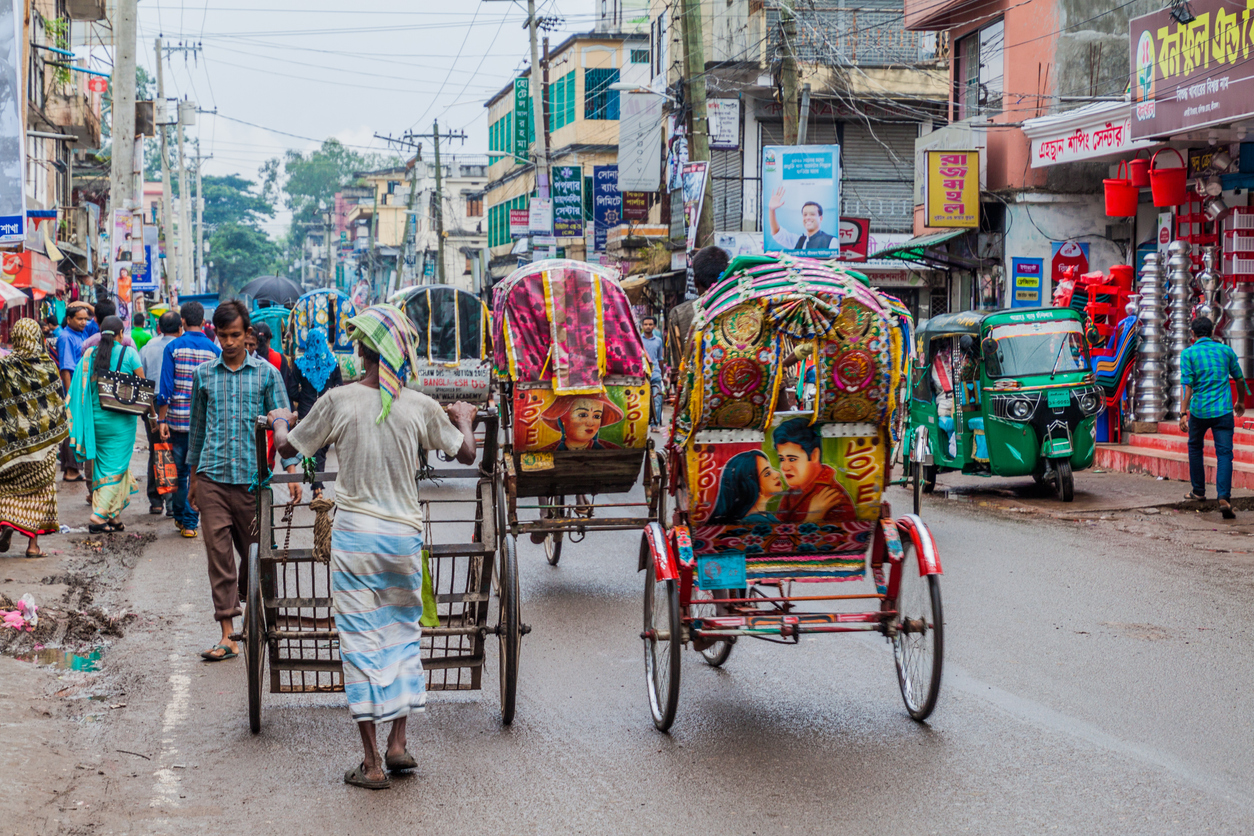
The RUTDP will support climate-resilient and gender-responsive infrastructural, economic and social interventions in seven city clusters consisting of 14 nodal cities and other secondary cities along the high priority economic growth corridors. This corridor spans over 950 kilometers from Cox’s Bazaar in the southeast to Panchagarh in the north of Bangladesh. Secondary cities are vital to Bangladesh’s economy with 75% of the GDP concentrated in urban areas. However, rapid urbanization is projected to increase the urban population from 38% in 2021 to 60% by 2050. This rapid growth is causing a decline in the benefits derived from urban clustering, such as productivity gains and employment opportunities.
Increasing climatic risks and natural disasters, environmental degradation, poor infrastructure provisions and slow human capital development are expected to further impact urban well-being. These challenges are exacerbated in poorly connected and underdeveloped secondary cities, which lack institutional capacity and access to resources, constraining their ability to provide sustained urban services.
Through RUTDP selected municipalities and city corporations will receive subgrants to invest in in climate-resilient, green building features, and gender responsive infrastructure. This investment will also create jobs, enhance rural-urban linkages, strengthen food supply chains, and connect domestic markets to global value chains.
Developing climate-smart cities to improve the urban environment and well-being is a key objective of Bangladesh’s National Adaptation Plan (NAP). The $400 million first phase of the World Bank programme will be implemented by the Local Government Engineering Department (LGED) between 2024 and 2031.
GCA’s CEO, Professor Patrick Verkooijen, stated “Cities and urban areas are increasingly becoming climate hotspots that not only affect the well-being of residents but also slow down the economic growth of the country. GCA’s work includes large-scale projects designed to protect vulnerable communities and infrastructure, including those in urban areas.”
During his recent visit to Bangladesh in June 2024, Professor Verkooijen visited climate-vulnerable informal settlements in Chattogram, which are receiving investment support from ongoing World Bank projects and technical assistance from GCA.
Underscoring GCA’s work on building climate-resilient cities in Bangladesh and the collaboration with RUTDP, Professor Verkooijen added, “By 2026, GCA’s climate-resilient urban development activities are expected to cover approximately 75% of all 329 municipalities in Bangladesh. This partnership is a key step towards achieving that goal, integrating climate-resilient solutions to ensure that the investment is climate-proofed.”
The World Bank also anticipates that climate-resilient development in secondary cities will help absorb climate migrants and reduce congestion in Dhaka. The project’s Task Team Lead Dr. Kwabena Amankwah-Ayeh remarked, “Developing secondary cities as growth hubs will be critical for the country’s sustainable growth.”
GCA will work closely with the RUTDP task team to provide technical assistance for priority formulation and a conceptual approach to mainstreaming climate resilience in selected secondary cities. This includes: (i) support for institutional arrangements for climate resilience planning at the sub-regional level; and (ii) assessment of local climate risks and vulnerability areas to help prioritize and design tailored local solutions for climate-resilient infrastructure.
Notes to Editors
About the Global Center on Adaptation
The Global Center on Adaptation (GCA) is an international organization that promotes adaptation to the impacts of climate change. It works to climate-proof development by instigating policy reforms and influencing investments made by international financial institutions and the private sector. The goal is to bring climate adaptation to the forefront of the global fight against climate change and ensure that it remains prominent.
Founded in 2018, GCA embodies innovation in its approach to climate adaptation as well as in its physical presence. It operates from the largest floating office in the world, in Rotterdam, the Netherlands. GCA has a worldwide network of regional offices in Abidjan, Côte d’Ivoire; Dhaka, Bangladesh; and Beijing, China. The Center will open a new office in Nairobi, Kenya in 2025.