
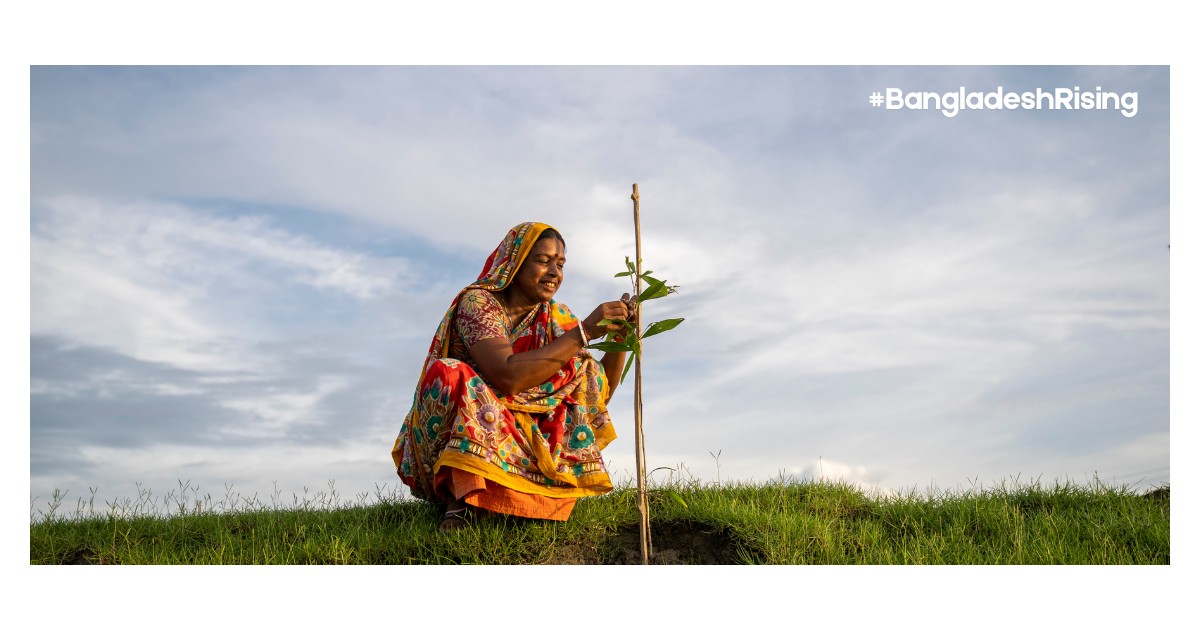
In a recent visit to a village in Khulna in Bangladesh’s coastal region, I met with a group of mothers who earn living from planting and guarding saplings on the very polders that protect their communities from cyclone and tidal surges. I saw firsthand their hard work and determination to provide better education and opportunities for their children. This is but one example of the resilient and determined spirit that underpins Bangladesh’s story of overcoming adversity.
I have always known Bangladesh as an example of resilience and poverty reduction. The country is globally recognized for its success in reducing poverty backed by economic growth despite daunting challenges. Between 2010 and 2022, 9 million people were lifted out of extreme poverty, and 25 million people from moderate poverty. Living standards improved as did access to essential services like electricity, sanitation, and education. Rural areas have emerged as increasingly important drivers of this progress, benefiting from improved connectivity and increased agricultural employment.
However, these achievements need unpacking and a deeper analysis as significant challenges loom large. The pace of poverty reduction has slowed since 2016 and economic growth became less effective at reducing poverty, and income inequality has risen. Job creation stalled in the manufacturing sector, particularly affecting women and youth. Progress is being held back by infrastructure and service quality gaps. High enrollment hasn’t translated into learning gains, and congestion is choking off agglomeration benefits.
Accelerating poverty reduction will require ensuring economic growth benefits more people, notably women and youth, and improving the quality of jobs. The Bangladesh Poverty and Equity Assessment: Navigating the Road to Prosperity, launched last week, examines these patterns in detail.
Bangladesh’s progress is real—but it has been slowing and becoming less inclusive
After 2016, the benefits of economic growth did not reach everyone equally. While overall spending in the country has gone up, most of the gains were enjoyed by richer households. Inequality in consumption remained stable nationally, but income inequality increased, rising from 51 to 54 Gini points. The poorest families have seen very little improvement in what they can afford.

And since 2022, rising inflation and job losses have pushed vulnerable households into poverty and reduced real income for the poorest. Microsimulation-based estimates suggest that poverty increased from 18.7 percent in 2022 to 21.2 percent in 2025. Some 62 million Bangladeshis—roughly one third of the population—are vulnerable to falling back to poverty.
Though social assistance programs more than doubled between 2016 and 2022, yet half of the poorest families did not receive any social assistance benefits, while 35 percent of the richest did in 2022. Social protection coverage in urban areas increased from 16 to 34.5 percent of households between 2010 and 2022, but leakage to better-off groups persisted. On top of this, electricity, fuel, and fertilizer subsidies favored wealthier households. In 2022, these subsidies accounted for 22 percent of the poorest household’s disposable income, yet the richest urban households alone captured nearly half of total electricity subsidy spending.