
In the early 1960s, Pakistan’s economy was growing well, aided by advice from the US and by the receipt of substantial amounts of foreign aid from the US. Pakistan’s economists, such as Parvez Hasan, were in hot demand, especially in the Asia-Pacific economies. A delegation from South Korea visited Pakistan to study the ingredients of success, convinced that it was in the “take-off” stage identified by the American economist and national security advisor, Walt Rostow. However, geopolitical developments such as the lingering conflict with India, which escalated into a full-scale war in September 1965, caused a reversal in Pakistan’s economic growth.
With the passage of time, South Korea, Taiwan, Hong Kong and Singapore would emerge as “Asian Tigers,” their economies growing based on successful promotion of exports. By 1980, as the graph shows, South Korea and Taiwan GDPs per capita were twice as high as Pakistan’s. By 2020, Pakistan’s GDP per capita (which lies close to the horizontal axis) was dwarfed by the GDP per capita of these two countries.

Much of this is well known. What is less well known is that Pakistan’s economy also lost the economic race to Bangladesh’s. Bangladesh was born in December 1971 after a bloody civil war in East Pakistan. In March 1971, the Pakistan army launched Operation Searchlight to take out leaders of the Awami League, which had won a majority in the general elections for the National Assembly. By November, the civil war escalated into a full-scale war with India. The war ended on 16 December 1971, when the Pakistani army surrendered to the Indian army and agreed to the secession of East Pakistan, resulting in the creation of Bangladesh.
As discussed previously, the new country was poorer than West Pakistan during the 24 years in which it was East Pakistan. For several years after independence in 1971, Bangladesh remained poorer than West Pakistan, which was renamed Pakistan. Then things began to change.
Bangladesh’s GDP growth averaged 6–7% over the last two decades, while Pakistan often struggled to reach 4%. Bangladesh overtook Pakistan in per capita GDP in 2019.
Bangladesh developed a relatively stable consensus around economic policy despite political turbulence. Civil society and NGOs often compensated for weak governance
In the late 1990s, Bangladesh’s economy began to move faster than Pakistan’s economy. The crossover occurred in the mid-2000s. By 2010, it had clearly moved ahead of Pakistan. By 2015, it’s per capita GDP was twice as high as Pakistan’s. By 2022, its per capita income was two- and-a-half times higher than Pakistan’s.
National poverty fell from 80% in 1971, to 44.2% in 1991, and 18.7% by 2022.
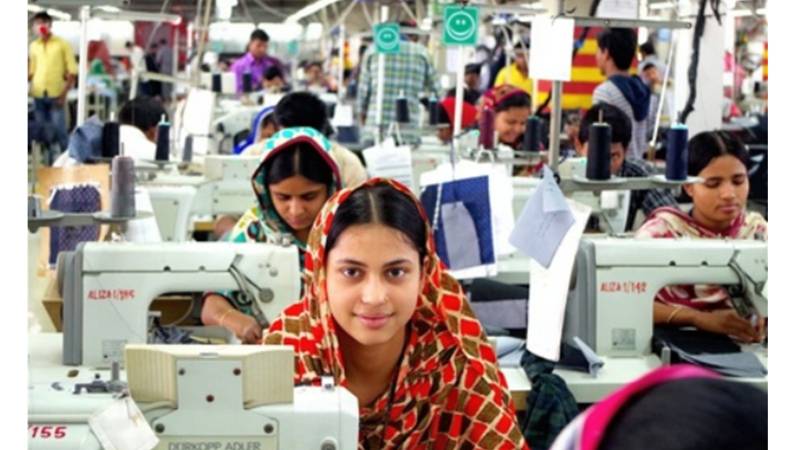
Bangladesh also went past Pakistan in exports. Its garment exports exceeded $40 billion annually, while Pakistan’s total exports hovered around $30 billion. This was a complete reversal of fortunes. In the sixties, garments and textiles were West Pakistan’s major exports while Bangladesh simply exported raw jute.
As a point of reference, in 1972, Pakistan’s GDP per capita was also higher than India’s. In the mid-1980s, India moved ahead of Pakistan on that metric. By 2022, it was 2.8 times higher than Pakistan.

Why did it move ahead of Pakistan? This is one of the most striking cases of post-colonial development. At independence in December 1971, Bangladesh was poorer, war-torn, and widely dismissed as an “economic basket case.” Yet today, it outpaces Pakistan in several key indicators.
Bangladesh suffered heavily from the devastating impact of cyclones. It did not have much industrial infrastructure, unlike Pakistan (the former West Pakistan). During the first two decades of its existence, in the seventies and eighties, it remained impoverished and struggled with political instability. During the same time period, Pakistan benefited from Cold War-related foreign and from remittances from expats in the Gulf countries.
Then its fortunes began to change, not because of natural or political reasons, but because it began to focus heavily on ready-made garments. The export revenues from these became its economic backbone. Today, it’s the second-largest garment exporter in the world, besides China. Pakistan, in contrast, remained dependent on low-valued cotton and agriculture and did not climb up the value chain.
Besides becoming a world leader in exports, Bangladesh also invested heavily in health, family planning, and education, particularly for women. A large share of Bangladeshi women entered the workforce, particularly in the garment sector. This boosted household incomes and spurred social mobility. In Pakistan, cultural and social restrictions limited women’s economic roles.
Fertility rates dropped rapidly, reducing population pressure on resources. NGOs like BRAC and Grameen Bank played a huge role in rural empowerment and microfinance. Sadly, Pakistan lagged in human development indicators such as those for literacy, health care, and women’s participation.
Furthermore, Bangladesh developed a relatively stable consensus around economic policy despite political turbulence. Civil society and NGOs often compensated for weak governance. Pakistan remained inflicted with the problems that had dogged it since its independence in 1947: elite capture, political turbulence and decades of military rule. It also continued to exist in a state of war with India, unlike Bangladesh.
Externally, Bangladesh negotiated preferential trade agreements with the EU and the US and boosted its exports to these regions. Its large diaspora also sent in steady remittances. By contrast, Pakistan received aid from the US during the Cold War and the “War on Terror”, but this deepened its dependency of foreign aid and distracted it from making much-needed structural reform that many Pakistani economists had called for.
To sum it up, Pakistan lost the race because it did not boost manufacturing and continued to rely on agriculture. It did not boost exports and continued to depend on foreign aid. Pakistan continued to struggle with issues of national security, such as the tensions with India and terrorism, brought on by its participation in the US-led wars in Afghanistan, first against the Soviets and then against the Taliban.
Pakistan failed to invest in education and health, especially for women. It had turned into a textbook case of elite capture. Bangladesh turned its disadvantages into strengths, while Pakistan continued to rely on geopolitical rents and did not focus on creating institutions that would reform its economy and eliminate elite capture.