
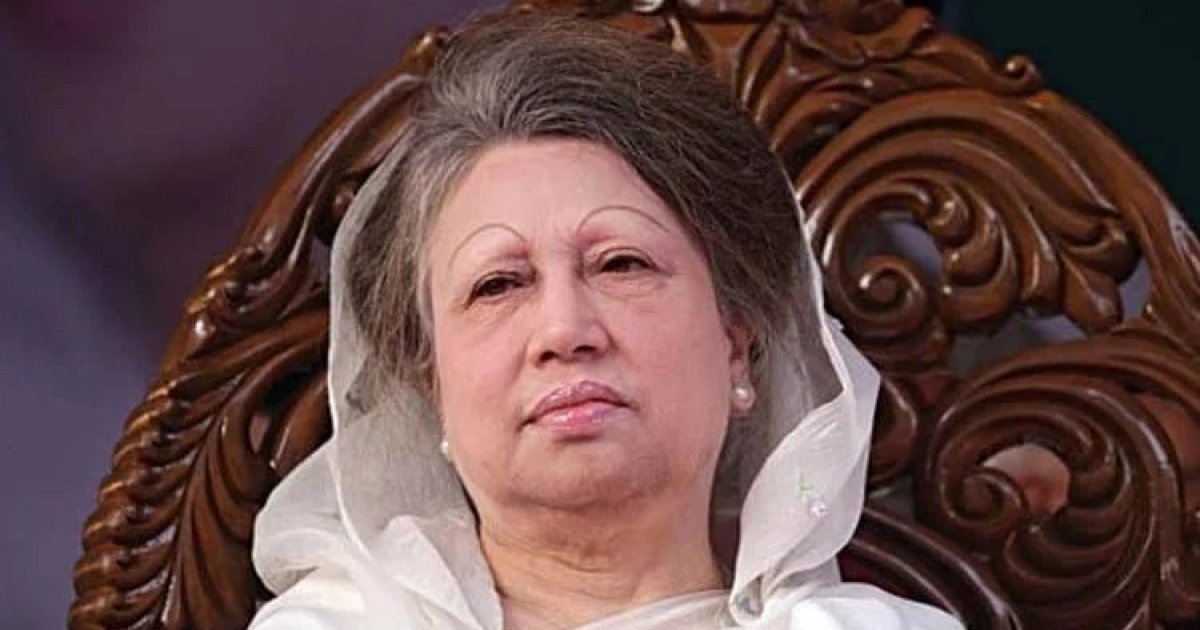
Khaleda Zia was not only a dominant figure in Bangladesh’s political landscape; she was also a key architect of the country’s economic direction during two critical phases of democratic transition. The policy choices made under her leadership—during her tenures as Prime Minister from 1991 to 1996 and 2001 to 2006—left a lasting imprint on Bangladesh’s economic structure, particularly in steering it towards a market-oriented and private sector–led path.
Economists note that Khaleda Zia governed at a time when expectations were modest, institutions were fragile, and the economy was emerging from prolonged military rule. Within these constraints, she sought to maintain stability while cautiously introducing reforms that laid the groundwork for future growth.
Dr Debapriya Bhattacharya, distinguished fellow of the Centre for Policy Dialogue (CPD), credits Khaleda Zia with providing the political leadership necessary for initiating economic reforms. Speaking to Dhaka Tribune, he said: “The economic reforms we are talking about today were initiated mainly during the tenure of Khaleda Zia. She understood the political necessity of economic reforms and led those reforms.”
Having worked with her on several occasions, Dr Bhattacharya highlighted three defining aspects of her leadership. First, he said, she listened attentively to complex and technical economic issues, making an effort to fully absorb policy explanations. Second, she asked logical and relevant questions that reflected her ability to grasp core concerns. Third, she demonstrated decisiveness—translating technical advice into political action with notable speed.
Her working relationship with Finance Minister M Saifur Rahman, he added, stood out as an example of effective coordination between political leadership and economic policymaking.
“When politics and economics run in parallel, a country has the potential to develop. That was visible during Khaleda Zia’s time,” he said.
During her administrations, economic growth remained steady, private investment expanded, and exports and remittances grew. Agriculture also registered notable gains.
Major reforms—including the introduction of the Value Added Tax (VAT) and greater exchange rate flexibility—were implemented with political backing. “Without that support, these reforms would not have been possible,” Dr Bhattacharya noted.
Rebuilding after return to democracy
When Khaleda Zia assumed office in 1991, her government inherited an economy weakened by institutional fragility, aid dependence, and political uncertainty. Restoring confidence and normalcy was the immediate challenge.
In collaboration with the International Monetary Fund and the World Bank, her government undertook structural reforms aimed at curbing inflation, reducing fiscal deficits, and stabilizing the macroeconomic environment.
While growth remained moderate, these measures established a stable foundation for subsequent expansion.
The return to parliamentary democracy also generated new momentum. The private sector began to assert itself, and research institutions such as CPD gained space to develop.
Private sector expansion
The economy gained greater dynamism during Khaleda Zia’s second term from 2001 to 2006. GDP growth averaged between 5.5% and 6.6%—impressive by the standards of the time.
The government’s economic philosophy was firmly market-oriented, with reduced state intervention and greater emphasis on entrepreneurship.
The ready-made garment sector consolidated its position as the country’s leading export industry, while investments expanded into leather, agro-processing, and light engineering.
Export Processing Zones attracted foreign investors and created employment, reinforcing Bangladesh’s shift towards an export-led economy.
Infrastructure development also gathered pace. The full economic utilization of the Jamuna Bridge transformed connectivity with the northern regions, while investments in roads, rural infrastructure, and power generation supported broader economic activity, despite limitations in long-term energy planning.
Remittances
Rising overseas employment during this period boosted remittance inflows, which became a vital pillar of the economy.
International agencies, including the World Bank, observed a trend of poverty reduction, driven by increased rural cash flows, consumption, and small enterprise growth.
The Bangladesh Economic Association describes Khaleda Zia as an important architect of economic and social change. Under her leadership, market liberalization accelerated, while significant emphasis was placed on education and social protection.
Programs such as food-for-education and stipends for girls helped strengthen human capital and supported long-term growth.
Expanded social safety nets and women’s empowerment initiatives also reshaped the socio-economic landscape.
Reforms extended to the financial sector. Private banks were encouraged, competition expanded, and efforts were made to modernize banking practices.
The insurance sector opened up to private investment, and steps were taken to strengthen capital market institutions, increasing investor participation.
Limitations
Economists widely regard Khaleda Zia’s tenure as a formative chapter in Bangladesh’s economic history.
Her policies helped move the economy towards a market-based structure, with lasting effects in banking, insurance, capital markets, and export industries—particularly garments, which transformed employment patterns and women’s participation in the workforce.
Yet, alongside these achievements, serious limitations remained. Institutional weaknesses and deficits in governance continue to be cited as the most significant shortcomings of the period.
Still, Khaleda Zia’s economic legacy endures as a reminder of a time when political leadership and economic reform moved largely in tandem—shaping the foundations of Bangladesh’s modern economy.