
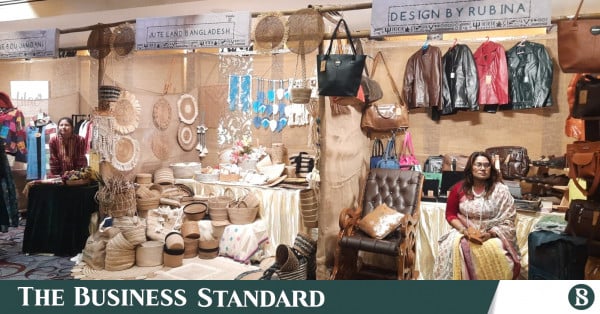
While the world rightly applauds the phenomenal success of Bangladesh’s ready-made garment (RMG) sector, a quieter, more pervasive revolution is powering the economy from the ground up. Beyond the export-oriented industrial parks, in every village, city alley, and local market, lies the nation’s true backbone: its microenterprises. These tiny ventures—often employing fewer than ten people and operating with minimal capital—are not merely surviving; they are thriving, innovating, and weaving the very fabric of Bangladesh’s remarkable economic resilience. They are, without exaggeration, the nation’s unsung growth engine.
According to the Economic Census 2024, there are an estimated 11.8 million economic units—commonly categorised as medium, small and micro enterprises (MSMEs)—in Bangladesh, up from 7.8 million in 2013. This vibrant sector contributes an estimated 25% to national GDP (FY22) and serves as the largest source of employment outside agriculture. Microenterprises alone account for 56% of jobs, while the CMSME sector as a whole employs around 87% of the active labour force. A significant share of this workforce comprises women and young people in rural areas, making microenterprises a critical driver of inclusive development.
Notably, these small businesses are distinguished by their financial discipline, often demonstrating higher loan repayment rates than larger enterprises—underscoring their stability and reliability as borrowers. The government aims to raise the SME sector’s contribution to GDP to 35% by 2030. The growing dominance of microenterprises clearly illustrates how grassroots entrepreneurship can drive national resilience. Their inclusiveness and adaptability make them essential pillars of Bangladesh’s transition towards a sustainable and equitable economy.

Circular economy: A legacy of innovation
In Bangladesh, the principles of the circular economy are not merely a modern trend but a long-standing practice born of necessity. Around 25,000–30,000 tonnes of solid waste are generated each day, and total waste generation could reach 142,000 tonnes per day by 2041. A circular economy offers a feasible solution by turning waste into resources.
Textiles and clothing:
The massive RMG industry generates enormous quantities of waste in the form of fabric scraps, rejected items, and used clothing. An estimated 577,000 metric tonnes of textile waste are produced by factories annually. Small workshops collect these fabric scraps—popularly known as jhut—sort them, and sell them to businesses that transform them into new products.
Plastics and packaging:
Plastic pollution poses a severe challenge. Dhaka’s annual per capita plastic consumption stands at 22.25 kg, triple the level in 2005. Around 646 tonnes of plastic waste are collected in the capital daily, yet only 37.2% is recycled. Here, microenterprises form the backbone of the collection and recycling chain. A vast network of waste pickers (tokai), small scrap dealers (feriwala), and aggregators collect PET bottles, polyethylene bags, and other plastics. Small-scale recycling plants then melt down the plastics to produce pellets, which are sold to manufacturers for new production.
Agriculture:
Microenterprises convert crop residues, rice husk, and animal manure into organic compost, reducing dependence on chemical fertilisers. Composting remains one of the most feasible manure management options. Small-scale biogas plants also help cut greenhouse gas (GHG) emissions—around 20% of which result from manure, and continue to grow by about 1% per year (IPCC, 2014).
These examples of circular practices in waste management, textile recycling, and agriculture highlight Bangladesh’s capacity to innovate from necessity. Strengthening institutional support for such micro-level circular models can transform informal ingenuity into a formal green economy.
Fuelling the proliferation: Key drivers
A microfinance revolution:
Pioneering institutions such as the Palli Karma-Sahayak Foundation (PKSF) have unlocked a tidal wave of entrepreneurial energy by providing financial services to underprivileged people—especially women—offering the seed capital that traditional banks have long withheld. PKSF has implemented numerous projects and programmes over the past two decades focusing on the development of Bangladesh’s microenterprise sector.
Proven creditworthiness:
A key driver of the sector’s growth is its exceptional record of loan repayment. Microenterprises—particularly those supported by microfinance institutions (MFIs)—often achieve higher repayment rates than large corporate borrowers. This is largely due to the group-lending model, strong community accountability, efficient monitoring mechanisms, and the borrower’s personal stake in their venture’s success.
Women’s empowerment:
Women’s participation in microenterprises has grown significantly over the past few decades. Today, women-owned microenterprises not only contribute to household income but also reshape community dynamics by promoting financial independence, decision-making power, and leadership. According to the Labour Force Survey 2022, women own 2.8 million SMEs—around 24.6% of the total—employing 8.4 million workers. However, fewer than 6% of women entrepreneurs received formal bank credit under BDT 500,000 in 2024.
The success of microfinance and community-based lending illustrates Bangladesh’s unique social capital. Strategic financial diversification and targeted policy incentives could further accelerate the formalisation and scaling of microenterprises.
Navigating the hurdles
The paradox of reliability:
Despite their strong repayment history, access to formal credit remains a major obstacle. Ironically, microenterprises—often more reliable than larger borrowers—are still overlooked by formal banks due to the absence of traditional collateral, cumbersome paperwork, and entrenched perceptions of high risk.
Lack of value addition:
Overreliance on primary products continues to constrain the sector. Greater emphasis on value addition is essential to penetrate higher-value markets and increase competitiveness.
The low-technology trap:
Many microenterprises depend on outdated tools and production methods, creating a self-perpetuating cycle: low technology leads to low productivity and inferior product quality, which in turn limits profitability.
Behavioural inertia:
Behavioural patterns form another non-trivial barrier. Many entrepreneurs become conditioned to familiar practices, compounding other challenges—finance, infrastructure, and market access. Without behavioural change, it becomes difficult for microenterprises to scale, formalise, adopt sustainable practices, or improve productivity.
Limited market reach and skill gaps:
Many enterprises struggle to access national retail chains or export markets due to limited networks, logistics, and business knowledge. There is a pressing need for training in modern business management, digital literacy, and quality standardisation.
Despite their contributions, structural barriers such as limited access to finance, low technology adoption, and behavioural inertia persist. Policy alignment, entrepreneurship training, and infrastructure investment are critical to overcoming these interconnected challenges.
The way forward
As Bangladesh marches towards its goals of becoming an upper-middle-income country by 2031 and a developed nation by 2041, it must look beyond mega-projects. The sustainable, inclusive growth required for this journey will be powered by the millions of small engines humming in unison across the country. By investing in its microenterprises, Bangladesh is not merely investing in businesses—it is investing in people, in communities, and in a future where economic prosperity is shared by all. Empowering this sector is key to unlocking the nation’s remarkable potential.
Abu Hayad Md Rahat Hossain is a Manager at Palli Karma-Sahayak Foundation (PKSF), E-mail: [email protected]
Disclaimer: The views and opinions expressed in this article are those of the authors and do not necessarily reflect the opinions and views of The Business Standard.