
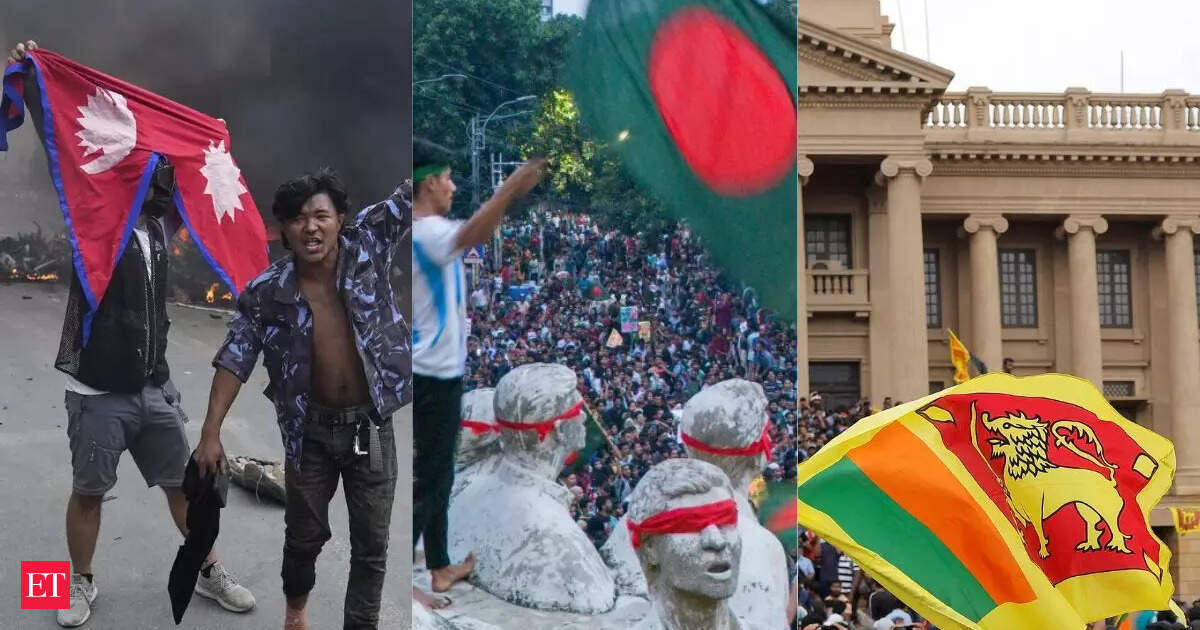
Sri Lanka: economic collapse and a mass uprising (2022)
Sri Lanka’s turmoil began with an economic breakdown. Foreign reserves fell to record lows, imports stalled, and essentials such as fuel and medicine disappeared from markets. The crisis quickly moved from households to public squares, as tens of thousands joined the Aragalaya movement and demanded political change. Protesters camped in central Colombo, stormed government offices, and eventually entered the presidential palace. By July 2022 Rajapaksa had fled the country and resigned, ending years of Rajapaksa family dominance and opening the door to emergency negotiations with the International Monetary Fund.
Sri Lanka July 2022 Protests: What changed after the street
The immediate political result was the fall of a dominant political family and a scramble to restore basic services and credit lines. Economically, emergency debt talks and IMF support began but the social and political trust deficits remained large, shaping elections and policy choices since 2022.
Bangladesh August 2024 Protest: A student uprising and the fall of a long rule
In August last year, it was Bangladesh’s turn to see a sudden shift. Protests that began in July 2024 over job quotas for government employment expanded rapidly into a wider anti-government movement. Students led marches across Dhaka and other cities, joined by workers and opposition groups who accused the administration of suppressing dissent and concentrating power. Clashes with security forces left scores dead and the country paralysed. By early August, Sheikh Hasina left Dhaka and sought refuge in India. An interim government headed by Nobel laureate Muhammad Yunus took charge, with the task of restoring calm and preparing the ground for new elections.
Nepal September 2025: Gen Z, a social-media ban and a national crisis
In September 2025, unrest spread in Nepal after the government moved to restrict major social media platforms unless they registered locally. The ban angered young people who saw it as an attack on free expression, and within days street demonstrations swelled across major towns. What began as a digital-rights protest soon merged with wider frustrations over corruption, unemployment and poor governance. The protests led to deadly clashes between security forces and demonstrators across the country, with authorities reporting at least 19 deaths in the most violent episodes in decades. Following the unrest, the government lifted the ban and some ministers resigned, but demonstrations continued, and Prime Minister KP Oli eventually stepped down within 36 hours of the protest.

The speed of the events, a digital-policy decision turning into national crisis within days, underlines how sensitive modern political ecosystems are to moves that affect online organising.
Common threads: Why these protests toppled governments
A proximate trigger plus deeper grievances: In each country a specific policy or event (economic collapse and shortages in Sri Lanka; student quotas and inequality in Bangladesh; a social-media ban and corruption allegations in Nepal) triggered mobilisation that tapped long-standing discontent. Youth and student mobilisation: Students and young citizens played leading roles, using networks and presence in public spaces to scale protests quickly.
Role of communications: Social media has acted both as an organising tool and as a flashpoint — bans or restrictions accelerated protests rather than containing them.
State response and legitimacy: Heavy-handed security action, defections or refusal of security forces to fire on civilians, and visible elite privilege undermined state legitimacy and widened public outrage.
What this means for India and the region
Stability and markets: Political shocks in neighbouring countries may spill into regional markets, trade routes and investor sentiment. Sri Lanka’s crisis required multilateral financial support; similar instability elsewhere raises ripple risks.
Cross-border flows: Large protests can cause refugee flows, close border crossings, and affect remittances and supply chains that link India to its neighbours.
Across Sri Lanka, Bangladesh and Nepal the pattern is familiar: a catalytic event met an accumulation of economic, social or political grievances; youth mobilisation scaled the response; and visible failures of governance and security approaches turned protest into regime-shaking crisis.