

AS BANGLADESH rapidly constructs highways, power plants and large-scale infrastructure projects, a quieter, less visible crisis is unfolding that threatens to undermine the very progress it seeks to achieve. It is a crisis of environmental accountability, driven by the neglect of a crucial safeguard: the Environmental Impact Assessment. Without it, today’s development may appear bright, but it casts a long, dark shadow over tomorrow.
Defined by the United Nations Environment Programme as a process to evaluate the environmental, social and economic consequences of proposed projects before decisions are made, it is essential for sustainable development. Bangladesh has institutionalised this through the Bangladesh Environment Conservation Act (Amendment 2010) 1995 and, more recently, the Bangladesh Environment Conservation Rules 2023.
The law places strict liability on polluters and mandates pollution control and environmental improvement. Under Section 20, the government introduced the 2023 rules to replace the old 1997 rules. It defines this assessment as ‘a systematic process for identifying, predicting and evaluating the potential environmental impacts of a proposed project or activity.’ Generally, this process includes screening, scoping, baseline data collection, impact assessment, mitigation, an environmental management plan, reporting and public consultation, decision-making and follow-up.
Projects are classified into four categories — green (low impact), yellow (moderate impact), orange (significant impact) and red (severe impact) — based on environmental and health implications. Projects in Green must obtain an environmental clearance certificate where yellow, orange and red category projects must obtain both a location clearance certificate and an environmental clearance certificate from the Department of Environment. Notably, Rule 3(2) mandates public hearings within 30 working days of application (extendable by 15 days) to address actual or potential environmental harm, ensuring participatory decision-making. The 2023 rules also details procedures for applying for clearances, including fees, timelines, appeals, and renewal terms.
However, industrial units in export processing zones, economic zones and BSCIC industrial estates are exempt from the requirement for location clearance certificates; they need only obtain environmental clearance certificates. While this streamlines approvals, it poses risks. Skipping site-specific assessments may ignore local sensitivities — nearby rivers, wetland, or residential zones. Without thorough monitoring, such exemptions could weaken essential environmental safeguards.
The rules further contain comprehensive annexures listing industrial categories, water quality standards, waste discharge limits, buffer distances, site selection guidelines, environmental impact assessment scoping protocols, registration criteria for environmental consultants and so on. Together, these form an intricate regulatory framework designed to embed environmental safeguards in national development.
Yet despite these provisions, the 2023 rules introduced a troubling change: coal-fired power plants up to 50MW and gas-fired plants up to 100MW no longer require mandatory environmental impact assessments. This deviates sharply from the 1997 Rules, where all power plants fell under the Red category. While emissions standards remain on paper, enforcement is often lacking. This absence of accountability is deeply damaging.
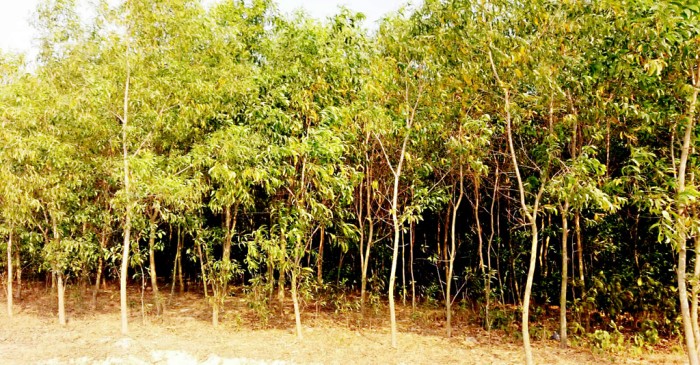
The Centre for Research on Energy and Clean Air reports that coal combustion releases sulphur dioxide, nitrogen dioxide, mercury and fly ash that impair respiratory health and degrade ecosystems. Studies estimate that air pollution contributes to over 200,000 deaths annually in Bangladesh. Our forests also reflect this crisis. While the Department of Forests claims 17 per cent coverage, satellite imagery places it close to 13.5 per cent, well below the global target of 25 per cent. Bangladesh’s deforestation rate stands at 2.6 per cent, twice the global average. In 2023 alone, the nation lost 20.2 kilo-hectares of natural forest, emitting 11.6 million tonnes of CO2. Over the last two decades (between 2002 and 2023), 8.39 kilo-hectares of humid primary forest has vanished, according to Global Forest Watch.
Large infrastructure projects are accelerating this ecological decline. The Chattogram–Cox’s Bazar railway, one of 22 major government projects affecting forest zones, felled 720,000 trees, cut through 26 hills and disrupted protected areas such as the Chunati and Fasiakhali Wildlife Sanctuaries, which are vital habitats for endangered species like the Asian elephant.
The broader implications are alarming. Investigations by The Guardian uncovered ‘forever chemicals’ in rivers near industrial areas, especially garment factories. Dhaka regularly ranks among the world’s most polluted cities. Forests are shrinking, wetlands are being filled illegally and biodiversity is under severe threat. Public health crises are mounting, with rising cases of respiratory ailments, waterborne diseases, and reproductive health complications. The nation may be gaining in gross domestic product but is losing irreplaceable environmental capital.
A promising initiative is the recent government directive requiring mandatory environmental impact assessments for all roads and highways department projects. This signals progress towards responsible infrastructure development. However, enforcement across thousands of projects remains a daunting task given institutional limitations.
The challenge lies not in the absence of legislation. The Enviromental Conservation Rules 2023 offers clear processes, while Article 15(1) of the 1995 law stipulates penalties, including fines, imprisonment, or both, for violation. Certificates are issued for varying durations: green (five years), yellow (two years) and orange/red (one year, renewable annually). An appellate authority within the Ministry of Environment, Forest and Climate Change handles grievances. However, laws only matter when they are enforced.
In reality, many projects escape proper scrutiny. Public hearings are often symbolic, environmental clearance certificate is issued with a minimal review, and monitoring is rare. Environmental officers, frequently under-resourced, face political or commercial pressure.
This culture of negligence is dangerous. It undermines ecological resilience, endangers public health and risks transforming Bangladesh’s development trajectory into a cycle of destruction. If left unchecked, we are trading green hills for grey concrete and clean rivers for chemical sludge, all under the pretext of ‘progress.’
To change course, Bangladesh must act decisively. Regulatory agencies such as the Department of Environment must be insulated from political influence and equipped with sufficient funding, technical tools, and personnel. It is essential to ensure at least an initial environmental examination and, where feasible, a full environmental impact assessment for all environmentally sensitive projects. Independent auditing and meaningful public consultation must be embedded within the review process. More important, the environment must no longer be treated as an afterthought. It must be central to national policy, a precondition for development rather than a casualty of it. No economic zone, expressway, or power plant is more important than clean air, potable water and thriving ecosystem.
Md Yeasir Arafat is a political science student at the University of Rajshahi.