
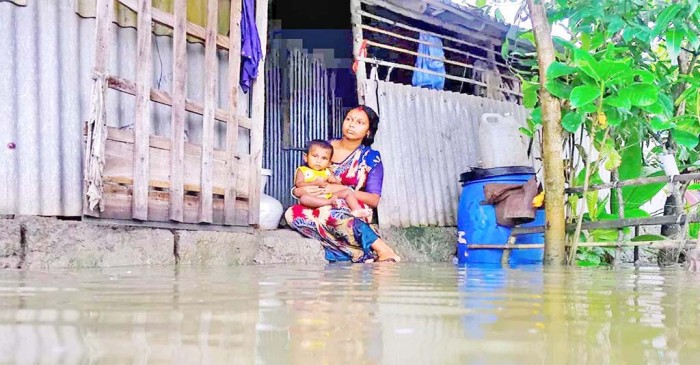

THE world just observed International Peace Day on September 21 with a call for climate action for global peace, which resonates with unparalleled urgency in Bangladesh. In this vast and vibrant delta, embraced by the mighty Padma, the Meghna and the Jamuna, the rhythm of life has always been tied to the water. But now, that very lifeline is threatened by a changing climate. Peace in Bangladesh is not merely the absence of conflict. It is the presence of stability, the security of a home that will not be washed away, the guarantee of a livelihood that can withstand the next storm, and the promise of fresh water to drink and cultivate the land.
For Bangladesh, a nation born from a struggle for justice and self-determination, peace is a cherished, hard-won prize. Yet, the intensifying climate crisis presents a new, insidious threat to this peace. It acts as a silent agitator, exacerbating old tensions and creating new ones. It pits farmer against fisherman, displaces families from their ancestral lands, and strains the resources of our already crowded cities.
The fight for climate resilience is, therefore, inextricably linked to our journey towards a more peaceful and prosperous future. This International Peace Day, we must look at climate action not as an environmental issue alone, but as the most critical peacebuilding strategy for our nation. It is the work of strengthening our embankments, innovating in our fields, and cooperating with our neighbours. It is the work of securing a peaceful ‘Sonar Bangla’ (golden Bengal) for generations to come.
Climate crisis as conflict multiplier
We must first recognise how climate change acts as a profound ‘conflict multiplier’ across the country, from the coastal belt to the northern riverine plains to understand why climate action is a peace issue.
At the heart of many communities, a quiet conflict is growing over the most fundamental resources. In the southern coastal regions of Khulna, Satkhira, and Bagerhat, rising sea levels and reduced freshwater flow from upstream have led to severe saline intrusion. The saline intrusion poisons agricultural lands that have sustained families for centuries. It has created a deep-rooted social conflict between traditional rice farmers, who need fresh water, and increasingly powerful shrimp cultivators, who thrive on the brackish water. This tension over land use often erupts into disputes that strain community relations and threaten local stability.
Simultaneously, along the great rivers, the phenomenon of riverbank erosion acts as a constant thief, stealing thousands of hectares of land each year. Families who lose their homes and farms overnight are left destitute, often leading to disputes over the remaining land and resources. This erosion does not just erode soil; it erodes social cohesion and the rule of law in vulnerable areas.
Bangladesh is witnessing one of the world’s largest movements of internal climate migrants. Every year, hundreds of thousands of people, displaced by coastal erosion, salinity, or devastating cyclones like Aila and Sidr, are forced to abandon their rural homes. Their destination is often the overburdened slums and informal settlements of major cities like Dhaka and Chattogram.
This mass migration is a significant threat to urban peace. These climate refugees arrive with little to no resources, competing for scarce jobs, housing, and public services. This places immense pressure on urban infrastructure and can lead to increased social friction, exploitation, and crime. The struggle for survival in these dense urban spaces tests the limits of social harmony and presents a formidable challenge to governance and security.
The climate crisis is a direct assault on the traditional livelihoods that form the backbone of our rural economy and culture. Unpredictable rainfall patterns, prolonged droughts in the north, and increasingly frequent and intense floods devastate crop yields. In the Bay of Bengal, changing water temperatures and acidity levels threaten the fish stocks that millions of fishermen depend on. When these traditional sources of income collapse, it creates a vacuum of economic desperation. This desperation can make communities vulnerable to exploitation, radicalisation, and criminal activities, undermining peace from the ground up. Addressing the climate threat is, therefore, essential to preserving the economic dignity and stability of our people.
Climate action as peacebuilding force
WHILE the challenges are immense, Bangladesh has refused to be defined as a passive victim. Instead, the nation has emerged as a global leader in climate adaptation, and it is within these innovative actions that we find a powerful model for building peace.
Bangladesh’s greatest strength is the resilience of its people. This has been channelled into world-renowned community-based adaptation strategies. These are not just technical fixes; they are social projects that strengthen community bonds.
Cyclone shelters and early warning systems: The extensive network of multi-purpose cyclone shelters and volunteer-led early warning systems requires immense community cooperation. During a crisis, neighbours help neighbours, transcending social and economic divisions. This collaborative survival strengthens trust and solidarity — the very bedrock of peace.
Innovations in agriculture: The development and adoption of saline-resistant rice varieties, the revival of ancient techniques like floating gardens (baira) in waterlogged areas, and rainwater harvesting for irrigation are empowering farmers. By providing communities with the tools to secure their own food and income, these innovations reduce resource competition and foster self-reliance and stability.
These local solutions, developed by Bangladeshis for Bangladeshis, demonstrate that the shared work of adaptation can unite communities, making them not only safer from the climate but also more peaceful.
Beyond borders, towards peace
MANY of Bangladesh’s climate and water woes are transboundary in nature, originating beyond our borders. The flow of our 54 shared rivers, for example, is critical for flushing salinity and irrigating our lands. Therefore, diplomatic engagement and collaborative water management with our neighbours, especially India, are paramount acts of peacebuilding.
Securing fair and sustainable water-sharing agreements, like the Ganges water sharing treaty, and working towards new ones for rivers like the Teesta are crucial for our national stability. Joint river basin management, data sharing on flood warnings, and collaborative efforts to conserve the Sunderbans mangrove forest — a natural shield we share with India — are all pathways to peace. They replace potential conflict over scarce resources with a framework of mutual respect and shared stewardship, turning a point of contention into an opportunity for regional cooperation.
Creating a climate-resilient economy is essential for long-term peace. By investing in green development, Bangladesh can create new, sustainable livelihoods that reduce the economic desperation fuelling instability. The remarkable success of solar home systems has brought clean energy to millions in off-grid rural areas, creating jobs and opportunities. The push for a ‘green’ apparel industry, with factories investing in energy and water efficiency, positions our largest export sector for a sustainable future. By diversifying our economy towards green technology and climate-smart industries, we can provide a hopeful alternative for those whose traditional livelihoods are under threat, thereby building a more equitable and peaceful society.
Call to action
THE path forward for Bangladesh is clear. Securing our peace requires a society-wide commitment to climate action. This is a responsibility that rests on all of us in our homes, our communities, and our government.
The challenge is great, but the power of collective action is greater. Every citizen has a role to play in this national peacebuilding project.
At the individual and household level: We can practise rainwater harvesting to reduce pressure on groundwater, adopt composting and reduce waste, and participate in tree plantation drives. These simple acts, when multiplied by millions, create a powerful current of change.
At the community level, we must strengthen our local institutions. This means actively participating in union disaster management committees, volunteering to maintain local embankments and canals, and helping to spread knowledge about climate-resilient farming techniques among neighbours. Fostering a culture of local cooperation is our first line of defence.
At the national level, we must demand greater accountability and ambition. We must advocate for the effective and transparent use of climate funds, such as the Bangladesh Climate Change Trust Fund. We must push for policies that accelerate our transition to renewable energy and protect our natural ecosystems. And we must support our government in pursuing climate diplomacy that protects our national interests and promotes regional stability.
The story of Bangladesh in the 21st century will be a story of its response to the climate crisis. We stand at a crossroads. One path leads to increased scarcity, displacement, and conflict. The other, the path of proactive and unified climate action, leads to a future of security, stability, and enduring peace.
Let this International Peace Day be a turning point. Let us recognise that building a solar panel in a remote village, planting mangroves along our coast, or securing a water-sharing treaty are all profound acts of peace. By dedicating ourselves to healing our relationship with nature, we dedicate ourselves to healing our nation. Let us work together to build a Bangladesh that is not defined by its vulnerability but celebrated for its resilience — a true delta of hope, peaceful and prosperous for all.
Manik Esahak Biswas is a social development worker.