
- Bangladesh generates around 87,000 tons of single-use plastics annually, of which 96% are directly discarded as garbage.
- Due to lack of awareness, many people dump plastic waste at convenience, which congregate especially near rivers or lakes. Rainfall, wind and other factors lead the plastic waste to mix with water and sediment, causing harm to the ecosystems.
- In addition, managing the country’s 13 Ecologically Critical Areas (ECAs) is becoming more difficult due to the presence of the large amount of plastic waste.
- Considering the negative impacts, the NGO BRAC started a project to turn the single-use plastic waste into raw material for plastic products in one of the ECAs.
The amount of single-use plastic that gets recycled as a measure to manage plastic pollution is insignificant in Bangladesh. However, some small-scale ventures working in this sector are trying to improve the situation.
Currently, around 300 small-scale ventures are engaged in recycling plastic waste, specifically single-use plastic bottles and other plastics heavier than polybags, which are used mainly for groceries and kitchen market and thrown away afterwards.
As part of the recycling move, Bangladesh has recently started recycling the untreated single-use plastic waste, comprising mostly of polybags.
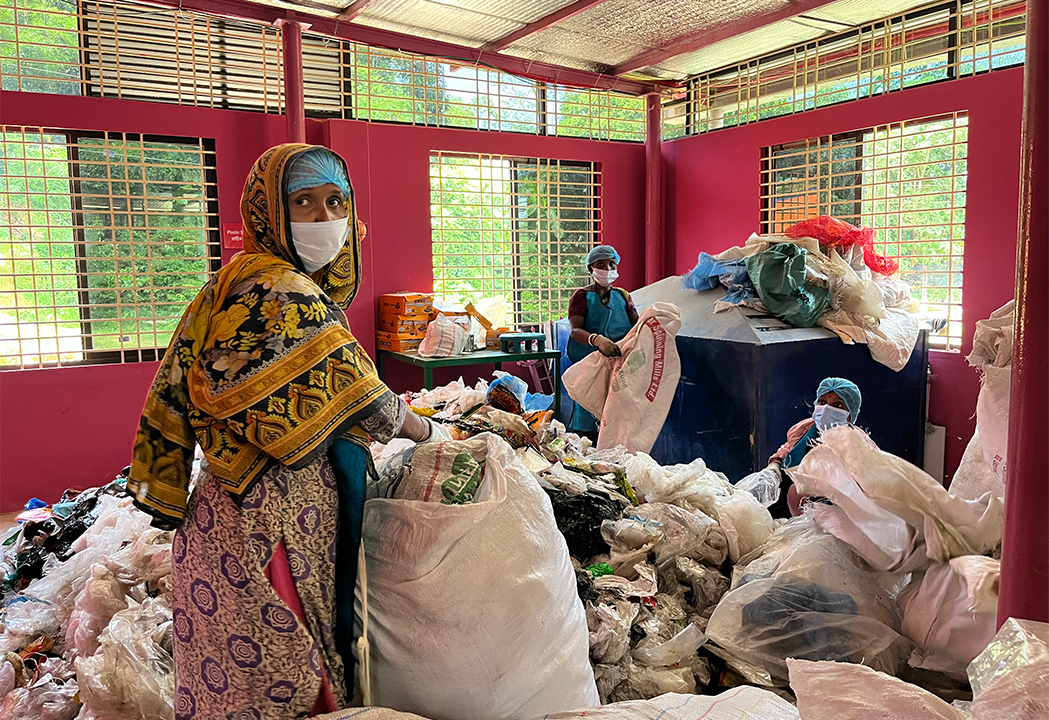
Considering the negative impacts of untreated waste, the NGO BRAC, an international development organization, introduced a project to turn single-use plastic waste into raw materials for plastic products. To start off, the project has been collecting plastic waste from Cox’s Bazar sea beach, one of Bangladesh’s Ecologically Critical Areas (ECAs), and its surrounding communities.
Cox’s Bazar sea beach is one of the 13 biodiversity-rich habitats declared as ECAs by Bangladesh, which accords them protection under strict laws.
BRAC’s plastic project was initially taken under the Plastic Free Rivers and Seas for South Asia (PLEASE) project by the South Asia Cooperative Environment Programme (SACEP), an intergovernmental organization of the eight South Asian nations.
“With the presence of rivers and the ocean, we selected Cox’s Bazar for the initiative and tried to change the behavioral patterns of locals and tourists through different awareness building initiatives. For turning the waste into a resource, we planned to establish a plant to process the most neglected plastic waste that is untreated as waste,” said Md Liakath Ali, director of BRAC’s Urban Development Programme.
“From there, we successfully produced raw materials called pallets and granules to produce different plastic-made products, also creating a market for the raw materials as well as developing entrepreneurship for managing the waste,” Ali said.
“To initiate the work successfully, we have engaged the city corporation authority to collect waste and set up the plant on their own land. Later, we will hand over the project to them when they are ready to operate the entire job successfully,” he added.


Ali also informed that from what they’ve learnt from this project, they have made plans to replicate the project across the country, which will help to manage the country’s single-use plastic waste.
Bangladesh consumes around 87,000 tons of single-use plastic annually. Of them, 96% are thrown away as garbage directly, degrading the country’s environment and ecosystems drastically.
Due to a lack of awareness, many people dump plastic waste at their convenience, especially near rivers or lakes. Rainfall, wind and other factors influence plastic waste to mix with water and sediment, causing harm to the ecosystems and food chains.
Simultaneously, an increase in local tourism in natural landscapes as well as biodiversity hotspots has increased the environmental degradation in those areas due to the convenient use of single-use plastic bags, food packs and water bottles.
“Managing the waste from single-use plastic has become one of the major challenges in Bangladesh, as the issue has turned into one of the major causes of environmental degradation. Recycling the untreated plastic waste from an ECA [that’s also a] busy tourist area is a great help for the environment,” said Ziaul Haque, additional director general at the Department of Environment.
The most popular tourist destinations like the Sundarbans, Cox’s Bazar sea beach, Saint Martin’s Island and Tanguar Haor, all ECAs, are the places that are most affected by plastic pollution.
Since last year, as part of protecting the ECAs, the government has been limiting the number of night stays for tourists in two of the ECAs that are popular tourist destinations: Saint Martin Island and Tanguar Haor.


Limiting the use of single-use plastic, introducing alternatives
Part of the Bangladesh Environment Conservation Act, when it was introduced in 1995, was to curb the production and use of single-use plastic in the country.
However, the country’s plastic-led pollution has reached a stage where microplastic was found in fish, indicating contamination of the food chain.
Apart from this, the High Court ordered to eliminate the use of single-use plastic from the country gradually, for the sake of environmental sustainability.
Since 2024, the government has implemented a the environment conservation act to stop using single-use plastic bags for groceries in department stores and promoting alternative bags like jute sacks and others.
Banner image: Workers at BRAC’s plastic project sort out single-use plastics. Image by Abu Siddique/Mongabay.
Bangladesh’s new government implements strong measures to eliminate single-use plastic
Bangladesh continues promotion of biodegradable bags amid battle against polythene
Citation:
Mim, F.I., Islam, M. J., & Abdullah, M. S. (2024). Plastic tsunami: Bangladesh’s maritime ecosystem under siege. Environmental Forensics, 25(6), 471–473. doi:10.1080/15275922.2024.2330026
Feedback: Use this form to send a message to the author of this post. If you want to post a public comment, you can do that at the bottom of the page.
