
Bangladesh is going through a democratic transition. In the aftermath of the mass uprising and the eventual fall of the Awami League regime last year, Bangladesh’s foreign relations also witnessed some level of shift.
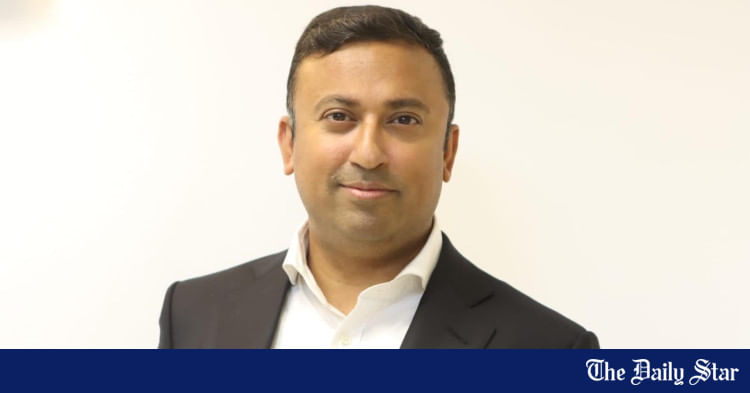
As the country prepares for an elected government, what will Bangladesh’s foreign policy look like? BNP’s Acting Chairman Tarique Rahman’s Foreign Affairs Adviser Humayun Kabir shared his views with The Daily Star.
 For all latest news, follow The Daily Star’s Google News channel.
 DS: How did you engage in Bangladeshi politics and become Tarique Rahman’s foreign affairs adviser?
Humayun: I started supporting BNP and pursuing a political career in 2005–2006. In 2008, Tarique was arrested and subjected to persecution. He was facing human rights violations in prison. So, I began getting passionately involved. In 2016, I became secretary of the BNP National Executive Committee for International Affairs. Then, after the last election, I was appointed chairperson of the council, with committee status under the chairperson.
DS: What’s your role as the foreign affairs adviser to Tarique Rahman?
Humayun: I am working in foreign affairs in pragmatic politics — providing diverse foreign and academic support, assisting a political leader in foreign stakeholder management, and managing relationships. As a prospective leader of Bangladesh, I focus on crafting messages for global audiences, stakeholders in different spheres of society, and institutions worldwide — so they can easily understand it.
DS: It has been more than a year since the interim government took office, but Tarique Rahman has not yet returned to the country. Why is that?
Humayun: During Sheikh Hasina’s last autocratic regime, he mobilised people in Bangladesh from London. He provided leadership to international community connected with Bangladesh and the UK, spending extended time for Bangladesh, meeting, and outlining the transition process. The country’s transition is expected to take place in February 2026. So, Tarique exercises patience. He does not believe in emotional decision-making. He will definitely return in right time.
DS: How is BNP preparation for the upcoming election?
Humayun: BNP’s election preparation is satisfactory. As a democratic party, we believe in elections. In 2014, Sheikh Hasina conducted elections in her own way. We are finalising the candidates competing in each of the constituencies.
DS: Recently, we saw that in the Ducsu and Jucsu elections, Jamaat-backed students won. Are you worried that this will influence the outcome of the upcoming general election?
Humayun: Not at all. Student union elections in universities revolve around student issues—campus security, canteen standards, education quality, and academic matters. They have no connection to national elections.
DS: Some reports have already been published alleging that BNP and some other parties’ leaders and activists were involved in extortion and land grabbing and illegal businesses. Doesn’t it create a negative perception of BNP?
Humayun: BNP’s leadership has said if anyone is found involved in extortion, arrest them. If they are from our party, expel them. The party has taken actions. My question is why is the government not arresting them if there are engaged in criminal activities?
DS: After August 5 last year, we have observed some shifts in Bangladesh’s foreign relations. How do you see that?
Humayun: The main outcome after August is that the people of Bangladesh have made a decision: they will not be slaves to anyone, nor remain a subservient country. This is the message. The political class, the party, and their behavior have been shaped by this. During Hasina’s her regime, Bangladesh became dependent on India. BNP’s position is different. Our policy is multi-faceted and balanced. Everything must be based on national interest. Any investment, any security operation — decisions must converge with Bangladesh’s national interest.
DS: To achieve that balance in foreign policy, what kind of internal strength do we need? Because of internal weaknesses, mainly political divisions, there is no national consensus. That has consequences for foreign policy too.
Humayun: BNP, as a political government, if elected, will pursue a foreign policy guided by political identity and objectives. Our political objective is safeguarding national interest and advancing political policy. Before that, a process of management is needed. BNP believes there must be a strong foundation for foreign policy. The distinction is clear: foreign policy conducted by the foreign ministry is under the political government, the prime minister.
DS: At present, we see tectonic shifts in global politics. In this context, what do you think are the major challenges for Bangladesh’s foreign policy?
Humayun: Institutional capacity, leadership, and prioritising national interest. Foreign economic relations will take priority: attracting investment, creating jobs, ensuring security, and legislative consent. Foreign policy isolation and economic security cooperation must go closely together.
DS: Often, because of internal political divisions and frictions, we see different political parties lobbying different foreign powers. Some parties appear pro-China, some pro-India, some pro-America. Can we avoid this tendency?
Humayun: The people of Bangladesh sent their message during the revolution: Do not be slaves to others, do not run the country based on someone else’s thinking — run it on your own national vision. For example, the Rohingya crisis is a national security crisis for Bangladesh. We must sit at the table with China, India, and others from a position of strength. With a mandate, community rights, and people’s rights restored, Bangladesh will have strength.
DS: Currently Bangladesh’s relations with India are strained. With Sheikh Hasina sheltered there, how would you deal the relations with the neighbour?
Humayun: Look, Sheikh Hasina was the most prolific mass killer in our political history. She tied the country to Indian dominance. The people of Bangladesh expect an independent foreign policy.
DS: You mentioned economic priorities in foreign policy. In that, foreign investment is very important, but foreigners allege of issues like corruption, bureaucracy, taxation, profit transfer. How do you view this?
Humayun: Tarique has already spoken about it. We will promote local products in the international arena — both offline and online markets –, ensure quality, and focus on specific sectors. Hasina depended on printing money and exploitative foreign investment. We will ensure strong governance in all sectors so that local and international – all investors regain their confidence and invest. We will focus on creating jobs.
DS: In exports, we are still too dependent on RMG. What about diversification?
Humayun: Exactly. We need to diversify seriously. Bangladesh must support soft industries including IT, films, creative industries, jewellery and other areas.
DS: Remittances are a real saviour of the economy, but problems remain: irregularities, high recruitment cost, exploitation that we have seen across all regimes.
Humayun: BNP will reform policies and protect workers. We will focus on upskilling our people. They are our main resources of the country.
DS: In many mega projects, we have reports of escalating costs and high interests of foreign loans. We need connectivity projects. How would the BNP deal with these aspects?
Humayun: Under autocrats like Sheikh Hasina, many projects were imposed by external powers. She had to take many mega projects at high interest. With good governance and transparency, we will take only what is necessary.
DS: There are several ministries involved when it comes to foreign relations, though foreign ministry is the focal point. For example, ministries of commerce, Economic Relations Division, Expatriates’ Welfare etc. But often they work separately without coordination. Do you think there is a need for structural change?
Humayun: Absolutely. BNP has a clear plan. Foreign, economic and security policy cannot be in isolation. Joint work is needed. Ministries and departments must coordinate. The Prime Minister’s Office will strongly coordinate everything related to foreign relations.
DS: Has BNP already prepared such a policy paper?
Humayun: Yes, strategy papers have been published. On security, our focus is on economic security as well. Bangladesh has intelligence, police, and strong diaspora talent worldwide. These can be utilised for national development.
DS: Bangladesh has a large diaspora community. How can they be engaged in Bangladesh’s national development?
Humayun: The diaspora community is already contributing. Bangladeshi talent exists everywhere. We will invite them, especially the experts in various sectors.