
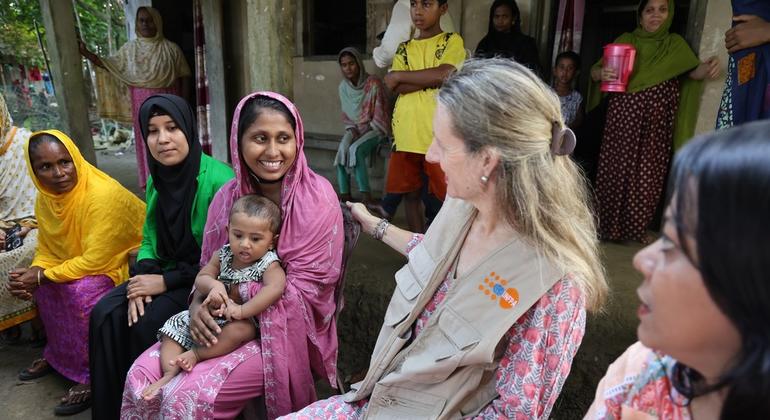
Sunamganj is a district in the wetland ecosystem in northeast Bangladesh, which is particularly vulnerable to climate change. Floods arrive quickly and suddenly and can last for weeks. They disrupt life, displace families and cut off access to services.
For the over 670,000 women of reproductive age living in the area, increasingly extreme weather events are threatening their access to reproductive healthcare.
Preparation and planning
To help prepare for these crises, UNFPA is training reproductive-aged women to protect themselves and their children during the next flood.
Shakila Akhter, a 24-year-old mother of two, was eight months pregnant during the last flood.
“Thanks to the training I received, I knew what to carry, how to prepare and how to protect my family,” she recalled. She now uses family planning tools she didn’t know about before: “I want to choose when I’m ready for another child.”
She also underscored the link between climate change and these severe floods: “We understand that the climate has changed over the past 20 years. In Bangladesh, the flood season has become longer, sudden floods are more frequent, heatwaves have intensified, and winters are now shorter.
“So, we all should be prepared to manage it to survive.”
Local volunteers
This training is made possible by volunteers trained to help others prepare for climate shocks.
Shakila Begum, 26, began volunteering with just two days of training. She works with the Climate Resilience Health System and Community initiative – supported by the UNFPA and the Swedish International Development Cooperation Agency – which educates women on topics from menstruation to childbirth during floods.
Ms. Begum is now the point of contact for 75 families, helping them with issues like family planning and maternal healthcare.
“One woman had dangerously high blood pressure just before giving birth,” she recalled. “I advised her family to go to the local hospital, where she safely delivered – completely free of cost.”
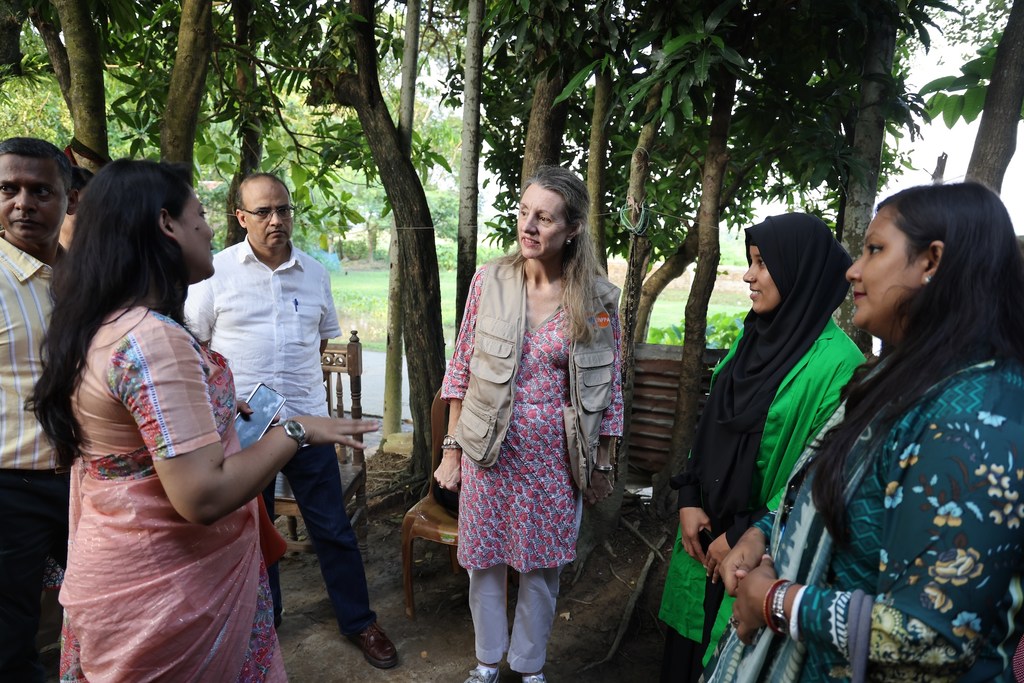
UNFPA Representative Catherine Breen Kamkong (centre) meets Shakila Begum (right, in green), a 26-year-old volunteer with the Climate Resilience Health System and Community Project in Sunamganj.
Empowerment through safe spaces
The initiative also offers safe community spaces where women can learn about sexual and reproductive health.
In Kurban Nagarn, an area in Sunamganj, volunteers have begun hosting “street dramas”. The volunteers act out scenes related to issues such as maternal health, disaster preparedness and child marriage prevention, with over 500 people attending each performance.
Taskira Hauque Tazin, a local student, is one of the moving theatre’s core members. She has attended many conferences in Bangladesh and abroad, where she shares her experiences and is recognised for her work.
“I feel proud to work for women’s empowerment and to support underprivileged communities. Through these plays, we raise awareness so that women don’t fall behind. We want to stop early marriage, promote girls’ education, and ensure that women get access to maternal health care,” she said. “Whether it’s in the sun, rain, or storm – we’ll keep doing this work for the people.”
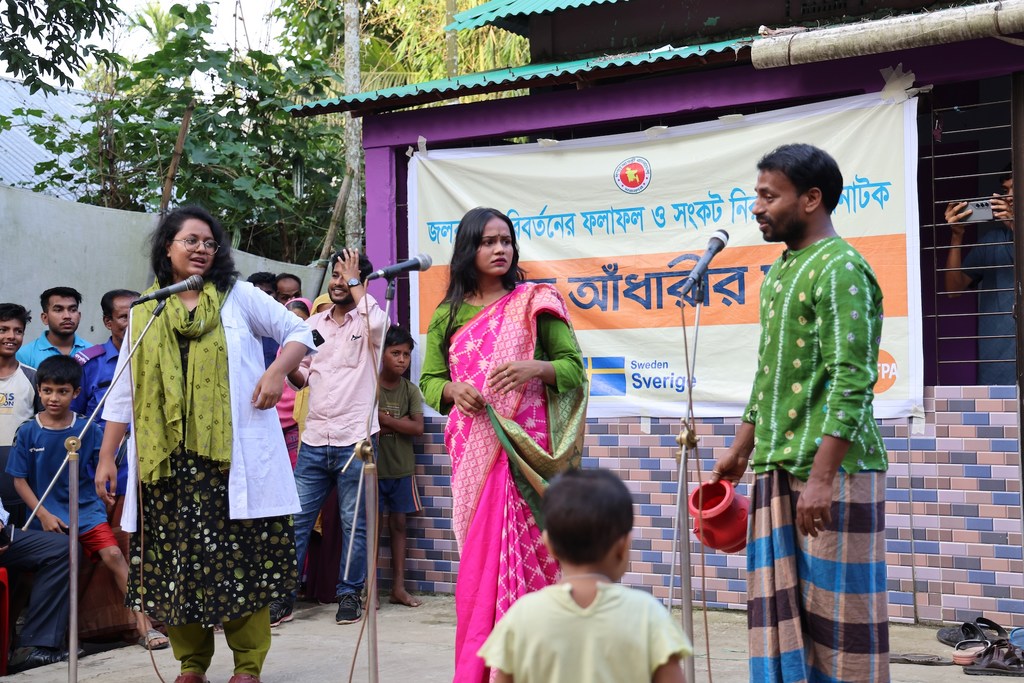
Villagers gather for an afternoon street drama in Bodipur, Kurban Nagar Union, Sunamganj, as part of the Climate Resilience Health System and Community Project.
Anima Akhter, a 24-year-old mother in Kurban Nagarn, explained that the street dramas provide a safe space for difficult conversations: “We want to share our problems, especially about our bodies – but we often can’t speak.”
With the support of local volunteers, Anima delivered her youngest child safely at the hospital.
Amina’s husband, Nurul, now accompanies her to community sessions and has become a role model in the community, receiving training from volunteers to teach his neighbours about women’s and girls’ health.
“Since my wife underwent training, I took it very seriously and felt inspired to help our neighbours, especially concerning women’s and girls’ health,” he said. “I regularly talk about these important messages with other men at the tea stall, encouraging them to be prepared for disasters and to take the same precautions.
“I urge them to seek help from service providers if they face any problems, especially concerning pregnant women’s deliveries and family planning methods.”
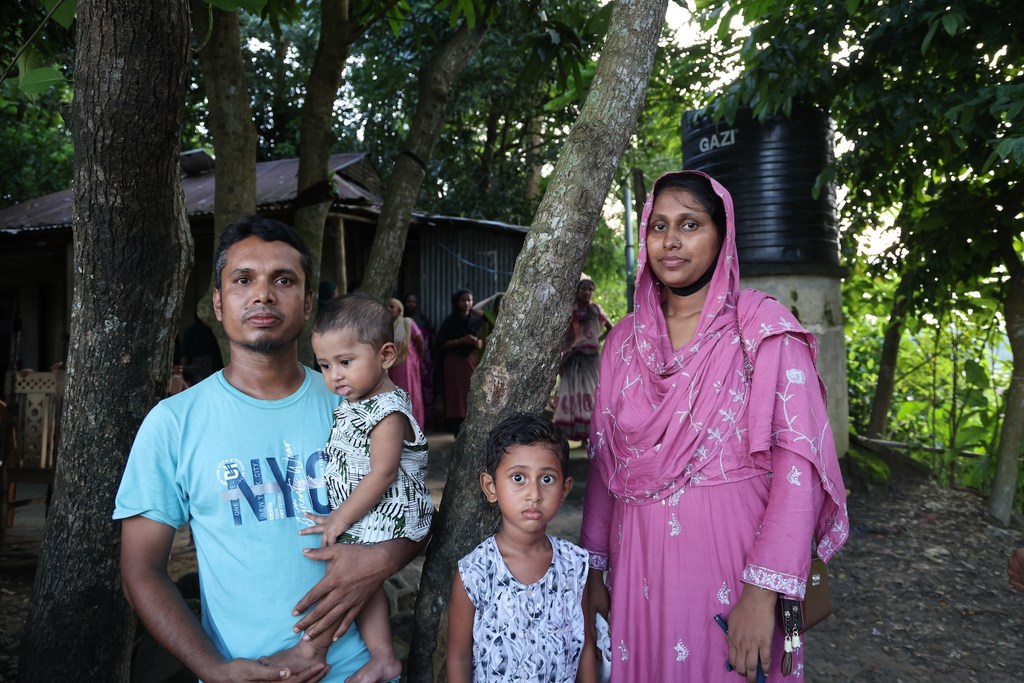
Anima Akhter, 24, with her husband Ruhul Amin, 30, a steelworker, and their two children outside their home in Bodipur village in Kurban Nagar Union.
Ongoing challenges
But challenges remain despite the best efforts of the UNFPA and other UN partners.
In flood-prone villages in Sunamganj, over half of deliveries still occur at home.
Many women and girls also still feel shame discussing topics like menstruation, and cultural norms often restrict women who attempt to generate their own income.
These vulnerabilities faced by women and girls are exacerbated by climate-related disasters, which often hit them the hardest.
Continued commitments
From 28 to 31 July, global experts convened at the Global Symposium on Climate Justice and Impacted Populations in Brasília, co-hosted by UNFPA and the Government of Brazil.
There, leaders worked to address the disproportionate impact of climate change on women and girls. The event called for gender-inclusive climate negotiations and a renewed commitment to understanding the impact climate change has on sexual and reproductive health and rights.
Diene Keita, Acting Executive Director of UNFPA, highlighted the gendered impact of climate change at the event: “The evidence tells us that climate change is increasing the risk of maternal mortality, disrupting access to contraceptives and increasing the risk of gender-based violence.”
“Our collective efforts need to strengthen the resilience of women, girls and health systems to withstand and adapt to climate shocks,” Ms. Keita stressed. “Being prepared, responding rapidly, and building forward better must be central pillars for our work.”