
They have also called for urgent reforms to revitalise private sector investment, which they view as crucial for the country’s future
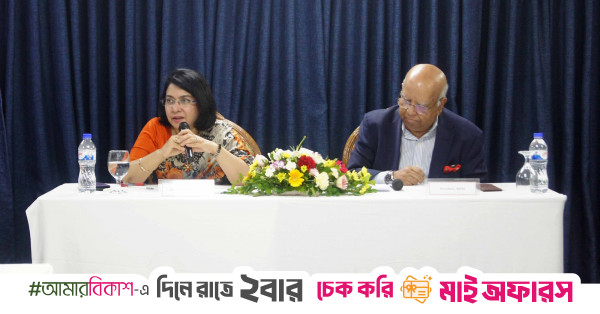
Fahmida Khatun, executive director of the Centre for Policy Dialogue (CPD), delivered the keynote, at a Lecture Club organised by the Bangladesh Institute of Peace and Security Studies (BIPSS) on Wednesday, 24 September 2025. Photo: BIPSS/Facebook
“>

Fahmida Khatun, executive director of the Centre for Policy Dialogue (CPD), delivered the keynote, at a Lecture Club organised by the Bangladesh Institute of Peace and Security Studies (BIPSS) on Wednesday, 24 September 2025. Photo: BIPSS/Facebook
Bangladesh’s economy is grappling with a convergence of severe challenges, which could jeopardise sustained growth and a smooth transition from Least Developed Country (LDC) status, according to experts.
They have also called for urgent reforms to revitalise private sector investment, which they view as crucial for the country’s future.
The Bangladesh Institute of Peace and Security Studies (BIPSS) on Wednesday night hosted a Lecture Club titled “Navigating the Perfect Storm: Unpacking Bangladesh’s Economic Challenges,” moderated by Major General (Retd) ANM Muniruzzaman, president of BIPSS.

The session highlighted the convergence of disrupted global supply chains, stubborn inflation, banking sector fragility, and the looming challenges of LDC graduation in November 2026.
Fahmida Khatun, executive director of the Centre for Policy Dialogue (CPD), delivered the keynote, where she painted both a sobering and cautiously hopeful picture of Bangladesh’s economy.
“For a country of Bangladesh’s size and aspirations, we need private investment at 30% of GDP or higher, comparable to emerging economies like India or China.”
Fahmida Khatun, executive director of the Centre for Policy Dialogue (CPD)
She reminded the audience that Bangladesh has enjoyed decades of impressive growth, averaging around 6% annually, driven by robust exports, remittances, and strong domestic demand.
However, she noted that macroeconomic stability, once a hallmark of Bangladesh’s economic narrative, has weakened in recent years.
“Bangladesh is at a critical juncture. LDC graduation brings immense opportunities for global integration but also poses significant risks. Without comprehensive reforms, we will not be able to make growth sustainable or ensure that its benefits are distributed fairly,” she said.
A recurring theme in her analysis was the stagnation of private sector investment. Despite years of healthy GDP growth, private investment has hovered around 22-23% of GDP – well below the levels needed for job creation and global competitiveness.
In the 2024-25 fiscal year, private investment fell to just 22.5% of GDP, down from 24% the previous year, amid political instability and weak investor confidence.
“For a country of Bangladesh’s size and aspirations, we need private investment at 30% of GDP or higher, comparable to emerging economies like India or China,” Fahmida emphasised.
Speakers noted that while public investment has grown, it cannot replace the role of private enterprises in generating employment and innovation.
They warned that banking sector vulnerabilities, including non-performing loans that have reached alarming levels, are eroding investor trust. Some banks have been found to have bad loans exceeding 90%, underscoring the urgent need for reforms to restore financial discipline.
Inflation, currently around 8.5%, has further complicated the business environment. High food inflation disproportionately affects lower-income groups, but it also squeezes consumption demand, dampening incentives for private firms to expand.
Combined with a tax-to-GDP ratio of just 7.4% – one of the lowest in the world – the government’s limited fiscal capacity makes private investment even more vital.
On the external front, experts highlighted that LDC graduation will erode preferential trade benefits and concessional financing opportunities, raising the stakes for competitiveness.
Fahmida pointed out that without new private capital, Bangladesh risks losing ground to regional competitors such as Vietnam and Cambodia, both of which have aggressively attracted foreign investment.
The discussion concluded with a call for urgent reforms in policy, institutions, and governance to attract new investment. Ensuring a stable political environment, transparent financial practices, and consistent policy signals will be critical to unlocking private sector potential.
The CPD executive director summarised, “We cannot rely on public spending alone. The resilience of Bangladesh’s economy will depend on how effectively we can create an environment where private sector investment thrives.”