
In every discussion related to economic growth, employment, youth, and jobs, speakers would cite data on the number of SMEs in Bangladesh and how they contribute to the economy of Bangladesh. The economic census 2024 estimates that there are 11.8 million economic units in Bangladesh. These economic units are also cited as the micro, small, and medium enterprises (MSMEs) in Bangladesh. The economic census 2013 estimated that there were 7.8 million MSMEs in Bangladesh.
There are varying estimates on the contribution of MSMEs in the GDP in Bangladesh. As per a Bangladesh Bank study (November, 2022), the contribution of SMEs to GDP stood at 24.45%. The report further cited that it was 23.36% in 2021. A previous SMEF study in 2019 (The future of SMEs in Bangladesh) estimated the contribution of SMEs to be 24.7%.
The data, when cited in a seminar, sounds very good. We use the SMEs as a vehicle for self-employment, employment generation, women’s economic empowerment, and poverty alleviation in general.
But are we in the process of killing the SMEs? In other words, is it possible that what is supposed to feed the SME’s growth, is also becoming cancerous and thus impeding the growth of the SMEs.
My assessment shows that there is a likelihood of it. Let me explain.
Vietnam reports that they have 870,000 SMEs which contribute to 50% of the GDP or approximately $196 billion. In contrast, Bangladesh reports 11.8 million SMEs which contributes to 25% of the GDP or $109.35bn. The annual output per SME in Vietnam under these accounts stands at $225,287 while the annual output per SME in Bangladesh under these accounts stands at $9266. This is alarming. How can an enterprise survive with an annual output of $9266?
The devil is in the details
Most of the MSMEs in Bangladesh are informal. The economic census 2024 estimates that more than 56% of the MSMEs are informal. The 2013 economic census showed that of the 7.8 million MSMEs, 4.5 million were permanent, 482,903 were temporary and 2.8 million were household economic activities. The 2024 census shows 6.2 million permanent establishments, 576,621 temporary establishments and 5.01 million economic households.
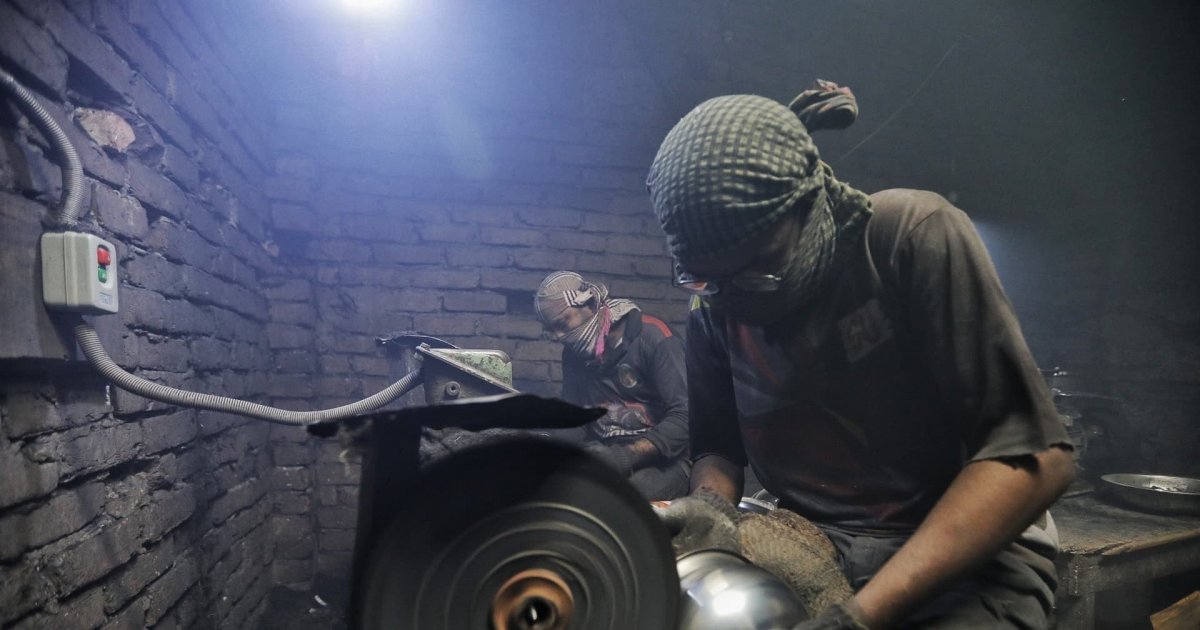
What you see in this data is that the MSME sector in Bangladesh is designed as a sink. It is a sink to absorb youth who we cannot employ in the formal sector. It is a sink that is designed to engage women who are otherwise not employed in the formal sector and thus work from home in their micro business.
During the Covid-19 pandemic, hundreds of thousands of women-owned enterprises entered the market through online business. We keep the entry barrier low so that these enterprises can begin the journey. This then means, the exit barrier is also low. The MSMEs enter the market in droves and they also exit the market in droves.
This will give you the foundation to understand why the issues of access to finance, market access, and quality of products have remained permanent. In the seminars that I spoke to you about, the conversations begin with the statement that SMEs are the lifeline for the economic growth of Bangladesh.
Then soon, it shifts to the discussion that the MSMEs do not have access to capital and markets. They cannot grow. Banks do not provide them capital. The MSMEs do not have license and registration. They do not have bank accounts. They do not have financial transaction details and thus there is no credit score. The banks thus cannot finance them.
My question is, when a sector is designed to attract informality, how can it then also solve all these issues? It simply cannot.
Between 2004-2010, I worked on supporting the growth of the furniture sector in Bangladesh. We carried out a series of market research and value chain studies in the furniture clusters in Bangladesh. We mapped the growth of furniture in China and Japan. We saw that as the sector grew, the small enterprises gradually became more efficient and specialized suppliers of large enterprises. We saw that the sector gradually shifted to ready to order, knocked down furniture. We saw that the brands would become the key engine of growth.
Equipped with this knowledge, we partnered with the largest furniture brands in the country and we supported them to develop the exporter’s forum. We supported them to develop the outsourcing system for furniture. We demonstrated that if the brands grew, it would gradually open up the market for more efficient small and medium enterprises.
Our assessment and our work proved right. The industry took the exact shift that we envisioned. The large brands became the agents of change and efficiency. The small manufacturers became more efficient. The inefficient ones exited the market.
We must remember that markets eventually need to become efficient, sectors need to become competitive. We must attract more MSMEs but not through informality and not at the expense of overall competency and efficiency. We must create avenues through which the breadth of the MSME sector can expand so that they do not crowd in in a narrow number of sectors and thereby crowd out the other MSMEs from the same market.
We must stop this romanticism that a high number of MSMEs is good for Bangladesh. It is only good when the market has the appetite for it. Otherwise, the long standing challenges of access to capital, increase in productivity, efficiency and quality, and such will remain.
Md Rubaiyath Sarwar is Managing Director, Innovision Consulting.